Showing posts with label boundaries. Show all posts

Monday, February 27, 2023

Everything is Politics: an Open Book Blog Hop post


Welcome to Open Book Blog Hop. You can find us every Monday talking about the writing life. I hope you'll check out all the posts: you'll find the links at the bottom of this post.

Do you tackle current political turmoil in your stories or avoid it? Tell us why.  
____________________
Oh dear. 

Now that's a doozy of a question. 

Here's the thing: there's no such thing as apolitical. 

Here. Other people have said it better than I can: 


Even choosing not to "be political" is a political choice, because it is a choice not to challenge or engage with the status quo. Silence is a statement, and leaves it to others to interpret what it means. They'll probably assume you agree with them. 

But, at the same time, I don't see the point in constant outrage and confrontation. Choose your battles, as they say. Save your strongest voice for things you feel the strongest about. Otherwise you're just angry all the time, and all the yelling will leave you raw. I don't want confrontation just for confrontation's sake, but there are moments when I will feel myself a coward if I don't speak. 

I don't shy away from talking about big issues in my writing, but I don't necessary focus on "current political turmoil" either, preferring mostly to stay a little more timeless than that. 

My Menopausal Superheroes series has a lot to say about aging, living as a woman, work-life balance, friendship, boundaries, sexism, racism, ageism, and many other issues, but it's in the story indirectly, as it affects the characters. They don't spout off about their political views for no reason--but because something happening in the story makes them take action or say something. 

Sometimes the problem with writing about very timely topics is that your work has an expiration date. 

All the same…

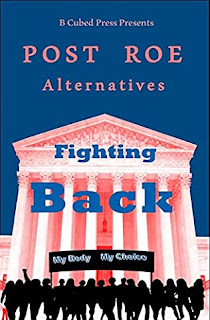
The most directly I tackled current political turmoil in one of my stories was in my short story, "No Country for Young Women," published in Post Roe Alternatives: Fighting Back

Given the title of the anthology, you can probably figure out what political issue the stories within are tackling. 

My story was mostly about the need for people to take notice of what's going on around them, and realize that what affects one human should matter to us all. It's about the dangers of not engaging. 

It's not the most overtly political story in the anthology, but then again, it doesn't shy away from frank assessment. 

If you read it, you'll have no doubt how the characters feel, and you'll have some suspicions of what the author might think and believe, too. 

It was a different kind of writing for me, more realistic than most of my work and I found it cathartic to write, but it's not my usual cup of tea. It was one of those moments, though, when I felt I would feel myself a coward if I did not speak. 
I do find that readers sometimes conflate the writer and her characters. I have written characters who feel very differently about the world and the people in it than I do, and in the reviews, I see that some readers assume that if my character espouses a view, it must be my view, too. That's not always true. 

I write to understand--to understand myself, others, and the world. That means grappling with things that scare and upset me, even if I do so through a lens of speculative fiction and have a heck of a lot of fun while I'm doing it. 

For me, writing is an act of empathy, and I want to understand what all my imaginary people are going through, to live it as if it is my own experience and grow from that effort. So, yes, it's political. It can't help but be so. 

You are invited to the Inlinkz link party!

Click here to enter

Monday, January 16, 2023

If Only I had Known: An Open Book blog hop post


Welcome to Open Book Blog Hop. You can find us every Monday talking about the writing life. I hope you'll check out all the posts: you'll find the links at the bottom of this post.

What is one thing that you wish you’d known about writing before you started?

_______________________________

It's been quite a journey. Writing has been a part of my life since before I could write. I was always telling stories: out loud to my mother, in drawings, to my toys, in my own head. Once I learned to write, it was my solace, my best form of expression, my way of understanding the world. 

a quote on a golden background with an old fashioned pen in the corner. The quote reads: The art of writing is the art of discovering what you believe. Gustave Flaubert.
image source

None of that has changed, but along the way, writing also became a vocation. I wanted readers, an audience, and maybe some recognition and money for my work. 

So, since I can't remember any "before you started," I'll try to tackle this as "before you started trying to do this professionally." 

As I look back on it, I wish I'd understood sooner that I'd have to MAKE time for writing. I let a lot of years slip by in which I wrote very little, or started things I never finished. It's easy, when you're young, to feel like you've got all the time in the world. Like the song says, "I was young and foolish then, I feel old and foolish now." 


For many years, my creative energy went into my teaching, into mothering, into baking--all things that served others. I don't regret that--much good came out of all that work--but I could have had a little balance, maybe. 

It took me a long time to develop a little healthy selfishness and insist on some space in my life for something just my own--my life of words. 

I'm not one to waste too much emotional energy on "what might have been," but I do lament that I didn't focus and finish things a little sooner in my life. 

How about you? In writing or in life in general, what do you wish you'd known? 

You are invited to the Inlinkz link party!

Click here to enter

Friday, December 31, 2021

2021, huh?

So, that was weird. 2021, I mean. 

Time is always weird, of course. But it's gotten weirder lately. 

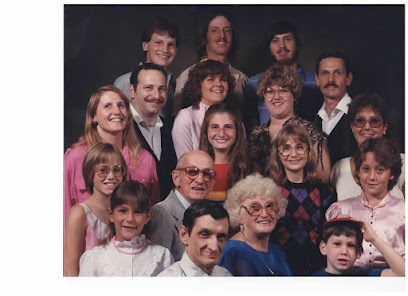
I was looking at a family picture today because Shutterfly sent it to me as a "remember this day" ad, and I do indeed remember the day very clearly. 

It's my mother's family, all of us except for one cousin and one aunt who couldn't come. It was a fundraiser my high school band was holding and we took the opportunity to get a family photo of ALL of us. The photographer had trouble getting us all in frame…maybe in part because we ranged in height from three foot to six and a half feet, or maybe because there were just so darn many of us. But it was a fun evening. We laughed so much, which is maybe why it's actually a pretty good picture with some genuine smiles in it. 

Two of my uncles, one of my aunts, and both of my grandparents are now gone, and I'm wondering how that can be, since I can remember this day so clearly, as if it were last week instead of three-going-on-four decades ago. 

2021 felt that way, too. As I write this, there's one more day in the year, and that doesn't seem right. 2021 never really felt like it started; it was more like 2020 just kept on going. So if 2021 never started, how can it be ending? 

So, I'm looking back at the year, because that's what we do at this time of year, right? Or maybe it's because I just read Mrs. Dalloway, by Virginia Woolf, a book about nostalgia, at least in part. Or maybe it's because one of the things I did in 2021 was turn 50, and that's what us middle-aged ladies do. I don't know. 

But here's my year that was: 

image source
Teaching:
I started 2021 teaching from home. My middle school had gone virtual starting in March 2020, like so many did. And we stayed that way until February 2021. 

It was a time of mixed blessings. I worried about my students, but was grateful for a way to keep teaching and still feel safe, in those pre-vaccine days. 

I had the best work-life balance I've ever had, and was really there for my family more completely than I've ever been able to manage before. Being home meant that my dog, O'Neill, who was losing a cancer battle, got to end his life with all of us at home to love him and care for him. 

I've always been a teacher who enjoys using tech tools to support my practice, but I became extra adept with learning management systems, video lesson presentation, and teaching via Zoom. Learning was different than it had been before, but it still happened, and some kids thrived on it. 

February-June 2021 were the hardest months of my teaching career (and I've been at this for 27 years in a variety of places and settings). I never considered quitting as often I did during the months where I did two jobs at the same time (as an online teacher and in-the-classroom teacher at the same time), under constant stress of uncertainty and threat of severe illness. Everyone who taught during this time should get double credit towards retirement. 

When the school year ended, everyone lost their minds panicking over "learning loss" (as if you only get one chance in life to learn 7th grade math concepts and the world will end if you didn't get it on the usual time table) and teachers were strong-armed, pressured, and bribed into working various summer programs. 

I knew how burnt-out I was, so I didn't take that work. I'm still glad I didn't, though the extra money would have been nice. Because when school started up in August, I hadn't recovered from the 2020-2021 school year yet. I was still crispy around the edges. It's rough to start a school year only a step away from burnt out. 

This school year has been strange in all new ways. So many people quit. So what felt like half the staff was new, and throughout these first four months (August-December 2021), lots more people have quit, taken early retirement, or suffered medical consequences that kept them out on leave. 

We had two teaching positions at my school that went unfilled until early December and were covered by long-term subs. Often, when a teacher was absent, there was no sub available to cover their classes, so safety precautions and policies were thrown the wind, putting two classes in together and giving up all possibility of social distancing, or taking non-teaching staff (librarians, counselors, teacher's aides, etc.) and taking them out of their own work to cover absent teachers. 

At least I work somewhere that is trying to find a balance between safety and learning. Some of colleagues have not been as fortunate. I'd have to quit if they didn't. But they have a vaccine mandate for staff, mask requirements for everyone, and keep us stocked in air filters and disinfectant spray. So far, I've stayed healthy, despite having one to five students a week who go on isolation or quarantine.   

I've found some joy with my students in person again, even with all the restrictions we have to work within, and most of them, now that they've seen what school is when it's not in-person, are cooperative and grateful and trying hard. But it's still challenging, given that kids disappear for days and weeks at a time and information sharing is sketchy, making it hard to know when to give grace and when to push for productivity (not that it's ever easy to know). 

I haven't quit yet, but I have submitted some resumes for non-teaching jobs. We'll see what happens in 2022. 

Writing
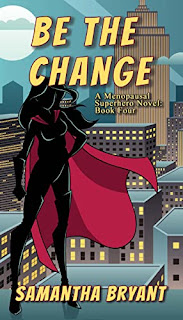
: I began 2021 with a big deadline: the fourth Menopausal Superhero Novel, Be the Change (which released on December 16, 2021), was due to my publisher on January 1, 2021. 

I missed that deadline, the first time I've missed a deadline in my writing life. I turned it in on February 1. Considering how screen-burnt I was in 2020 and how difficult it was to write during that time, I'm proud that I finished the book even CLOSE to on time. 

As soon as I turned it in, I turned my attention back to the Gothic Romance I've been working on these past two years (working title: The Architect and the Heir). I was hoping to finish it by the end of summer, before I had to put it aside to work on the fifth and final Menopausal Superheroes novel, due (under renegotiated deadline) in April 2022.

I didn't finish it in time. I've always been a slow writer, compared to many of my friends and colleagues, and that became a serious frustration in 2021. 

Now, as we finish the year, I've got 20,000 words in on that fifth (as yet untitled) novel. It's proving difficult to write. Since I intend it to the be the last, there's a lot I need to wrap up from the entire series, while still making sure the book has an individual story of its own. 

Because teaching life left me so crispy I'd be a hit at Kentucky Fried Chicken, I didn't have a burst of productivity in my writing life over the break like I usually do. I'm hoping that the rest I gave myself during these two weeks will allow me to begin seeing good progress again in January. 

Still, it was not a year to sneeze at for new words written: According to my writing tracker (I use Jamie Raintree's Writing and Revision Tracker and highly recommend it), I wrote 394,333 words in 2021 (on various projects) and revised 278,544 words. My daily writing chain is now eight years long. 

I had two short stories published in paying markets. "Poison" in Enchanted Conversation and "Boy Chick" in Apex & Abyss. I saw another novel through publication. It wasn't the kind of success that lets a girl quit her day job and write full time, but it wasn't bupkis either. 

image source
Getting Out Into the World: 
In 2020, I dug into life as a Hobbit, and came to appreciate going slower and being home. 

But in 2021, vaccinated and caffeinated, I ventured forth again, taking some opportunities for my writing life, and taking a couple of small trips. Not as many, and with more caution than before, but I got out there. 

In 2020, I attended one convention, MarsCon in January, before conventions started shutting down, cancelling, or even folding. After building up a schedule of appearances and events over the past few years, it was weird to suddenly stop doing that. 

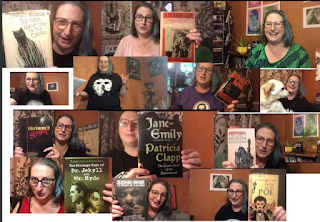
Since my day job involved so much screen time, I wasn't thrilled about zoom events for my writing life, but I did a few. (Con-Tinual gave us all a chance to connect with readers that way, as did Strong Women, Strange Worlds. A pretty complete list of my video appearances can be found here.) Video appearances are easier in some ways--no travel, mitigates geographic distance, potential wider audience--but they are not the same as the energy of an in-person room and the kinds of connections made that way. 


In summer 2021, convention life opened up a bit again, and I attended Con-Carolinas, Con-Gregate, Galaxy Con, and a library Pop-Con. It was really good to see my writing friends again in person. I'd missed them terribly. I have become more cautious about my energy, though, and plan to do fewer conventions and more single-day events in 2022. 


I also managed a visit to Kentucky for my mother's birthday, and she and my dad managed a visit down here for mine. Sweetman took me on a trip to the mountains to celebrate my fiftieth birthday. My long-time writing critique group (which had moved to Zoom), began meeting in person again after we were all vaccinated, and we took a short retreat to Lake Gaston in the fall. 


The big trip was a visit to New York City in October, when Broadway re-opened. I had never been and really enjoyed my few days there, though it solidified my understanding of myself as a rural girl at heart. 

We ate lots of good food, saw iconic sights, and really enjoyed the production of Six: The Musical. We haven't had that many cool travel opportunities with our youngest child, so it was great to spoil them with this trip. 

Throughout it all, I continued to walk in the woods, finding stress relief and solace in walking among the trees. 

Starting in July, two new friends joined me for those walks, when we adopted two new rescue dogs: Ghost and Pumpkin. 

They are wildly different than O'Neill was, but they have brought a great deal of joy to our lives. 

Our holidays were quiet, but lovely and we took our time away from school and work restfully and gave ourselves time to recuperate and recharge. 

So, that's my year that was. Not bad for my fiftieth one on the planet. I hope 2021 brought you joy as well, and that 2022 will give us all more reasons to smile. 


Tuesday, June 22, 2021

Flirting with Feminism, 1940s Style

Coincidentally, I picked two movies that premiered in 1942 for my watching this week: Now, Voyager with Bette Davis and Woman of the Year with Katherine Hepburn. Both are striking for their exploration of roles of women, and both left me frustrated by not quite being willing to go all the way. 

In Now, Voyager, Bette Davis plays Charlotte Vale, a woman from a wealthy and respectable Boston family ("Oh, one of the *Boston* Vales"). When we meet her, she is thoroughly cowed by her overbearing mother and deeply unhappy, though her very frustration with her role points to a stronger spirit beneath than sometimes makes itself known. Her story is one of coming into herself. 

In contrast, Katherine Hepburn's Tess Harding in Woman of the Year is a woman very much in charge of her own life, sure of herself and cutting a wide swath in the world as an activist, columnist, and speaker on a variety of social and political issues. Her story is one of coming out of herself a bit. 

Both roles were well suited to these iconic actresses. Who better than Bette Davis to drown us in big, emotional eyes and delivery fiery lines with passion? Who better than Katherine Hepburn to hold tears in a tightly controlled face, resisting the revelations of self laying themselves before her? 

But neither story satisfied me. 

I am wary of stories that romanticize infidelity, due to my personal feelings about marital infidelity, so Now, Voyager had a hard row to hoe winning me over, since a central tenant of the story is the love between a married man and a woman who is not his wife. We're meant to sympathize with the man who made a bad match and is now "trapped" in a loveless marriage (though we never see that wife or marriage for ourselves). To his credit, he was never dishonest about the fact that he was married and had no intentions of abandoning his family and starting anew with our heroine. 

So, one could argue that our heroine knew what she was walking into. I found I had complex emotions, watching the way that they influenced each other while still maintaining separate lives: he returning to the work he loves with her encouragement, she finding confidence to stand up against her bullying mother with his support. Was he an obstacle to her finding happiness with someone else? Or was her own heart the true obstacle?

The story gives Charlotte the opportunity to marry someone else and she turns it down admitting to herself and her potential husband that she doesn't love him. 


What the story doesn't quite make clear is the line between self-sacrifice and self-determination. I could read her eventual care for her would-be-lover's daughter in either light. I've ordered the novel, hoping that I'll get a bit more of the interior life of the main character and understand better why she made the decisions she did. 

In the end, Charlotte made a life for herself that was truly independent, without a mother, husband, or even would-be-lover to tell her what to do, but she still seemed apologetic about it, and I guess I wanted her to embrace it fully. 

That ending line is a honey though, full of ambiguity and poetry.  


(And oh my, how sexy they make cigarettes. I wonder how much the tobacco industry paid for that placement). 

In Woman of the Year, I found myself wondering why two intelligent people like Tess Harding and Sam Craig could ever have believed a marriage partnership between them would work. Maybe it's intended as a lesson about how a sexual charge isn't enough to base a marriage on? (They do really sell that sexual charge, though): 


It's not as bad as Bringing Up Baby where I find myself screaming "Run!" at Cary Grant's Dr. Huxley, hoping he does not get eaten alive by Hepburn's manic pixie dream girl. 

But all the same, Spencer Tracy's Sam Craig seems to be a man who knows what he wants and all signs point clearly to danger! I don't buy that he didn't see it. 

Tess doesn't see him as an equal and shows him again and again that he is not first in her heart, or even second or third, but quite low down the list with things nice to have, but not truly necessary, like a pretty lamp or a pet poodle you pay someone else to walk for you because you don't have time. 

But he marries her anyway. And Hepburn gets her trademark self-realization moment, which she sells beautifully, but at the end I still don't really believe they're going to work as a couple. Honestly, the only thing that holds the romance together is the on-screen chemistry of Hepburn and Tracy, because it's not there in the story. 

While Tess is arguably a feminist character, having built an impressive brand as "Tess Harding," the story falls back on the old saw that ambitious women must feel the lack of love partnership in their lives. Certainly some women (me, for one) want both a husband and a career and manage to have both, but there's nothing in this movie to convince me that Tess ever felt the lack of a husband in her life or wanted to make significant changes to how she lives her life to make room for one. Other than possibly sexual spark, I never saw anything in the story to explain why she wanted him at all. 

One of the keys to traditional romance stories is that the reader/viewer should be cheering for the couple to get together, and I wasn't actually doing that in either of these films. Yet, I liked both main characters and hoped for their happiness. I guess they work for me as sort-of anti-romances. 

If you've seen these films, I'd love to hear what you think in the comments. Same if you have suggestions for other films of the 30-60s with strong female leads for me to check out!

Wednesday, September 2, 2020

IWSG: Seeing the Weird in the Ordinary


Welcome to the first Wednesday of the month. You know what that means! It's time to let our insecurities hang out. Yep, it's the Insecure Writer's Support Group blog hop. If you're a writer at any stage of career, I highly recommend this blog hop as a way to connect with other writers for support, sympathy, ideas, and networking.

If you're a reader, it's a great way to peek behind the curtain of a writing life.

September 2 question - If you could choose one author, living or dead, to be your beta partner, who would it be and why?

The awesome co-hosts for the September 2 posting of the IWSG are PJ Colando, J Lenni Dorner, Deniz Bevan, Kim Lajevardi, Natalie Aguirre, and Louise - Fundy Blue!
_________________________________________________

image source

I've been fascinated with Shirley Jackson's work since I first encountered her book We Have Always Lived in the Castle in my library when I was weird thirteen year old kid. 

I've returned to her work over and over since then, revisiting her work once a decade or so--re-reading favorites and finding new pieces I've missed. Even though my own writing is not disturbing in the same vein as Shirley's, I feel a connection to her, as if she speaks something inarticulate from deep inside my own consciousness. 

Recently, I watched the quasi-biopic of her, based on the novel by Susan Scarf Merrell, and that feeling of connection was only strengthened. (The book/movie isn't accurate in a biographical sense, BTW, but it evokes a feel that I believed). 

Like Shirley, I am ill-suited to be a housewife, even though I love my husband, my home, and our children and sometimes revel in taking care of them--and sometimes wish they weren't there, so I could focus on my life of words. We'd have that push and pull in common. 

I, too,  have a creative bent, and though I look pretty darn normal on the outside, it's more than a little weird inside my brain. Sometimes my mundane life and the worlds within my mind don't mesh well.

It's probably why her horror works so well for me. We both see the weird in the seemingly ordinary.

Luckily, I'm living my adult years in a different era than she did--she died six years before I was born. The expectation that I would marry and devote my life to only the work of household and children still lingers in the corners of my experience with other misogynist mumbo-jumbo, but no one is terribly shocked to learn that I work full time, or that I write. Those limiting views of femininity and a woman's role in the world have lost cachet and are no longer the norm, at least not that in my peer group. 

I don't face social censure for the kinds of things that I write either. Not like she did. I also have a better husband than she did (at least as far as you can judge someone else's husband from what you see from the outside of the relationship).

I don't know that Shirley would have liked my work. She might accuse me of being too light or fluffy. But I suspect that if I could thicken my skin enough to take her criticism, my work would be the better for it. She would call me on it when I try to pull back from hard emotional moments or take it too easy on characters I've grown attached to, even more than my real-life critique partners do (and they don't really pull any punches--especially not Rebecca). 

Would Shirley want or respect my opinion on her work? Maybe? I do have a lot of practice, as a middle school teacher, giving constructive criticism kindly and with support and compassion interlaced. And my admiration is sincere. I would mean the praise I offered. 

Given the chance, I'd sit on the veranda with her and talk about the life of words, even if I had to put up with her cigarette smoke to do it. I like to think we'd get each other. 

Wednesday, July 1, 2020

IWSG: When Smaller is Better


Welcome to the first Wednesday of the month. You know what that means! It's time to let our insecurities hang out. Yep, it's the Insecure Writer's Support Group blog hop. If you're a writer at any stage of career, I highly recommend this blog hop as a way to connect with other writers for support, sympathy, ideas, and networking.

If you're a reader, it's a great way to peek behind the curtain of a writing life.

July 1 question - There have been many industry changes in the last decade, so what are some changes you would like to see happen in the next decade?

The awesome co-hosts for the July 1 posting of the IWSG are Jenni Enzor, Beth Camp, Liesbet @ Roaming About, Tyrean Martinson, and Sandra Cox!
_______________________________________________

In most of aspects of life, I'm a believer in the power of the small. I shop small businesses, live in a
image source
small town, and teach in a small school. I look for small beauties in daily life and take small steps toward my goals. I don't like crowds or high pressure socializing. I lack good small talk. I'm impatient with slick insincerity. 

I've come to believe that the fewer rings in the circus, the more likely it is that the performance will hold together. 

When I began seeking publication though, I looked "big" to begin with: The Big Six publishers (now the Big Five), agent representation, publicists, etc. I'd bought into the idea that you had to do it that way--that you weren't a "real writer" if you didn't. 

It didn't take long to learn that I wasn't well suited to that rarified atmosphere. 

I became impatient with the glacial pace of giant companies and agencies that can take six months to a year just to send a nonspecific rejection. I lost faith that having an agent would actually benefit my career, having watched several colleagues share their small incomes with an agent in hopes of "hitting it big" only to find that it didn't really bring them any opportunities they couldn't have garnered on their own. I learned that profit share was often not that high, even if you hit it big. 

image source
I still dream big, imagining my books being picked up and turned into a movie or a Netflix series: who wouldn't like to see more attention for their work and more money in their pockets? 

But, I'm not sure I have the schmooze in me to handle the glad-handing, networking, and PR machinations. I'm not sure it's worth developing those skills if I feel like I lose myself in the process. 

When it comes to publishing? I've stopped spending energy on trying to get an agent or leaving manuscripts languishing in big house slushpiles for years at a time. 

Instead, I've looked small: small publishing in particular. 

While I am working on my first independent publishing project, in hopes of getting it together by October of this year, I'm not ready to make it as an author-preneur.  I do this part time, in addition to full time teaching work and there are only 24 hours in the day. I need help. 

So, that means traditional publishing is for me! 

I want a situation where a lot of the work of bringing a book to readers is handled by someone besides me: arranging for editing, designing a cover, deciding on production details, laying out and designing the book, arranging for distribution, finding reviewers, etc. 

Sure, as an author whose writing is published by a small press, some of this work comes back around to me (and I'm grateful that my input is sought and considered), but I get the advantage of having a team behind me that can fill in the skills I don't have and teach me what I need to learn to move forward. 

My main job in my writing life is to write, not to become an expert in SEO and maximizing social media. 

So, for myself anyway, I'd like to see the industry get smaller. 

Bigger is not always better. The personal is lost. Creativity can become stunted when its forced to fit into boxes--and big business doesn't like to take risks. They like *known* quantities. 

That's why so many big Hollywood movies feel just like every other big Hollywood movie, why "bestselling" novels often bore me to tears and are entirely predictable from page one. Big gets big and stays big by making safe choices, and as a creative and as a consumer of media, I want risk, surprise, and nuance. 

If that means I stay small, so be it. At least I'll be happy. 

Tuesday, June 16, 2020

Switching Gears

image source
I've been working on a novel for about a year (a gothic romance, working title The Architect and the Heir). It's going well and I want to keep plugging away on it. I gave myself "until school ends" to finish a draft…and I failed to do so. 

I made great progress, especially considering that I do this part time and you know…COVID, police violence, terrifying fascism rearing its ugly head everywhere. If 2020 is the year of seeing clearly, I sometimes wish I could back to being blind. 

And now, I have to shelve A&H and switch gears, hard turn to starboard. 

The reasons are positive. I have a contract! That's a lucky position for an author to be in: knowing I have a publisher ready and waiting for my book, willing to help bring it out there into the world. 

But contracts come with deadlines--external deadlines, imposed because of schedules for editing, proofreading, cover art, etc. My next deadline is January, which means it's time to set down Devon and Victor and pick up the Menopausal Superheroes again or I won't make it. 

Image Source


I'm also coming back to this series after a nearly two year break during which I worked primarily on other fiction: short stories, editing for work that already been submitted, and another shelved novel before this one. So, I'm feeling a little daunted. 

This is the first time in my writing career (all five years of it) that this has happened to me. I've heard other writers talk about juggling different projects and now I finally understand how wrenching it can be to slam on the brakes and screech to a halt, leaving good rubber on the road, so I can keep my promises. It's not that I don't love the other projects, too--I totally do! It's just the moment of switching gears that hurts a bit. 

I'm hopeful though, that Devon and Victor will be there waiting for me when I come back to them. I've made good notes about where the story is going. I have already managed to set it aside three times in the past few months to complete edits on novellas for the Menopausal Superhero stories, and each time I fell back in within a few days. 


Any advice for me on switching gears and finding my groove on the new thing quickly? The clock is running guys, so I need to get this booty moving! I'd love to hear your ideas in the comments!

Wednesday, March 4, 2020

Scattered Focus: IWSG March 2020


Welcome to the first Wednesday of the month. You know what that means! It's time to let our insecurities hang out. Yep, it's the Insecure Writer's Support Group blog hop. If you're a writer at any stage of career, I highly recommend this blog hop as a way to connect with other writers for support, sympathy, ideas, and networking.

If you're a reader, it's a great way to peek behind the curtain of a writing life.

The awesome co-hosts for the March 4 posting of the IWSG are Jacqui Murray, Lisa Buie-Collard, Sarah Foster, Natalie Aguirre, and Shannon Lawrence! I hope you'll check out their blogs as well as some of the others on this blog hop after you see what I have to say.
____________________________________________________

In some ways, I'm a very disciplined writer. I write every day and have for more than six years now. But as my career has progressed, I feel overwhelmed by commitments and by "shoulds" sometimes to the point that my energy feels completely scattered, so even when I am being very productive, I feel like I'm not, which makes it hard to keep heart.

Currently, I try to:
  • post on instagram daily
  • blog once a week
  • participate in some kind of promotional activity for my published work once a month
  • move forward in the WIP novel every week
  • take advantage of short story opportunities (invitations, interesting open calls) as they arise
  • keep my unpublished work on submission 
  • meet deadlines for work I've got in process (edits, proofreads, submission dates, etc.)
  • keep up with communications (emails, responses to social media)
  • send a newsletter once a month to my subscribers
  • journal or do day pages often enough to let new ideas develop on the back burner
  • track the business end of things to make sure my contracts are followed and royalties are paid
  • play (write things that I don't have solid goals for, but am writing because I want to and enjoy it)
That's a lot to balance. Especially when you consider that I do this alongside a day job (teaching middle school Spanish) and house and family responsibilities. I can generally get 1-2 hours for writing life on a school day and 4-5 on a school holiday. Though I think it would still be a lot to balance if I were a full time writer without other jobs. 

When I talk to other writers about this, I get a lot of sympathetic nods, but not many solutions offered. I know I'm not alone in the struggle to pursue my dreams while still keeping a roof over my head, a car to drive, groceries, and insurance for my family. 

Saying no is scary--refusing opportunities can mean that you don't get a repeat offer or that you miss out on something that might really have served you well. But all the same, I'm learning to use that word more often, to really analyze each blip across my radar and consider whether it's helping or just keeping me from focusing "where it matters." 

I guess that's the real rub: figuring out "where it matters." 

How about all you other creatives out there? How do you choose where to focus your energy? What balls are you juggling to keep your creative life moving in the direction you want? How do you keep heart when it gets overwhelming? Inquiring minds want to know! Tell me in the comments!

Wednesday, August 14, 2019

Summer's End


LeSigh. Can summer really already be over? I didn't get it all done again, of course. Doing *everything* I want to do every summer would require at least five women, and my cloning experiments failed (my daughters turned out to be their own women, with their own things they want to do).

Still, it was a good summer. As I start to have end-of-summer panic, I need to remind myself of that.

Longtime readers already know that I'm a middle school Spanish teacher in my day job, and that writing novels is my secret identity (which I'm trying to make less secret, so people will know I write books and maybe even buy them).

So, summer is, in part, about self-care and recovery for me. It's also my time to live life as a full time writer for a few weeks. So, I'm always trying to balance writing productivity with rest and recuperation and progress on all those life tasks that are hard to complete when I'm not available during business hours (August-June).

To feel good, I really need all three things: rest, writing, and life/project time.

As I write this, I'm at the beach, making sure that I end my time with sea salt on my skin and a brain scrubbed clean by sand. I did pretty well on the rest and recuperation angle.

I walked damn near every day with my dog, ate breakfast (a luxury I can't find time for during school), read sixteen books (and may finish another one or two this week), visited my parents for a few days, took a nap a few times (I'm terrible at napping, even when I need to), and watched more television than I watched in the entire six previous months (I finished a few shows: Good OmensWynonna EarpThe Marvelous Mrs. Maisel, Black Lightning, The Boys, and, of course, Stranger Things). I started Downton Abbey, so that'll probably take me all school year to finish now :-)

Home/life productivity gets a middling score. There was one big thing I wanted to get done involving paperwork and I didn't get there, because I couldn't find all the right pieces. I admit to procrastinating on looking, and I'm mad at my past self for being so bad at sticking to ONE organizational system for important papers so you can find them when you need them. Luckily there isn't a hard deadline on that one, so I can keep looking and get it done this fall.

I did work out some financing for a home improvement project that will make a big difference to our lives, and I did get my home office several steps closer to the space I want it to be. I'm especially proud of that since everything I've done in there, I've paid for with writing money only (which is why it's all DIY and second hand, but still: I paid for it with my writing money).

Some of my home/life project energies went to my oldest daughter, helping her arrange her college monies for fall and move into her FIRST APARTMENT! (yikes, I'm old).

Writing went well. I set aside the novel I've been working on for the past year (YA dystopian romance, working title: Thursday's Children). It needs more time to simmer before I can get that dish ready to serve and I finally admitted it.

I started a new novel (gothic romance, working title: The Architect and The Heir) and made lots of progress on my first all-indie project, a collection of 13 weird tales I plan to release this Halloween, choosing and organizing the stories, self-editing, arranging for cover art and professional proofreading, and learning some new software for formatting.


My daily writing chain is now 2,144 days longs (nearly six years), and summer's work included nearly 35,000 words on the new novel. It's flowing well, which speaks to the importance of following your passion in your writing (another balance: between focus and dogged stubbornness).

I've wanted to write a gothic romance since I first read one, when I was around eleven years old. It took me a while to actually do it, but it's the most fun I've had since the first Menopausal Superhero novel.

I think I probably wrote this post primarily for myself, to look back on in a couple of weeks when I'm haranguing myself and accusing myself of having wasted my entire summer once I'm buried up to the neck in schoolwork. After all, I hold myself to very high expectations on a lot of fronts. I'm meaner to myself than I would ever be to anyone else. So, it's good to make myself admit from time to time, that I got this!

Wednesday, May 1, 2019

IWSG: Overwhelmed


Welcome to the first Wednesday of the month. You know what that means! It's time to let our insecurities hang out. Yep, it's the Insecure Writer's Support Group blog hop. If you're a writer at any stage of career, I highly recommend this blog hop as a way to connect with other writers for support, sympathy, ideas, and networking.

If you're a reader, it's a great way to peek behind the curtain of a writing life.

This month's wonderful co-hosts are Lee Lowery, Juneta Key, Yvonne Ventresca, and T. Powell Coltrin!

Be sure to check out their blogs (and others on this great blog hop) when you're finished here!
_______________________________________

I forgot to post this morning. That's how overwhelmed I am. I mean, I can give you a list of excuses, but I really look forward to this post every month and it completely slipped my mind. That's not like me.

Obviously I'm juggling too much. But what can I drop?

I did say no to a few things this spring, trying to help find a better balance. I didn't apply for any conventions or author events in February, March, or April, giving myself back several weekends of time for other things. I also left my long time critique group, deciding to be a little more selfish with that time as well.

But then I said yes to other things, helping to organize a few events for my Friends of the Public Library group, and taking on teaching a new class for a local community college.

I think I'm still suffering from what I complained about last month: the demands of a full time writing life squashed into part time hours leaving me feeling a day late and a dollar short all the time.

I'd love to hear tips from others who manage a writing life while holding down a day job. How do you make it work without driving yourself crazy? What do you let drop?

Wednesday, January 16, 2019

Marketing for Introverts

Hi! I'm Samantha, and I'm an introvert. In fact, I'm really happy that we're having this little talk here on the Internet, where I don't have to actually talk to you.

It's not that I'm not friendly. I bet I'd even like you. It's that I'm still recuperating after participating in a fan convention this weekend for my writing life.

Being a writer might seem like a natural job choice for an introvert. In some ways, it's an excellent fit.

Doing the work requires spending copious amounts of time alone.

The work itself is usually pretty quiet (just some keyboard clicking or pen scritching noises).

You can do the work wherever you are most comfortable.

On the other hand, if you want to make a career of writing, you can't *just* write. You have to put your work out there for others to read.

Then, there's the marketing, that second job of garnering attention for your work and being discoverable. That can be pretty painful for a introverted person, but I'm here to tell you that it can be done.

At Illogicon last weekend, I participated in a wonderful panel on this very topic with some talented introverts: Gray Rinehart, Claire Wrenwood, Patrick Dugan, and Fraser Sherman. We all agreed that you can make a career as a writer without undergoing some kind of alchemy and becoming an extrovert, and that in some ways, introverts might be especially well suited to it.

So, here are a few things to consider if you're an introvert and trying to promote yourself and your work.

1. Take it slow: A lot of people seem to think that building a writing career and support network is a sudden quick movement, like sweeping the legs in a kickboxing match.

It's not.

Not even for extroverts.

Building contacts and relationships is the work of years, and luckily, it's the kind of work introverts are good at! We may not be comfortable standing behind the megaphone and calling for the attention of everyone in the room, but we're great one-on-one and when we get to know someone, we usually get to know them well. Our relationships are deep and strong and lasting.

When you are meeting new people, be reasonable in your expectations for yourself. I'm happy if I make one or two new initial contacts at any given event. I'm not trying to go home with my pockets bursting with business cards. I'm trying to make a few meaningful connections.

2. Pick your poison:  There are a lot of ways to put yourself out there as a writer. You can give readings, participate in discussion panels, teach workshops or classes, hand sell books from a table or booth at an event, make videos about your work, tweet cleverly, blog, etc.

Some of these things will scare the heck out of you, and some may only make you nervous. Pick something you feel like you can do and try it. You can push yourself a little at a time, and you don't have to put yourself out there on every possible platform.

Look at events carefully, think about your comfort levels, and plan accordingly. I enjoy doing fan conventions, for example, but I tend to stick to small and medium sized ones relatively near my home base.

I take my sister with me whenever I can because it's good to have someone more outgoing with you and someone who will help you take care of yourself when you need it. Even better if that someone loves you and understands your needs and limits.

I like panel discussions because they have a clear structure and don't require me to "make the first move" like approaching someone at a booth or table does. Someone will call on me when it's my turn to talk.

I ask convention organizers not to schedule me for late night programming because it's harder for me to be entertaining and clever and "on" when I get tired.

Over time, this has gotten more comfortable for me because I've gotten to know more and more people, so often attending an event means I'll be among as many friends as strangers. I find that VERY comforting.

Though Dragon Con is the BIG con near me, I have yet to apply, because I know how stressful I would find it to navigate the halls of such a large free-for-all event. Maybe I'll get there someday, or maybe I won't. We'll see.

For now, I'm feeling good about how much more comfortable I feel with what I'm doing now.

3. Self-Care! Everyone needs self care, but introverts may need to tend to themselves a little sooner and more specifically than other folks (I wouldn't know; I've never been one of those other folks).

For me, that means being as careful as I can be with my schedule: making sure there are adequate meal breaks and quiet time, packing some good snacks.

That might mean that I skip some networking opportunities and don't go to the bar with the other writers after an event, or decide to spend time alone in my hotel room instead of sitting at my table or booth for two more hours (even if I miss a chance to sell a book that way).

If I don't give myself space to recoup my energies, I'm not going to make a good impression or make good use of those opportunities anyway.

It also means that I try to give myself decompress time after an event.

I'm writing this on Monday night and I got home from a convention on Sunday night. I had three different social invitations this evening, but I turned them all down in favor of sitting here quietly at my laptop. It was the right choice, especially since I'll have to be "on" again next weekend for the college class I'm teaching.

So there are my thoughts on how to make a go of this if you're an introvert. By the way, that panel? It was the most laid back and polite panel I've ever been on. I don't think anyone talked over someone else or interrupted even once. And we left plenty of wait time for questions from our audience. :-)

Wednesday, November 28, 2018

Making A Room of My Own

I officially have an office now, guys. Since September, the smallest bedroom, formerly inhabited by the youngest kid has been my office. It's not painted or furnished as I'd like yet, but it's a room that's mine. It's been a good sixteen years since I had a designated writing space and I'm so excited!

Ever since I realized that sending a kid off to college was going to make this possible, I've been plotting. Here's my kit of plans for the room:


I already have a few things. Some plants sitting on folding tables. I've got a great couple of oddball lamps (thanks, Mom!). I've purchased two things: the comic book spinner rack I bought early this year even though I didn't have a place for it yet and last month: my hippo stool.

My hippo foot stool is the bomb--his name is Franklin and since he has a compartment inside him, he's a compartamus.


Other things I'm making do with right now until time and money coincide to let me do better.

We removed the Disney princess banner that came with the house and pulled off the weird low-level moulding that I guess was meant to affect wainscoting. We removed the crappy old blinds and child-pleasing draperies, leaving me an open unadorned window that lets me watch fall leaves fall in my back yard. I'm using a futon and a chair coopted from other parts of the house for now.

It'll be a slow process, turning it into my own space, but I can already write in there and that's already so good for my head space! It's lovely to just leave the book I was reading open and not worry that it's in anyone's way. It's wonderful to stick planning documents to my walls! It's great to close the door!

Do you have a room of your own in your home? A designated space for your projects and creations? What's the best part of it? Or what do you dream of doing to make it perfect?

Wednesday, July 18, 2018

The Art and the Artist

I was a guest author last weekend at ConGregate (a FANTASTIC small convention in High Point, NC that you should all attend if it's reasonable at all to your lives). I've written about it before: here, here, and here.

One of my panels this time was a conversation on separating the art and the artist.

Carol Cowles of the podcasts Guardians of the Geekery and Out of Our Skull moderated a panel of me, sci-fi/fantasy author and publisher Nicole Givens Kurtz of Mocha Memoirs Press, and sci-fi/fantasy author and editor Margaret McGraw.

It's always epic to have a conversation with intelligent, thoughtful, well-read, and articulate women like these three, but this discussion has really lingered with me. It's still resonating several days later.

What's a reader/viewer/media consumer to do when a work of art you love is sullied by realizations about the creator?

When you find out the author is a racist, misogynist jerk, or the actor sexually assaulted someone?

Are you a bad person if you still admire the work? Or a hypocrite?

The four of us couldn't solve this quandary in a fifty minute conversation at a convention, but we did break it down a little and how it works for us when we find we have a problematic love. The big conclusions I walked away with:

1. Context is everything: consider the timeframe and life experience of the creator. (Especially useful when we're talking about classic works of history)

If you read or view media that is more than fifty years old, there's a high probability that you will find attitudes that seem old-fashioned or even outright offensive to modern sensibilities (and not just if you're liberal; conservative views have evolved, too). Art is always part of the era in which it was created and artists are people with beliefs and attitudes, too. (NOTE: there's plenty of misogyny, racism, and hatred in contemporary work as well, but I don't give it a "bye" like I might in an older work).

So, do you throw Herman Melville's Moby Dick back into the sea unread because of the cringe-y chapter with the black cook? (Or Queequeg?) Do you burn copies of the First Folio because of antisemitic jokes in Shakespeare's plays? Is Rochester still hot even though he locked his first wife in the attic when it became clear she was mentally ill?

If you follow me on Goodreads, then you know that I read a fair amount of classic literature. So, I run into this quite a bit.

There are some classics I can't get through because the bile fills my mouth until I'm ready to vomit. There are others that I can grimace through a section that makes me feel uncomfortable because there's enough to the rest of the work to keep me pulled in and engaged.

I don't write off the problematic attitudes entirely and automatically as "well, it was different back then" because that's only partly true (I'm looking at you HP Lovecraft, considered racist by your own peers even "back then."). But nor do I refuse to read anything that reflects a world view I disagree with.

A major part of why I read is to learn. To walk in someone else's metaphorical shoes and see what it is like to be them and live their lives. That includes learning about people I wouldn't want to invite to lunch. Understanding is at the heart of growth and change.

2. Attitude in the art: is the attitude or belief that troubles you evident in the work itself?

When I'm reading a living author, currently writing, it's pretty easy to learn about their lives and attitudes. Like many contemporary readers, when I like someone's work, I check them out on social media, follow their Twitter or Instagram, subscribe to their newsletter, attend their public events.

That's not always great for my enjoyment of the work. I learn things I wish I didn't know.

More than once, I've learned that someone who made a piece of art I enjoyed is not a good person by my personal moral compass.  Sometimes, this changes how I view their art. I can't, for example, watch anything with Woody Allen in it anymore without getting slammed in the face by all the troubling sexual attitudes, when once I would have laughed those off as comic exaggerations.

But, sometimes, I don't find the "problem" in the work. There are some writers I have enjoyed reading that I was genuinely surprised to learn held attitudes I find offensive. HP Lovecraft's racism is directly in the work. You don't even have to dig for it. But when I read Ender's Game by Orson Scott Card, I didn't notice an anti-homosexual agenda, even though I now know the author has one (I haven't gone back and re-read since I learned though, so I don't know yet if it would color my perception of the work).

But then…especially if the author is still living, I have to consider what I'm supporting with my money:

3. Follow the money: Are you funding bad behavior that you don't support by buying this work?

When the #metoo movement started uncovering poorly hidden predatory behavior in Hollywood and other media, I felt gut-punched more than once. Someone whose work I admire was revealed for the ugly face beneath the pretty mask and I learned once again that actors ACT, so it's a mistake to conflate actors with the characters they play.

But, when I go to a movie, my dollars don't all go to that actor. A movie employs a LOT of people doing a lot of different kinds of work. Of course, if an actor stops being a box-office draw, they will stop being cast, but I don't generally go back and destroy all the copies of movies I already have and enjoyed before the fall. I might even still see a movie with a problematic personality attached, depending on how intrinsically linked the project and the person are.

With a book, there's also a production team, but it's much smaller, and it definitely feels like more of my dollars are going to the writer. So, just like I don't eat at some restaurants or buy some kinds of products because I don't want to hand their owners dollars to ruin my country with, I also don't buy books by people like this. If I want to read them still, I borrow from my library or buy second-hand to mitigate the financial aspect of support.

So how about you, friends? How do you handle it when you learn something troubling about an artist? Or are the art and the artist completely separate in your mind? Would love to hear your thoughts in the comments below.