Showing posts with label teaching. Show all posts

Saturday, June 11, 2022

Leaving Teaching

I've been a teacher my whole life. Just ask my cousins and my poor little sister about the days when I forced them to play school with me in the basement, when I was five and they were still toddlers. I even had school desks and a chalkboard. I made worksheets for them and corrected their letters. 

Admittedly, I was a bossy little thing, and that probably had something to do with it, but it's also about sharing an enthusiasm for learning. What can I say? I LOVE school.  Learning and books are part of my soul. 


image source

I was probably only six or seven when I started telling people that I was going to be a teacher when I grew up. I was also going to be a witch, a dancer, a veterinarian, a reporter, a writer, and an astronaut…only some of those stuck. 

Unlike most people I know who changed their minds multiple times about what to be as they grew up, I stuck to that childhood plan of becoming a teacher. The only thing that changed was what level I thought I wanted to teach (elementary, middle, high, college). 

I went to college and earned a degree in English education with minors in Spanish, Creative Writing, and a sort of Humanities add-on they called "Honors." Other than a minor gig with my college public radio station and a brief secretarial job, all my work life was teaching or education adjacent. I tutored, served as a classroom aide, subbed, and taught in my own public school classroom, in summer programs, and on college campuses. 

The work was never easy, but it was worth it. There's such power in being there at the moment of elucidation or new comprehension or boundaries being stretched and helping people gain the tools they need to make their goals and improve their lives. I felt useful, important…like I made a difference. 

Even now, after 27 classroom years, I still believe public education is the most important idea to rise out of American democracy: the idea that ALL citizens have the right to education was and is ground-breaking and represents all that is best about my country. (we can talk another day about the forces trying to kill that from within). 


image source


You knew there would be a but, right? 

The realities of choosing a teaching life can be pretty grim. Nearly always, it means sacrifice in other aspects of your life. 
  • You'll always earn a low salary, especially considering the education required, the importance of the work, and the stress and danger involved. 
  • It's the only profession I know of where people who have never attempted the work themselves (or worse yet: FAILED at it) are in charge of the system, and the whole world thinks they know better than the trained professionals how to do the work. (Well, maybe mothering--that also came with a TON of irrelevant, hateful, and unwanted "feedback" from people who don't know a darn thing about it--we can talk another time about misogyny and the value of women's work). 
  • You might as well change your middle name to scapegoat, because you'll collect ALL the blame and none of the credit.
  • The stress levels are sky-high and self-care is just two words people like to say, about as useful as sending "thoughts and prayers" during a tragedy. No one means it; no one cares. 
  • It's physically dangerous. More schoolkids than police officers have been killed in our country this year by gun violence, and their teachers die trying to save them. Between school violence, stress-related health damage, unsafe and poorly maintained work environments (school buildings), and contagious illnesses, teachers die from the work every day. Your life is on the line. 
  • You'll be overworked every single day. Schools are underfunded, which leads to being understaffed, which leads to one person shouldering a work load more appropriate for three to five people. 
  • People will call you a hero, but it's lip service they pay to avoid paying you in respect, support, or dollars (you know: things that MATTER and might make a difference). It's disingenuous at best, and often far darker than that. 
  • You'll feel helpless a lot because you can see the problems and what needs to be done, but you don't have the tools, time, or resources to fix things. It'll break your heart a little bit every day…and can eventually make you shut down out of self-protection. 

It's not sustainable. The system was built on the backs of women--something we allowed at a historical moment when it was hard for a woman to get paying work of any kind at all and have been stuck with ever since. When the entire system is predicated on the exploitation of the workers, there's something wrong. 

It's even worse in states like North Carolina: "Right to Work" states they call them. Anti-union is probably a step more honest. No protection for the worker--not even the basic protection I'd enjoyed in other states like a guaranteed lunch break every day or due process if I got fired. 

image source


I've thought about leaving lots of times. 

  • Sometimes I stayed out of passion--to try and make change from the inside.
  • Sometimes I stayed because I'd been gaslighted so much that I'd internalized the idea that the problems were about me instead of about the work conditions.
  • Sometimes I stayed out of exhaustion--too tired to put in the footwork to find something else. 
It was like having an abusive spouse in a lot of ways. You convince yourself that it's not as bad as it is. You stay "for the kids." Fear and manipulation reign over all. 

Well, reader, I left him: that abusive spouse I called a teaching career. 

Two weeks ago, I said goodbye to my last group of students and walked out into the sunlight. I'm corporate Samantha now, working as a content strategist for a large financial firm. I've had my new job for all of nine days as I write this, and it's already a world of difference in terms of stress and work-life balance. 
image source

It's telling, I think, that my primary emotion, intermixed with the sadness of leaving the children and some of my colleagues, was relief. 

Friday, December 31, 2021

2021, huh?

So, that was weird. 2021, I mean. 

Time is always weird, of course. But it's gotten weirder lately. 

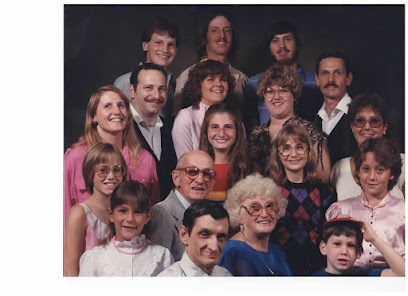
I was looking at a family picture today because Shutterfly sent it to me as a "remember this day" ad, and I do indeed remember the day very clearly. 

It's my mother's family, all of us except for one cousin and one aunt who couldn't come. It was a fundraiser my high school band was holding and we took the opportunity to get a family photo of ALL of us. The photographer had trouble getting us all in frame…maybe in part because we ranged in height from three foot to six and a half feet, or maybe because there were just so darn many of us. But it was a fun evening. We laughed so much, which is maybe why it's actually a pretty good picture with some genuine smiles in it. 

Two of my uncles, one of my aunts, and both of my grandparents are now gone, and I'm wondering how that can be, since I can remember this day so clearly, as if it were last week instead of three-going-on-four decades ago. 

2021 felt that way, too. As I write this, there's one more day in the year, and that doesn't seem right. 2021 never really felt like it started; it was more like 2020 just kept on going. So if 2021 never started, how can it be ending? 

So, I'm looking back at the year, because that's what we do at this time of year, right? Or maybe it's because I just read Mrs. Dalloway, by Virginia Woolf, a book about nostalgia, at least in part. Or maybe it's because one of the things I did in 2021 was turn 50, and that's what us middle-aged ladies do. I don't know. 

But here's my year that was: 

image source
Teaching:
I started 2021 teaching from home. My middle school had gone virtual starting in March 2020, like so many did. And we stayed that way until February 2021. 

It was a time of mixed blessings. I worried about my students, but was grateful for a way to keep teaching and still feel safe, in those pre-vaccine days. 

I had the best work-life balance I've ever had, and was really there for my family more completely than I've ever been able to manage before. Being home meant that my dog, O'Neill, who was losing a cancer battle, got to end his life with all of us at home to love him and care for him. 

I've always been a teacher who enjoys using tech tools to support my practice, but I became extra adept with learning management systems, video lesson presentation, and teaching via Zoom. Learning was different than it had been before, but it still happened, and some kids thrived on it. 

February-June 2021 were the hardest months of my teaching career (and I've been at this for 27 years in a variety of places and settings). I never considered quitting as often I did during the months where I did two jobs at the same time (as an online teacher and in-the-classroom teacher at the same time), under constant stress of uncertainty and threat of severe illness. Everyone who taught during this time should get double credit towards retirement. 

When the school year ended, everyone lost their minds panicking over "learning loss" (as if you only get one chance in life to learn 7th grade math concepts and the world will end if you didn't get it on the usual time table) and teachers were strong-armed, pressured, and bribed into working various summer programs. 

I knew how burnt-out I was, so I didn't take that work. I'm still glad I didn't, though the extra money would have been nice. Because when school started up in August, I hadn't recovered from the 2020-2021 school year yet. I was still crispy around the edges. It's rough to start a school year only a step away from burnt out. 

This school year has been strange in all new ways. So many people quit. So what felt like half the staff was new, and throughout these first four months (August-December 2021), lots more people have quit, taken early retirement, or suffered medical consequences that kept them out on leave. 

We had two teaching positions at my school that went unfilled until early December and were covered by long-term subs. Often, when a teacher was absent, there was no sub available to cover their classes, so safety precautions and policies were thrown the wind, putting two classes in together and giving up all possibility of social distancing, or taking non-teaching staff (librarians, counselors, teacher's aides, etc.) and taking them out of their own work to cover absent teachers. 

At least I work somewhere that is trying to find a balance between safety and learning. Some of colleagues have not been as fortunate. I'd have to quit if they didn't. But they have a vaccine mandate for staff, mask requirements for everyone, and keep us stocked in air filters and disinfectant spray. So far, I've stayed healthy, despite having one to five students a week who go on isolation or quarantine.   

I've found some joy with my students in person again, even with all the restrictions we have to work within, and most of them, now that they've seen what school is when it's not in-person, are cooperative and grateful and trying hard. But it's still challenging, given that kids disappear for days and weeks at a time and information sharing is sketchy, making it hard to know when to give grace and when to push for productivity (not that it's ever easy to know). 

I haven't quit yet, but I have submitted some resumes for non-teaching jobs. We'll see what happens in 2022. 

Writing
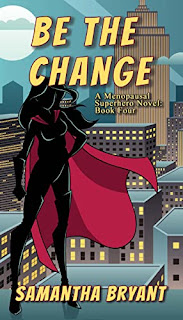
: I began 2021 with a big deadline: the fourth Menopausal Superhero Novel, Be the Change (which released on December 16, 2021), was due to my publisher on January 1, 2021. 

I missed that deadline, the first time I've missed a deadline in my writing life. I turned it in on February 1. Considering how screen-burnt I was in 2020 and how difficult it was to write during that time, I'm proud that I finished the book even CLOSE to on time. 

As soon as I turned it in, I turned my attention back to the Gothic Romance I've been working on these past two years (working title: The Architect and the Heir). I was hoping to finish it by the end of summer, before I had to put it aside to work on the fifth and final Menopausal Superheroes novel, due (under renegotiated deadline) in April 2022.

I didn't finish it in time. I've always been a slow writer, compared to many of my friends and colleagues, and that became a serious frustration in 2021. 

Now, as we finish the year, I've got 20,000 words in on that fifth (as yet untitled) novel. It's proving difficult to write. Since I intend it to the be the last, there's a lot I need to wrap up from the entire series, while still making sure the book has an individual story of its own. 

Because teaching life left me so crispy I'd be a hit at Kentucky Fried Chicken, I didn't have a burst of productivity in my writing life over the break like I usually do. I'm hoping that the rest I gave myself during these two weeks will allow me to begin seeing good progress again in January. 

Still, it was not a year to sneeze at for new words written: According to my writing tracker (I use Jamie Raintree's Writing and Revision Tracker and highly recommend it), I wrote 394,333 words in 2021 (on various projects) and revised 278,544 words. My daily writing chain is now eight years long. 

I had two short stories published in paying markets. "Poison" in Enchanted Conversation and "Boy Chick" in Apex & Abyss. I saw another novel through publication. It wasn't the kind of success that lets a girl quit her day job and write full time, but it wasn't bupkis either. 

image source
Getting Out Into the World: 
In 2020, I dug into life as a Hobbit, and came to appreciate going slower and being home. 

But in 2021, vaccinated and caffeinated, I ventured forth again, taking some opportunities for my writing life, and taking a couple of small trips. Not as many, and with more caution than before, but I got out there. 

In 2020, I attended one convention, MarsCon in January, before conventions started shutting down, cancelling, or even folding. After building up a schedule of appearances and events over the past few years, it was weird to suddenly stop doing that. 

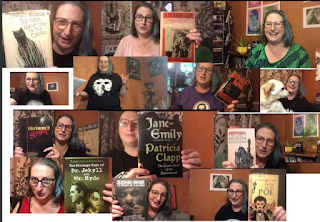
Since my day job involved so much screen time, I wasn't thrilled about zoom events for my writing life, but I did a few. (Con-Tinual gave us all a chance to connect with readers that way, as did Strong Women, Strange Worlds. A pretty complete list of my video appearances can be found here.) Video appearances are easier in some ways--no travel, mitigates geographic distance, potential wider audience--but they are not the same as the energy of an in-person room and the kinds of connections made that way. 


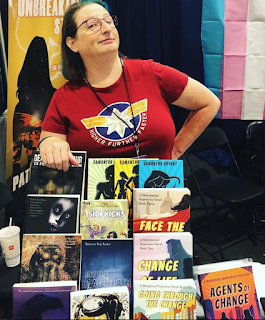
In summer 2021, convention life opened up a bit again, and I attended Con-Carolinas, Con-Gregate, Galaxy Con, and a library Pop-Con. It was really good to see my writing friends again in person. I'd missed them terribly. I have become more cautious about my energy, though, and plan to do fewer conventions and more single-day events in 2022. 


I also managed a visit to Kentucky for my mother's birthday, and she and my dad managed a visit down here for mine. Sweetman took me on a trip to the mountains to celebrate my fiftieth birthday. My long-time writing critique group (which had moved to Zoom), began meeting in person again after we were all vaccinated, and we took a short retreat to Lake Gaston in the fall. 


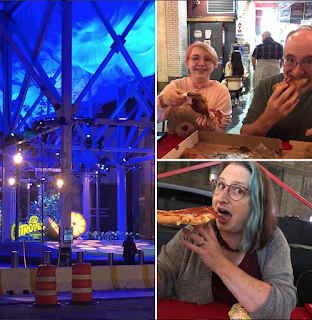
The big trip was a visit to New York City in October, when Broadway re-opened. I had never been and really enjoyed my few days there, though it solidified my understanding of myself as a rural girl at heart. 

We ate lots of good food, saw iconic sights, and really enjoyed the production of Six: The Musical. We haven't had that many cool travel opportunities with our youngest child, so it was great to spoil them with this trip. 

Throughout it all, I continued to walk in the woods, finding stress relief and solace in walking among the trees. 

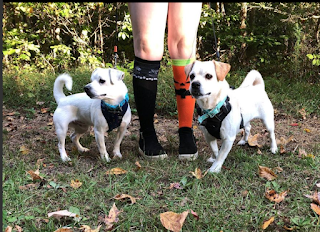
Starting in July, two new friends joined me for those walks, when we adopted two new rescue dogs: Ghost and Pumpkin. 

They are wildly different than O'Neill was, but they have brought a great deal of joy to our lives. 

Our holidays were quiet, but lovely and we took our time away from school and work restfully and gave ourselves time to recuperate and recharge. 

So, that's my year that was. Not bad for my fiftieth one on the planet. I hope 2021 brought you joy as well, and that 2022 will give us all more reasons to smile. 


Wednesday, August 18, 2021

Not a Superhero


They probably meant well. 

It seems flattering at first blush, being called a superhero. 

It implies that I'm special, someone who handles work that an ordinary human would not be able to do--jobs that require super-human strength, endurance and effort. 

But the problem with that overblown, hyperbolic, and manipulative rhetoric is that teachers aren't superheroes. We're people. 

Don't get me wrong. I'm an amazing person. I can do more with 90 non-supervisory minutes a day than some people do in entire eight hour work days. I'm a master of efficiency, and surprisingly good at improv, too, given how often the rug is pulled out from under me mid-stride. Many of the teachers I work with are as amazing as me. Some are even MORE amazing. 

But, they're not superheroes. Neither am I. I'm just a middle-aged woman who's fed up with this particular method of dodging discussion of real issues. 

I know superhero imagery is appealing, and has become a favorite metaphor for lots of overworked, underpaid public servant sorts of work. But a lot of the people using this comparison don't know superheroes. 

I, do, though. I read, watch, and write superheroes. I know them well. 


And here's something we all need to remember: 

Superheroes are fictional.

Real heroes exist. Some of them are teachers. But superheroes are imaginary. 

Only imaginary heroes can shoulder the load alone, out of the goodness of their hearts, with no thought of reward or rest. Superheroes don't need help from ordinary folk. They don't need things like reasonable workloads, safe working environments, a living wage, or even our respect. 

But if society can cast teachers as superheroes, it lets the rest of the people off the hook. We don't have to make any sacrifices for the public good, like paying higher taxes so that students can learn in buildings that aren't falling apart, or paying teachers enough money that young, passionate, talented people might be attracted to this line of work. 

When I am called a superhero, I remember James Jonah Jameson, editor of the Daily Bugle, the angry spittle-flinging man ranting about the ineptitude and untrustworthy nature of the very superheroes who continue to save his butt and the butts of all the ungrateful citizens of imaginary New York and the world beyond.

Superheroes *do* get thanked from time to time, mostly in moments of crisis like alien invasions and such. 

Real heroes get thanked under similar circumstances, like a teacher throwing herself in the literal line of fire when another problem society ignored too long walks through the front door with a gun, or dying during the pandemic because they went to work in person despite the risk "for the kids." 

Remember those five minutes at the start of the pandemic when parents all over America realized what a teacher's job actually was and expressed gratitude? 

Yeah, that was over as soon as it went on "too long." When the superheroes were revealed as all too humanly vulnerable. A grateful public turns into a resentful public very quickly when the superheroes stop saving them. 

If teachers stumble--regardless of why (or even if they don't stumble, but someone manages to spin the story just right)--those teachers we were just praising as superheroes are suddenly on the front page again, but this time as the recipients of blame, anger, and ire. We're called selfish or incompetent, accused of indoctrinating students when we try to teach them to think for themselves. All from people who have never done our jobs (and honestly probably couldn't handle the job if we got them to try it). 

So, instead of throwing empty compliments like "superhero" at teachers, how about working to increase the likelihood of success? Remember that teachers are ordinary human with ordinary limits. If the job truly requires a superhero, no wonder we're going through a giant teacher shortage. Superheroes don't exist and ordinary people trying to be superheroes can die trying. 

I don't need flattery, and I'm not accepting more than my share of the blame. Instead, I want to see a world where success is possible and the work is sustainable. It's possible . . .it's just expensive. America has gotten off cheap on education so far, and we're starting to see the truth in "you get what you pay for." 

But, for now, what I really want to say is: take that cape and shove it. 

Thursday, June 3, 2021

A Teacher Who Writes, or a Writer Who Teaches?

I began my dual career path as a teacher-who-writes twenty-six years ago, give or take.  Honestly, trying to do both meant I didn't write all that often or all that much. Teaching, especially when you're new at it, will swallow all of you, if you let it--demanding your time, your energy, and your love and leaving you depleted. Not the best recipe for a creative life. 

image source
Like most teachers who survive in the field long enough to be called veterans, I did eventually learn to set some boundaries and work on that ephemeral dream we call a "work-life-balance." 

That required being strict with myself, some compartmentalizing, and fighting off the guilt goblins barnacled to my soul. Not easy for a someone with an empathetic soul with a strong drive to help--you know, the kind of people who becomes teachers. 

But, creative life aside, it's essential to avoid burnout and make teaching a sustainable career choice. 

Failure to do so is how you win teacher of the year, but it's also how you end up quitting the career after only a few years. 

Even after I'd established some boundaries and limited how many hours a day my teaching life got, my writing life still came in fourth most of the time, after teaching, family, and community. 

Writing, after all, is solitary, just for me, and that seemed selfish. There are healthy forms of selfishness, but I was raised a lower middle class American woman in a blue collar family AND became a teacher, so finding a healthy level of selfishness and accepting the idea that self-care is not immoral . . .well, that took some time. 

Until I was in my mid-thirties or so, writing was something reserved for moments of passion or crisis--a way of processing and coping, or expressing feelings so strong they could not simply be sublimated into other kinds of work. 

image source
Then, after my second marriage when my second child was born, I had a bout of post-partum depression. I'd never dealt with the more clinical, longer-lasting side of depression, and honestly, I wasn't doing very well. I didn't understand why I wasn't happy when I "ought to be." 

Sweetman, ever observant and kind, had noticed in our courtship and marriage what a solace writing was for me. He pushed me to make regular space for it in my life, even helping me find a local critique group so I'd have a schedule. (It's like he *knows* me :P).  

It worked, at least in terms of the post-partum. As it had always been, writing was a solace and I felt so much more balanced when I gave time to my voice and my heart's truths in this way. 

And I started writing more regularly--still in fits and starts in the corners of my life, but SO much more often than I had ever done before. And my new writing community made my writing better than it had ever been before. 

I might have stayed there--a happy hobbyist--the rest of my life if not for the next moment of crisis. 

I turned 42. 

Now, as all readers of Douglas Adams's The Hitchhiker's Guide to the Galaxy know, 42 is the meaning of life, the universe, and everything. Even though turning 30 and 40 had not phased me, turning 42 did. 

image source
So far as midlife crises go, mine was mild. A haircut, some new clothes, lots of fantasizing about exotic travels. I didn't run off and join the circus, adopt up any new addictions, or take up with a younger man. 

I did, however, wallow in a feeling of dissatisfaction and low-key restless anger (mostly directed at myself) for a bit. 

That's when I decided to make a commitment to my writing life. To give it a *real* go. So, what did that mean? 

1. I stopped teaching English and become solely a Spanish teacher. Most of my jobs up to that point had been some combination of the two. The feedback load and external scrutiny for English teachers is crushing AND the literature and writing work pulls from the same energy as my writing life, so doing both was more than I could handle. 

Spanish is an elective, and at the beginning levels, where I teach, feedback on writing amounts to reading a few sentences and assessing whether the kid said what they meant to say. MUCH simpler. 

2. I laid claim to more time. We had a family meeting. By this time, my kids were older: 14 and 7, so they didn't need me at the same levels they had when they were younger. They were able to take on a little more independence, and it turned out they were willing to do so, because a happy mommy who is sometimes unavailable was preferable to a grumpy mommy, even if she was there all the time. 

Since it was hard for me to get enough separation and focus at home, I went elsewhere to write. Coffee shops, the library, the park, even just sitting in my car. When my own discipline got better, I started being able to work at home, even without an office. I shot for 250 words a day at first. 

It worked! I began to finish things, polish them, submit me, and see them accepted and published! I collected external validations like books contracts and royalties . . .even an award!  Over the next few years, I noticed the shift. 

I was now a writer-who-teaches, instead of a teacher-who-writes. 

My core identity centered around writing instead of teaching. When I met new people, I mentioned writing first. I've now written every single day for more than seven years. 

I still love teaching, and I still invest in my students and their success, but I no longer base my own feelings of success and worth on it. Too much of it is beyond my control, and making it the center of my identity was eating me. Teaching has always been both a calling and a job, but I've decided it should not also be my identity. 

Writing, on the other hand, is mine. And whether anyone ever accepts another piece of work for publication or not, I will still be a writer and I will still have all my creations, and what they have meant to me.

So, as I move into summer and shift gears into my yearly couple of months of being *just* a writer while I'm on summer hiatus from teaching, I feel a joy akin to coming home after a long journey. 

Sunday, February 14, 2021

Whiplash and Tire Tracks on My Back: Teaching During the Pandemic

 In my day job, I teach middle school Spanish. My school, like many in the United States, closed its doors in March 2020, expecting that we'd all stay home for a couple of weeks while the wave of Covid-19 rolled over the country and that we'd be back to finish the school year. That's not what happened, of course. It didn't go away in a couple of weeks. 

We finished the 2019-2020 school year from home, with an ineffective program cobbled together in six minutes with no clear expectations and guidelines for teachers or students. We had some things in our favor since my school district already provided laptops to students, so we could at least guarantee that students had a device to use to access school materials, but we had no plan for offering instruction without the in-person element.  

Teachers were told that they were not allowed to teach new material, nor give any grades, and kids quickly figured out that there would be no consequences for failure to perform, so they disappeared in droves. I doubt that much learning of significance happened for anyone between March and June 2020.

Image source

During this first bit of school-from-home public rhetoric was full of realizations of how difficult teaching really is. We were called heroes. Parents talked about how much they admired us for handling this every day and praised our creativity in finding ways for our students to keep learning.  

That lasted a month or two, then parents began to feel the wear of providing educational support and supervision for their children while trying to juggle their work responsibilities. 

So they began to throw teachers under the bus. The public rhetoric shifted to how teachers were overcautious at best, selfish for worrying about their own survival instead of what's "best for kids." 

NCAE and other teacher groups fighting for basic precautions and accommodations for teachers with underlying conditions putting them at high risk began to be accused of trying to get paid for "nothing" even as teachers worked harder than they ever had before to try to make learning possible despite huge obstacles. 

My personal favorites are the people who argue that teacher need to suck it up because other people did--the same argument people use to argue against student loan forgiveness and other social programs, like we can only be united by suffering the same fate, instead of learning from what happens to one group and preventing suffering for others. Now *that* my friends, is a particularly bitter brand of selfishness. 

Come 2020-2021 school year, and we BEGAN the school year at home. It was better though, at least in my neck of the woods. 

We had worked on a program all summer, and we had a plan involving scheduled and required live zoom classes, online asynchronous learning opportunities, and even offering limited in-person learning centers for kids/families in high need. Work would again be graded, giving back that traditional tool of accountability and measure of participation and effort. 

It hasn't been perfect, but it's been functional. My students mostly show up to live zoom class, or communicate about why they can't. I have about the same percentages of kids struggling and excelling that I always have had (I've been doing this for 26 years, and though I try to reach every kid, I'm enough of a realist to know that isn't realistic). My 6th graders, who had never attended middle school in person struggled the most, and my 8th graders, veterans of our school, handled it the best. Some kids have truly thrived, loving the release from bullying situations and uncomfortable social pressure.

The district found creative ways to bridge technology access problems. They provided wifi hotspots to families in rural areas or who didn't have regular internet access at home. They transformed school busses into rolling wifi stations and drove into high need neighborhoods and parked during agreed upon hours, so kids could use that access. The foods programs kicked into high gear, trying to make sure that no one went hungry and making it as easy as possible to get meal boxes for our families. The librarian arranged for curbside book pickup and drop off. In a lot of ways, it was working. 

So, of course, we can't just enjoy the fruits of our labor and stick with the system a little longer. Because the people who lost the earlier argument keep coming back and leadership folds because their decisions are based on external pressure rather than any independent analysis of facts and consideration of what's actually best for the students and teachers. Jelly for backbones. 

My district has changed plans so many times now that I've lost track. I feel like I've been watching high speed tennis and got whiplash in the process. 

I remember that, at first, we were due to come back to a sort of in-person school in January, but the pushback was HUGE, especially given that that the projected return date wasn't even 2 weeks past Christmas--which was the epicenter of a new spike of cases across the country. We won, and the return date was set for April--after Spring Break, and after the date we expect that teachers will have been offered the chance to be immunized. I was so relieved, I felt like my shoulders dipped below my ears for the first time in months. 

Image source

That brings us to now: 

Teachers, even teachers with ADA accommodations like me, are being forced back into the classroom next week in my school district, thanks to a legislative push that our governor opposes but is not expected to veto. So, my first day back in the classroom with kids will be February 22 (just in time for the Superbowl spike of cases). It's either that or quit--four years too early for retirement, with a kid in college to support. 

February 22 is an arbitrary selection that ignores all the safety measures we've been discussing for months. The immunization becomes available for teachers in my state on February 24, and the new HEPA air filters are scheduled to be installed in mid-March, but we're being shoved back in the classroom early, which I find especially frustrating when immunizations and filtered air are both right there just barely over the horizon. What do two weeks matter in the face of a safer transition? 

There I am, back under the bus again. 

It's not that my district isn't doing anything. They do have clear mask policies and requirements with zero tolerance for noncompliance. They do ask the questions and take the temperatures of anyone entering the building, so we at least have the performative security measures like taking off your shoes at airport security. 

But my BIG question right now is: what do we gain from this that is worth what we lose? 

Here's what in-person instruction will look like at my school: 

Roughly 50% of my students will continue to learn-from-home because that is what their families have selected--parents get the right to select based on nothing more than personal assessment of comfort/safety, but staff is not afforded the same consideration. The other 50% has been divided into group A and B, which will attend school from 8:30-2:00 four days a week on alternating weeks. 

So, if you're a parent hoping for day care help, you get 4 shorter-than-usual days every other week with no options for pre or post-care. Not sure how helpful that will be for your own work concerns. 

The students will be masked and kept 6 feet apart at all times, including while walking through halls, waiting in line, using the bathroom, etc. They will get very little of the social benefit of time spent with other kids because they are not allowed any close contact and will have to eat their lunches in silence because they are limited to 15 minutes with masks off and may not speak during that time because of concerns of germ spread. They cannot play their instrument in band or sing in chorus, and the rules seem to change by the moment for physical education.

So, if you're a parent hoping this will give your kiddos the benefits of social interaction, you're not really getting that either. 

I will be pinned to my desk because I have to offer instruction to the 1/4 of my students IN the room, and the 3/4 of my students NOT in the room at the same time. This means that the kids in my room, will still pretty much just be getting a zoom class. Also, I'm not allowed any nearer to them than 6 feet. Also, I will be stressed out and frazzled by managing all that at the same time and probably much shorter tempered than I ever allow myself to be in the classroom. 

So, if you're a parent hoping this will give your student the benefits of in-class live-teaching experience, you won't really get that either because the teacher's focus is divided and physical distancing limits our interactions with the people present with us. 

image source

Meanwhile, people will get infected. 

Maybe we'll be lucky. Maybe our cases will be mild. 

Maybe your kid and your kid's teacher won't be the one who dies or suffers lifelong health implications. 

But many among the staff and students will spend a fair amount of mental energy worrying about it and anticipating disaster, and that takes a mental health toll in and of itself. 

Teachers will quit. 

Many already have--left teaching, taken early retirement. Classes will be supervised by substitutes while the teacher quarantines after exposure, which means they'll still be taking zoom classes or participating in asynchronous learning, but now they'll also be worried about their teacher and getting limited feedback. 

So, I'll let you know how it goes, but my prediction: poorly. And if I die from Covid because my district wouldn't wait two weeks to get me immunized? Y'all better pray ghosts aren't real, because I'll be back to haunt with a vengeance. 

Friday, December 11, 2020

Repost: "We Value Teachers" and Other Lies

Note: This post first appeared on my teaching blog a week ago, but I felt strongly enough to seek a wider audience for these thoughts. Apologies to anyone who follows me both places. 

Image source

I lost another colleague yesterday. Thankfully not to death (though I worry about this daily now), but to retirement. That makes three already this year and I don't blame them a bit. I've looked at retirement myself, though it's complicated for me because I don't have the optimum number of years (having spread my career across four states) to get full benefits yet and I'm too young. The calculus of life vs. livelihood is complex when you have others to support by your work. 

Besides the three who retired, I know of one who is leaving the profession and another seeking a transfer, in hopes that another school will value her work and treat her better. I've thought about both of those options, too. I love teaching, but I also love being able to protect myself and those I love from infection and death. 

Lots of us are in the crisis decision moment right now, as our district is sending staff back to the buildings on Monday and students back in January (don't get me started on the lack of faith in us this shows). I expect to see more and more talented educators making the hard choice to leave the work they love. 

I keep getting messages from my district, my state, and my country playing lip service to the idea that they value teachers. But I don't see it. Saying thank you is easy; showing actual support and appreciation is much more difficult. 

If we were valued, our voices would be at the forefront of conversations about how to handle education under the current crisis. Instead, there's barely even performative attempts to include teachers--the workers with the most expertise and most at risk--in the conversation at all. 

I fill out all the surveys I am sent and participate in all the meetings, but there's no evidence so far that it is worth my time. The results send a clear message, one that is ignored in favor of what's easier for the institution. Though we allow our students' families to choose to stay home and continue virtual education, teachers will not be afforded the same right, even though we are more at risk than our students, especially the veterans. You don't become an experienced teacher without getting old, and you rarely get old without developing some underlying conditions that put you at additional risk.  

If we were valued, the communication from above would show that those above me in the hierarchy know what I am doing and are looking for ways to make it easier and more sustainable. Even though I work in a small school district, where you would think it would be easier to keep track of who is here and what we're doing, there's little sign that anyone who isn't a direct parallel colleague understands what I actually do. It's like being a baker whose supervisor last used an oven when you had to stoke an actual fire inside to bake.   

And this is America, after all, so if we were valued, our country would put their money where their mouth is. Money would have flowed towards resources to make safe education from home tenable--providing infrastructure and tools as well as paying attractive salaries to bring our country's brightest and best to the fight. Internet access would have become free and fast for any household with a student in it. You can always tell what a capitalist REALLY values, by looking at the bottom line, and education is far too near the bottom across the board. 

So, thanks for saying you value me and my work. But if you really do, then prove it. 

Wednesday, April 1, 2020

IWSG April: Pandemic Edition


Welcome to the first Wednesday of the month. You know what that means! It's time to let our insecurities hang out. Yep, it's the Insecure Writer's Support Group blog hop. If you're a writer at any stage of career, I highly recommend this blog hop as a way to connect with other writers for support, sympathy, ideas, and networking.

If you're a reader, it's a great way to peek behind the curtain of a writing life.

The awesome co-hosts for the April posting of the IWSG are Diane Burton, JH Moncrieff, Anna @ Emaginette, Karen @ Reprobate Typewriter, Erika Beebe, and Lisa Buie-Collard! I hope you'll check out their blogs as well as some of the others on this blog hop after you see what I have to say.

____________________________________________________

April 1 question - The IWSG’s focus is on our writers. Each month, from all over the globe, we are a united group sharing our insecurities, our troubles, and our pain. So, in this time when our world is in crisis with the covid-19 pandemic, our optional question this month is: how are things in your world?

In the larger scheme of things, we're fortunate here at la Casa Bryant. We're all in good health, the adults are able to work from home and be paid as usual, the larders were well stocked before the crisis hit. 

We're all introverts and have great technology access and plenty of distractions in stock. Our child still at home is twelve, which makes this way easier than it would have been if she were two. The hubby and I are solid in our relationship and united in this fight. 


Complaining, when I know how much harder this is hitting others in the world, feels ridiculous. 

My day job is teaching, so I see firsthand our families struggling to feed themselves and children struggling with isolation. Even if I try to stay away from news poisoning--limiting my news sources and time spent reviewing them--the wider problems poke sharp fingers into the corners of my awareness and I can't be blithe and ignorant, even if I'd like to be in some ways. 

I have a constant restless energy beneath my skin, fueled by anxiety and worry. Although finding time to write is easier than it usually is during the school year, finding focus and using that time well is harder. We're trying to balance preparing for the worst with generosity to others. 

I'm staying focused on the positives. My recent blog posts try to highlight the good: I have time to try new recipes and cook better meals. We're getting so much family time! My house is slowly coming into better order than it has been the entire time we've lived here. 

I'm taking nature walks every day, and the time among trees, flowers, and running water calms the wild panic to manageable levels, leaving me better equipped to care for my family. 

I hope all of you are safe and well, and able to find some cause for joy during our forced isolation. I pray that our nation and communities will learn lasting lessons that make us a better people--a people who value the work of our service industry and recognize that the pace we're trying to keep is killing us. When we get back to normal, may normal be better than it was in the past! 

Wednesday, June 19, 2019

Summer Writing


Summer is here! As I write this, I've been on summer vacation for (checks watch--remembers I don't have one and checks phone) 1.5 days!

As a teacher-writer-mother, I look forward to summertime all year for the control over my schedule and ability to focus more on my writing life instead of shoehorning it in around school demands. And I've made it! I'm a full time writer, for almost two months in a row.

As a 21st century woman though, I always want more out of my time than I can actually get, so here are my tips for managing a mother-writer summer schedule.

For context, my kids are currently 12 and 19, with the 19 year old living forty-five minutes away from home, near enough that I can see her often, and be there to help her when needed, but not part of my daily dinner plan.

1. Chunk your time: I'd love to have all day every day of summer for my writing life, but that's not realistic given the parameters of my life, so I just snag *part* of each day for writing.

I tend to think of my day in three chunks: morning, afternoon, evening. Because my tween will sleep as late as I let her, it generally goes: morning for me, afternoon for house/daughters, evening for family. This keeps things from bleeding into my writing time too much, but still leaves me pretty flexible during each chunk of day.


I get up when my husband gets up for work even though I could probably get away with sleeping later. I'm a total wimp about the heat, so I get outside for my exercise first: a walk or a run with my dog immediately before the summer sun is fully awake and trying to bake us alive. This has the added benefit of waking up my brain in a pleasant environment.

Then, I start all the appliances, so clean dishes and laundry (and sometimes even lunch: go rice cooker and instant pot!) happen while I'm not looking, and it's breakfast and writing time. I try to stop at lunch time.

Afternoons are for running errands and making sure the tween has some fun and doesn't turn into a total lump of lazy. Often I can write during this time as well, jotting down thoughts in the notes app on my phone and handling the social media commitment of a writing life during the waiting moments. If there's a playdate or mom couch time and my interaction level is lower, I steal that for writing, too.

Evenings are for managing home life aspects that require all of us (after the husband gets home from work) and for enjoying time together: games, movies, outings, etc. Sometimes I sneak extra writing time during this time, if there's dad-daughter time going on.


2. Make arrangements for a few ONLY writing days:

For me, that means sending the youngest away (camp, visiting Grandma, overnights at someone else's house, etc.) or sending me away (writing retreat!). I can usually only manage about two weeks of full time writing life across a summer, but they are heaven on earth when they come.

It requires being strict about protecting that time. If the youngest is at camp, I AM NOT filling that time up with errands, even pleasant ones like lunch with my sister. I grab those hours with both hands and hold on tight, refusing to let anything shy of an actual emergency wrest them from my grip.

I also have to be strict with myself about using the time well when I get it. I set priority lists of what to write in what order and am careful not to let myself fritter the time away on social media or writing the wrong things.

My rules for prioritization are: passion level, publication expectations, promises made, and watching out for burnout. Just like every other part of my life, choosing how to spend my writing time is a balancing act, too.

3. Planning ahead helps.

Generally, we plan and shop on Sunday for the entire upcoming week, making note of al the "extra" (not in the usual schedule) things we need/want to do, and making meal plans.

This really helps, because I don't have to spend time on Monday-Friday deciding on meals or shopping them. Those decisions have already been made; all I have to do is follow the plan. That frees up brain space for more fun things like deciding why my male lead's secret twin was a secret.

I plan ahead for my writing time as well, figuring out which day will be spent writing a blog post, which a short story, which focused on the current novel, which on promotion, and so on. I can't do all those things every day, and it helps me to compartmentalize them, promising each task its spotlight moment in turn.

After all this time, I'm good at figuring out what kind of writing I'll be able to do given the constraints of a day: how much time a row I can get, likelihood of interruption, need to devote extra time to other parts of life, etc.

So, there are my ideas for managing a writing life among the other demands I've taken on. How about you, kind readers? Any tips that work for you? How do you protect and arrange time for your creative endeavors?

Friday, April 12, 2019

A to Z: Letters to Dead Writers: Helen Keller


This month I'm writing one post for each letter of the alphabet, all on the theme of "Letters to Dead Writers." You can see my theme reveal post here and learn more about the blogging challenge here.

Today's writer is Helen Keller
_____________________________________

Dear Ms. Keller,

I first heard of you when I was in second grade. We were learning about biography, and yours was one of the names on a list of people we could pick to write a research project about.

When I took the list home and asked my mom and dad about the people on it, I learned that you were deaf and blind, but you had become world famous as a writer and speaker. It was clear that my parents thought you were amazing, so I chose you for my project.

I wasn't really ready to read your autobiography yet, since I was only seven, so I read some children's books about you and watched the movie The Miracle Worker with my mom. The part of your story that struck me at the time was the part about the power of language. You'd always been a bright person full of ideas, but because illness had robbed you of language, you couldn't communicate. Once you learned how, the transformation was as good as any enchantment in a fairy tale.

Around this same time was when I decided for sure that I would be a teacher (and I'm a teacher today, so obviously the idea stuck!). I wanted to be that person who made that connection and difference for someone. Anne Sullivan is certainly an inspiration for the difference one person can make in the life of another.

Sometime, when I was older, I read your autobiographies, The Story of My Life and The World I Live In, as well as Teacher and some of your Journals. I came to admire you all the more for your deep thoughtfulness and your advocacy for the rights of others: women, workers, people with disabilities. You had such a way with words, and such strong opinions.


I admire you still today, for the courage of your convictions and your use of your fame to try and make a difference in the world. I hope someday the world rises to your vision of what it could be.

Love,
Samantha

Wednesday, January 16, 2019

Marketing for Introverts

Hi! I'm Samantha, and I'm an introvert. In fact, I'm really happy that we're having this little talk here on the Internet, where I don't have to actually talk to you.

It's not that I'm not friendly. I bet I'd even like you. It's that I'm still recuperating after participating in a fan convention this weekend for my writing life.

Being a writer might seem like a natural job choice for an introvert. In some ways, it's an excellent fit.

Doing the work requires spending copious amounts of time alone.

The work itself is usually pretty quiet (just some keyboard clicking or pen scritching noises).

You can do the work wherever you are most comfortable.

On the other hand, if you want to make a career of writing, you can't *just* write. You have to put your work out there for others to read.

Then, there's the marketing, that second job of garnering attention for your work and being discoverable. That can be pretty painful for a introverted person, but I'm here to tell you that it can be done.

At Illogicon last weekend, I participated in a wonderful panel on this very topic with some talented introverts: Gray Rinehart, Claire Wrenwood, Patrick Dugan, and Fraser Sherman. We all agreed that you can make a career as a writer without undergoing some kind of alchemy and becoming an extrovert, and that in some ways, introverts might be especially well suited to it.

So, here are a few things to consider if you're an introvert and trying to promote yourself and your work.

1. Take it slow: A lot of people seem to think that building a writing career and support network is a sudden quick movement, like sweeping the legs in a kickboxing match.

It's not.

Not even for extroverts.

Building contacts and relationships is the work of years, and luckily, it's the kind of work introverts are good at! We may not be comfortable standing behind the megaphone and calling for the attention of everyone in the room, but we're great one-on-one and when we get to know someone, we usually get to know them well. Our relationships are deep and strong and lasting.

When you are meeting new people, be reasonable in your expectations for yourself. I'm happy if I make one or two new initial contacts at any given event. I'm not trying to go home with my pockets bursting with business cards. I'm trying to make a few meaningful connections.

2. Pick your poison:  There are a lot of ways to put yourself out there as a writer. You can give readings, participate in discussion panels, teach workshops or classes, hand sell books from a table or booth at an event, make videos about your work, tweet cleverly, blog, etc.

Some of these things will scare the heck out of you, and some may only make you nervous. Pick something you feel like you can do and try it. You can push yourself a little at a time, and you don't have to put yourself out there on every possible platform.

Look at events carefully, think about your comfort levels, and plan accordingly. I enjoy doing fan conventions, for example, but I tend to stick to small and medium sized ones relatively near my home base.

I take my sister with me whenever I can because it's good to have someone more outgoing with you and someone who will help you take care of yourself when you need it. Even better if that someone loves you and understands your needs and limits.

I like panel discussions because they have a clear structure and don't require me to "make the first move" like approaching someone at a booth or table does. Someone will call on me when it's my turn to talk.

I ask convention organizers not to schedule me for late night programming because it's harder for me to be entertaining and clever and "on" when I get tired.

Over time, this has gotten more comfortable for me because I've gotten to know more and more people, so often attending an event means I'll be among as many friends as strangers. I find that VERY comforting.

Though Dragon Con is the BIG con near me, I have yet to apply, because I know how stressful I would find it to navigate the halls of such a large free-for-all event. Maybe I'll get there someday, or maybe I won't. We'll see.

For now, I'm feeling good about how much more comfortable I feel with what I'm doing now.

3. Self-Care! Everyone needs self care, but introverts may need to tend to themselves a little sooner and more specifically than other folks (I wouldn't know; I've never been one of those other folks).

For me, that means being as careful as I can be with my schedule: making sure there are adequate meal breaks and quiet time, packing some good snacks.

That might mean that I skip some networking opportunities and don't go to the bar with the other writers after an event, or decide to spend time alone in my hotel room instead of sitting at my table or booth for two more hours (even if I miss a chance to sell a book that way).

If I don't give myself space to recoup my energies, I'm not going to make a good impression or make good use of those opportunities anyway.

It also means that I try to give myself decompress time after an event.

I'm writing this on Monday night and I got home from a convention on Sunday night. I had three different social invitations this evening, but I turned them all down in favor of sitting here quietly at my laptop. It was the right choice, especially since I'll have to be "on" again next weekend for the college class I'm teaching.

So there are my thoughts on how to make a go of this if you're an introvert. By the way, that panel? It was the most laid back and polite panel I've ever been on. I don't think anyone talked over someone else or interrupted even once. And we left plenty of wait time for questions from our audience. :-)

Wednesday, June 14, 2017

Teachers are Superheroes

Ah, another year over and what have you done? Well, I completed my twenty-first year as a teacher, and, is often the case when I'm finishing a school year, I've got mixed feelings about the sustainability of this as a career choice.

While I watched students take state and federally mandated tests for days on end and tried not to the let the rage and heartache of all that wasted energy eat me alive, I considered the idea that teachers are superheroes.

Now, I don't mean anything very touchy-feely by that, though, of course, we do change and save lives. But I'm at the cynical end of the year, and will need to spend summer recapturing my optimism and faith. Right now, I'm just thinking that you *have* to be a superhero to do this work.

There are so many similarities!

Teachers need secret identities. Remember that time you saw your second grade teacher at the grocery store and just about had a heart attack thinking that teachers might go shopping? There's also the way people FREAK OUT if it turns out that a teacher (who is old enough) drinks a beer in public, or is photographed wearing a bathing suit (at the beach) or cusses in a social media post.

It's changing, and is definitely better from the days when you couldn't teach if you had a husband and being a teacher was akin to being a cloistered nun in the public eye, but many of us still build a protective persona and keep our private life as separate from the work as possible. It's not quite a cool domino mask and a cape, but there is a whole separate me hidden from my work life.

It's a job, but it's also a calling. Just like being a superhero.

Teaching is also one of the few professions where people who have no qualifications, expertise, or experience beyond having attended school themselves feel free to pass judgment on how the job should be done. I try not to be bitter about this and dwell on the idea that this is because teaching, at least through high school, is a female-dominated field.

Like superheroes we are vilified or lauded in the press and public discourse with very little in between, and we are expected to do the job for very little material gain because we're supposed to have a nobler, higher calling (which apparently matters more than whether you are a college educated professional who qualifies for food stamps).

So, if get the vitriol and criticism of superheroes, do we get the powers? Here are some of the superpowers you need to handle this job.


Endurance: Depending on what's going on in your school building on any given day, you may have to go as many as six hours in a row without any kind of break--bathroom, food, coffee, silence, and personal time are for wimps! You also have to be "on" for six hours a day, responding with grace under serious pressure and dealing with every curve ball thrown your way.


Speed: Teachers in my building get 90 non-supervisory minutes a day (if you don't have any meetings
taking up that time) in which to prep 2-7 lessons (depending on your course load), complete any assessment and correspondence, research and collaborate with colleagues, eat and see to personal needs. I can get more done in 90 minutes than many people can do with an entire day.


Extra-sensory awareness: Alone in a room with 30 tweens? You'll need eyes in the back of your head AND a sixth sense for trouble. A little ability to foresee the future wouldn't hurt either. I'd stay away from mind-reading though. You *don't* want to know what they're thinking.


Bullet-proof flesh: Kids are mean. Adults are worse. You'll need that bulletproof flesh to protect you
from attacks of all kinds. (Sadly, some of these bullets are literal, but we'll keep the focus metaphorical for this blogpost).

Reflexes. Emergencies, real or imagined, abound in buildings full of children. A teacher has to be able to jump in with no preparation and build a functional airplane before we hit the ground, all while calming panicking people.


Flexibility. Make all the well-constructed lesson plans you want. They WILL change, usually at the last minute. Resources will fall through, disaster will strike. The wifi will fail.


Wealth. Okay, this one's a pipe dream, but you'll have to teach with fewer and fewer resources every year, because this country likes to SAY it values education, but if you go by where our dollars are spent, we value LOTS of things more highly than education. So, it would help to be independently wealthy, so you can afford to buy all the clothing, food, and school supplies your students come to school without. If I *were* Bruce Wayne or Oliver Queen, you can bet my students would be spoiled rotten with all the best equipment, trips, and experiences.