Showing posts with label learning. Show all posts

Monday, April 13, 2026

A to Z: Going Indie: Knowledge


Welcome to Blogging A to Z! My theme this year is Going Indie. I hope you enjoy it. Don't forget to check out the other participating blogs

Knowledge is power, right? At least that's what Schoolhouse Rocky taught me, back in the day. 

It's definitely been true in my pursuit of indie publishing. One reason I didn't do it the first time I thought about it was because I was daunted by how much there was to learn. I thought writing the books was hard! But, learning how to manage all the systems to make this dream a reality? Not *that's* hard!

Luckily, there are a lot of ways to learn these days. I already posted a couple of books I found helpful back on my B is for Books post, but I also learned a lot from actually taking classes and training opportunities. 

A big one for me was a Business Boot Camp from Women in Publishing. Making that shift into thinking of my writing life as a business and making sound business decisions regarding it was a tough one for me, so I really appreciated this kind and supportive group of women willing to share their experience and take questions. 

That community was so valuable that I ended up buying a full membership, and I continue to learn from them all the time. 

There's also the in-person route. My public library was a great source for "how to" information. In fact, that's how I met James Maxey, now a good friend, and the guy who introduced me to superhero novels, so is indirectly responsible for my entire Menopausal Superheroes series

Every time I spend time with other writers, I learn something. As a group, we're a generous lot. If you've got questions, ask them! Most writers will do their best to help you. 
 

Monday, October 24, 2022

What would you study? An Open Book blog post


Welcome to Open Book Blog Hop. You can find us every Monday talking about the writing life. I hope you'll check out all the posts: you'll find the links at the bottom of this post.

Today's question: If you could take a free class at a university, what course would you take?

I've had some great learning partners in the form of teachers in my life, and a great teacher has definitely made all the difference for me when I was studying something I found intellectually challenging, like when I took Transformational Grammar with Thom Stroik. He was so passionate about linguistics and it was hard to sit in his classroom and not become infected with that same enthusiasm.  

I'm not as interested in formal learning on someone else's schedule as I used to be, though. As much as I've loved school, there's something to be said for  auto-didacticism: building my own reading lists and choosing assignments that push me in the direction I wanted to go and are tailored to my own specific interests and strengths. 

image source

There's any number of things I'd like to study: additional languages, various eras and segments of literature, sociology, feminist theory, agriculture, business management, webpage design, anthropology, geography…pick. your "logy" or "aphy" and I could probably summon some interest. It all serves as fodder for my writing life, after all. And I'm at least a little interested in almost everything!

So, since I'm good at finding resources and teaching myself in a lot of ways, for me, it's not "what" I'd like to study, but "who" I'd like to study with. 

If I had the chance to study writing with Neil Gaiman, I'd pounce on it. I've almost bought his online master class more than once, but am not entirely convinced that it would worth it, without the personal interaction. Relationships are a big part of learning. Joyce Carol Oates is at Princeton. That would have to be worth the trip. 

Let's see, who else? I hear that Condoleeza Rice is teaching Political Science at Stanford. That would have to be fascinating. Or how about Andrew Ng teaching Computer Science, also at Stanford? Or a film class with Spike Lee at New York University? University of North Carolina at Chapel Hill recently lost the chance to have Nikole Hannah-Jones on staff through shenanigans, so I'd need to follow her to Howard University. 

How about you? Is there someone you're yearning to study with, or a topic you'd devote study to, given the time and resources? I'd love to hear about it in the comments! And don't forget to check out the other posts in the blog hop, by my fine colleagues of Open Book. 

You are invited to the Inlinkz link party!

Click here to enter

Saturday, June 11, 2022

Leaving Teaching

I've been a teacher my whole life. Just ask my cousins and my poor little sister about the days when I forced them to play school with me in the basement, when I was five and they were still toddlers. I even had school desks and a chalkboard. I made worksheets for them and corrected their letters. 

Admittedly, I was a bossy little thing, and that probably had something to do with it, but it's also about sharing an enthusiasm for learning. What can I say? I LOVE school.  Learning and books are part of my soul. 


image source

I was probably only six or seven when I started telling people that I was going to be a teacher when I grew up. I was also going to be a witch, a dancer, a veterinarian, a reporter, a writer, and an astronaut…only some of those stuck. 

Unlike most people I know who changed their minds multiple times about what to be as they grew up, I stuck to that childhood plan of becoming a teacher. The only thing that changed was what level I thought I wanted to teach (elementary, middle, high, college). 

I went to college and earned a degree in English education with minors in Spanish, Creative Writing, and a sort of Humanities add-on they called "Honors." Other than a minor gig with my college public radio station and a brief secretarial job, all my work life was teaching or education adjacent. I tutored, served as a classroom aide, subbed, and taught in my own public school classroom, in summer programs, and on college campuses. 

The work was never easy, but it was worth it. There's such power in being there at the moment of elucidation or new comprehension or boundaries being stretched and helping people gain the tools they need to make their goals and improve their lives. I felt useful, important…like I made a difference. 

Even now, after 27 classroom years, I still believe public education is the most important idea to rise out of American democracy: the idea that ALL citizens have the right to education was and is ground-breaking and represents all that is best about my country. (we can talk another day about the forces trying to kill that from within). 


image source


You knew there would be a but, right? 

The realities of choosing a teaching life can be pretty grim. Nearly always, it means sacrifice in other aspects of your life. 
  • You'll always earn a low salary, especially considering the education required, the importance of the work, and the stress and danger involved. 
  • It's the only profession I know of where people who have never attempted the work themselves (or worse yet: FAILED at it) are in charge of the system, and the whole world thinks they know better than the trained professionals how to do the work. (Well, maybe mothering--that also came with a TON of irrelevant, hateful, and unwanted "feedback" from people who don't know a darn thing about it--we can talk another time about misogyny and the value of women's work). 
  • You might as well change your middle name to scapegoat, because you'll collect ALL the blame and none of the credit.
  • The stress levels are sky-high and self-care is just two words people like to say, about as useful as sending "thoughts and prayers" during a tragedy. No one means it; no one cares. 
  • It's physically dangerous. More schoolkids than police officers have been killed in our country this year by gun violence, and their teachers die trying to save them. Between school violence, stress-related health damage, unsafe and poorly maintained work environments (school buildings), and contagious illnesses, teachers die from the work every day. Your life is on the line. 
  • You'll be overworked every single day. Schools are underfunded, which leads to being understaffed, which leads to one person shouldering a work load more appropriate for three to five people. 
  • People will call you a hero, but it's lip service they pay to avoid paying you in respect, support, or dollars (you know: things that MATTER and might make a difference). It's disingenuous at best, and often far darker than that. 
  • You'll feel helpless a lot because you can see the problems and what needs to be done, but you don't have the tools, time, or resources to fix things. It'll break your heart a little bit every day…and can eventually make you shut down out of self-protection. 

It's not sustainable. The system was built on the backs of women--something we allowed at a historical moment when it was hard for a woman to get paying work of any kind at all and have been stuck with ever since. When the entire system is predicated on the exploitation of the workers, there's something wrong. 

It's even worse in states like North Carolina: "Right to Work" states they call them. Anti-union is probably a step more honest. No protection for the worker--not even the basic protection I'd enjoyed in other states like a guaranteed lunch break every day or due process if I got fired. 

image source


I've thought about leaving lots of times. 

  • Sometimes I stayed out of passion--to try and make change from the inside.
  • Sometimes I stayed because I'd been gaslighted so much that I'd internalized the idea that the problems were about me instead of about the work conditions.
  • Sometimes I stayed out of exhaustion--too tired to put in the footwork to find something else. 
It was like having an abusive spouse in a lot of ways. You convince yourself that it's not as bad as it is. You stay "for the kids." Fear and manipulation reign over all. 

Well, reader, I left him: that abusive spouse I called a teaching career. 

Two weeks ago, I said goodbye to my last group of students and walked out into the sunlight. I'm corporate Samantha now, working as a content strategist for a large financial firm. I've had my new job for all of nine days as I write this, and it's already a world of difference in terms of stress and work-life balance. 

image source

It's telling, I think, that my primary emotion, intermixed with the sadness of leaving the children and some of my colleagues, was relief. 

Wednesday, August 4, 2021

IWSG: Craft Books: Thinking ABOUT writing, or writing?


Welcome to the first Wednesday of the month. You know what that means! It's time to let our insecurities hang out. Yep, it's the Insecure Writer's Support Group blog hop. If you're a writer at any stage of career, I highly recommend this blog hop as a way to connect with other writers for support, sympathy, ideas, and networking.

If you're a reader, it's a great way to peek behind the curtain of a writing life.

Our Twitter handle is @TheIWSG and hashtag is #IWSG.

August 4 question
- What is your favorite writing craft book? Think of a book that every time you read it you learn something or you are inspired to write or try the new technique. And why?

The awesome co-hosts for the August 4 posting of the IWSG are PK Hrezo, Cathrina Constantine, PJ Colando, Kim Lajevardi, and Sandra Cox! Be sure to check out what they have to say, and visit other writers in the blog hop!
________________________________________

I don't read a lot of craft books anymore, though once I did. They are a pleasure, and can be inspiring and encouraging, as well as instructive. 

But I don't read them very often anymore. 

It's not that I don't still feel like there's a lot to learn about writing life. I definitely do!…it's more a matter of time management and HOW I do my learning these days. 

Since my first novel was published in 2015, I've considered myself a professional writer. Currently, I stuff a full time writing life into part time hours, working 1-2 hours a day during the school year and 4-8 hours a day during summer hiatus, so that my day job (teaching middle school) can provide money, insurance, retirement plans and other staples of stability. 

It's not enough time for all the work of writing, rewriting, networking, marketing, etc., but it's what I can afford (literally, in the dollars in the bank, sense of "afford"). Plus, I'm finding there's something to be said for "hands-on" learning or "on the job" training. Theoretical consideration and hypothetical situations will only take you so far. 

image source
So, while I loved Anne Lamott's Bird by Bird and Stephen King's On Writing and Natalie Goldberg's Writing Down the Bones when I was younger, it's been years since I read a book on the craft of writing, though there are plenty of them on my bookshelves still.  

That's not to say I'm not studying. I just tend to combine that with other tasks these days. When I get stuck, I read a few articles or posit a question to one of my writing communities to get real-time advice from others in the thick of the struggle themselves. I learn by doing and by talking to others who are doing. 

For Lamott, King, Goldberg and other giants of the field, my level of struggle is a memory. They no longer worry about building an audience, navigating the shark-infested waters of publishing, or balancing quality with quantity of output to keep a career from languishing. 

For others in The Writing Tribe, Works in Progress, or Area 42 (three of the writing communities I work with), that battle is being fought right now, and for that reason, the advice is very pragmatic. These groups linger less over the philosophy and ideals and concentrate more on the practice. 

If I let myself wander down those philosophical paths too long, I find I just stay there. I spend a lot of time thinking ABOUT writing instead of actual writing, and that might feed my practice in the long run, but it doesn't feed my career here in the short run. 

So, once again, I'm back to seeking a balance, this time between thinking and doing. 

How about you? Do you fall into research rabbit holes as easily as I do, and spend too much time thinking ABOUT what you want to do instead of doing it? Or have you found a better balance of learning and doing? I'd love to hear your thoughts in the comments! 

Sunday, February 14, 2021

Whiplash and Tire Tracks on My Back: Teaching During the Pandemic

 In my day job, I teach middle school Spanish. My school, like many in the United States, closed its doors in March 2020, expecting that we'd all stay home for a couple of weeks while the wave of Covid-19 rolled over the country and that we'd be back to finish the school year. That's not what happened, of course. It didn't go away in a couple of weeks. 

We finished the 2019-2020 school year from home, with an ineffective program cobbled together in six minutes with no clear expectations and guidelines for teachers or students. We had some things in our favor since my school district already provided laptops to students, so we could at least guarantee that students had a device to use to access school materials, but we had no plan for offering instruction without the in-person element.  

Teachers were told that they were not allowed to teach new material, nor give any grades, and kids quickly figured out that there would be no consequences for failure to perform, so they disappeared in droves. I doubt that much learning of significance happened for anyone between March and June 2020.

Image source

During this first bit of school-from-home public rhetoric was full of realizations of how difficult teaching really is. We were called heroes. Parents talked about how much they admired us for handling this every day and praised our creativity in finding ways for our students to keep learning.  

That lasted a month or two, then parents began to feel the wear of providing educational support and supervision for their children while trying to juggle their work responsibilities. 

So they began to throw teachers under the bus. The public rhetoric shifted to how teachers were overcautious at best, selfish for worrying about their own survival instead of what's "best for kids." 

NCAE and other teacher groups fighting for basic precautions and accommodations for teachers with underlying conditions putting them at high risk began to be accused of trying to get paid for "nothing" even as teachers worked harder than they ever had before to try to make learning possible despite huge obstacles. 

My personal favorites are the people who argue that teacher need to suck it up because other people did--the same argument people use to argue against student loan forgiveness and other social programs, like we can only be united by suffering the same fate, instead of learning from what happens to one group and preventing suffering for others. Now *that* my friends, is a particularly bitter brand of selfishness. 

Come 2020-2021 school year, and we BEGAN the school year at home. It was better though, at least in my neck of the woods. 

We had worked on a program all summer, and we had a plan involving scheduled and required live zoom classes, online asynchronous learning opportunities, and even offering limited in-person learning centers for kids/families in high need. Work would again be graded, giving back that traditional tool of accountability and measure of participation and effort. 

It hasn't been perfect, but it's been functional. My students mostly show up to live zoom class, or communicate about why they can't. I have about the same percentages of kids struggling and excelling that I always have had (I've been doing this for 26 years, and though I try to reach every kid, I'm enough of a realist to know that isn't realistic). My 6th graders, who had never attended middle school in person struggled the most, and my 8th graders, veterans of our school, handled it the best. Some kids have truly thrived, loving the release from bullying situations and uncomfortable social pressure.

The district found creative ways to bridge technology access problems. They provided wifi hotspots to families in rural areas or who didn't have regular internet access at home. They transformed school busses into rolling wifi stations and drove into high need neighborhoods and parked during agreed upon hours, so kids could use that access. The foods programs kicked into high gear, trying to make sure that no one went hungry and making it as easy as possible to get meal boxes for our families. The librarian arranged for curbside book pickup and drop off. In a lot of ways, it was working. 

So, of course, we can't just enjoy the fruits of our labor and stick with the system a little longer. Because the people who lost the earlier argument keep coming back and leadership folds because their decisions are based on external pressure rather than any independent analysis of facts and consideration of what's actually best for the students and teachers. Jelly for backbones. 

My district has changed plans so many times now that I've lost track. I feel like I've been watching high speed tennis and got whiplash in the process. 

I remember that, at first, we were due to come back to a sort of in-person school in January, but the pushback was HUGE, especially given that that the projected return date wasn't even 2 weeks past Christmas--which was the epicenter of a new spike of cases across the country. We won, and the return date was set for April--after Spring Break, and after the date we expect that teachers will have been offered the chance to be immunized. I was so relieved, I felt like my shoulders dipped below my ears for the first time in months. 

Image source

That brings us to now: 

Teachers, even teachers with ADA accommodations like me, are being forced back into the classroom next week in my school district, thanks to a legislative push that our governor opposes but is not expected to veto. So, my first day back in the classroom with kids will be February 22 (just in time for the Superbowl spike of cases). It's either that or quit--four years too early for retirement, with a kid in college to support. 

February 22 is an arbitrary selection that ignores all the safety measures we've been discussing for months. The immunization becomes available for teachers in my state on February 24, and the new HEPA air filters are scheduled to be installed in mid-March, but we're being shoved back in the classroom early, which I find especially frustrating when immunizations and filtered air are both right there just barely over the horizon. What do two weeks matter in the face of a safer transition? 

There I am, back under the bus again. 

It's not that my district isn't doing anything. They do have clear mask policies and requirements with zero tolerance for noncompliance. They do ask the questions and take the temperatures of anyone entering the building, so we at least have the performative security measures like taking off your shoes at airport security. 

But my BIG question right now is: what do we gain from this that is worth what we lose? 

Here's what in-person instruction will look like at my school: 

Roughly 50% of my students will continue to learn-from-home because that is what their families have selected--parents get the right to select based on nothing more than personal assessment of comfort/safety, but staff is not afforded the same consideration. The other 50% has been divided into group A and B, which will attend school from 8:30-2:00 four days a week on alternating weeks. 

So, if you're a parent hoping for day care help, you get 4 shorter-than-usual days every other week with no options for pre or post-care. Not sure how helpful that will be for your own work concerns. 

The students will be masked and kept 6 feet apart at all times, including while walking through halls, waiting in line, using the bathroom, etc. They will get very little of the social benefit of time spent with other kids because they are not allowed any close contact and will have to eat their lunches in silence because they are limited to 15 minutes with masks off and may not speak during that time because of concerns of germ spread. They cannot play their instrument in band or sing in chorus, and the rules seem to change by the moment for physical education.

So, if you're a parent hoping this will give your kiddos the benefits of social interaction, you're not really getting that either. 

I will be pinned to my desk because I have to offer instruction to the 1/4 of my students IN the room, and the 3/4 of my students NOT in the room at the same time. This means that the kids in my room, will still pretty much just be getting a zoom class. Also, I'm not allowed any nearer to them than 6 feet. Also, I will be stressed out and frazzled by managing all that at the same time and probably much shorter tempered than I ever allow myself to be in the classroom. 

So, if you're a parent hoping this will give your student the benefits of in-class live-teaching experience, you won't really get that either because the teacher's focus is divided and physical distancing limits our interactions with the people present with us. 

image source

Meanwhile, people will get infected. 

Maybe we'll be lucky. Maybe our cases will be mild. 

Maybe your kid and your kid's teacher won't be the one who dies or suffers lifelong health implications. 

But many among the staff and students will spend a fair amount of mental energy worrying about it and anticipating disaster, and that takes a mental health toll in and of itself. 

Teachers will quit. 

Many already have--left teaching, taken early retirement. Classes will be supervised by substitutes while the teacher quarantines after exposure, which means they'll still be taking zoom classes or participating in asynchronous learning, but now they'll also be worried about their teacher and getting limited feedback. 

So, I'll let you know how it goes, but my prediction: poorly. And if I die from Covid because my district wouldn't wait two weeks to get me immunized? Y'all better pray ghosts aren't real, because I'll be back to haunt with a vengeance. 

Monday, August 31, 2020

What I Read in August


It look like I didn't read much in August. Only five books…and I'm cheating a little to claim the fifth. I still have a couple more hours on Look Homeward, Angel. But, in reality, I read a lot! It's just that one of the books to fill my August hours was more of a tome. 

Also, school started, which really crimped my style when it came to reading time. Since school is an entirely online endeavor right now, I'm suffering from screentime overload, which makes me avoid reading on Kindle--which is usually my go-to format! The good news is that I can listen to audiobooks without looking at a screen, so anything waiting in my Audible and Chirp libraries is moving up the TBR pile a little faster. 

You'll see that first three of my reads this month were more how-to sorts of things. I'm diving hard back into drafting the fourth Menopausal Superhero novel and I'm always looking for ways to increase my output speed, making the first drafts better so it doesn't take as many drafts to have a reader-worthy manuscript. So, The Emotion Thesaurus and Emotion Amplifiers are great quick reference when I'm finding myself hiding behind too many filter words, or drowning in "was." Maybe I didn't exactly "read" these, but I used them enough to be able to attest to their usefulness. 

If life lets me, I'm planning to release my first fully indie project this October, so I checked in Danielle Ackley-McPhail's Build-a-Book-Workshop for some tips and advice. It turned out to be a little more basic than I was looking for, but I will still make use of her checklists as I work my way through the project, making sure I put out the best product I can. The book seems like an excellent introduction to the business of publishing your own work and I wish I'd started with it instead of picking up everything I knew piecemeal over the past few years. 

The only book on the list that was purely a pleasure read was Maplecroft by Cherie Priest. What if Lizzie Borden killed her parents because something Lovecraftian was going on? 

That's the beginning premise of the book, which follow Lizzie, her sister, her actress girlfriend, and the local doctor into a fight against monsters trying to take over their town, and struggling to keep their sanity at the same time. 

I ran across this book because Speculative Chic (a lovely magazine that recently hosted me for a guest post) had a book club discussion about Lovecraft Country, and this book came up as a recommended read in the same vein. 

I'd read Boneshaker by Cherie Priest some time ago and really loved the post-apocalyptic steampunk alternate-history mixture, so I was excited to see what the author could do with Lovecraftian horror intermixed with historical fiction.

It didn't disappoint. It was only a shortage of funds at the moment that stopped me from buying the sequel immediately. Today's payday, so guess who's getting a new book? 

The last book of August is Look Homeward, Angel, which is actually going to be a book of September, too because I'm not quite done yet. It's the October selection for my First Monday Classics Book Club (we don't meet in September because the first Monday is Labor Day). I had mixed feelings going in. Some people I've talked to LOVE this book; others, well…hate is a strong word, but…. 

I had heard from James Maxey (the founder and other host of our club) that the book was rather plotless. That's not always a good sign for my enjoyment. This is the story of a man's life…and it started several years before he was born and I was 20% into the book before he made it to puberty. But, I haven't been bored. Even though it's a bit of a meander of a book, I still care about Eugene and his strange and quirky family. 

It's an interesting walk through the region (the book is set in Asheville, NC, mostly) and through history, peppered with all the racism and sexism you'd expect from anything telling the truth about 1929 (when it was published) in the South. 

The last book of this sort I read was Pat Conroy's The Prince of Tides, maybe less regarded as a "classic" but still widely read and touted as representative of something true about the South. I didn't like it nearly as much, and I worried that this book, too, would suffer from "woe is me" whining and annoy me. 

Good news! It didn't (at least not so far and I'm at 90% on the Kindle edition--been reading it as a combination of audiobook/kindle). 

Though the main character, Eugene, does complain about his lot in life sometimes, the book doesn't feel like only navel gazing. It feels more like a bildungsroman--and I think he's actually going to grow up and not stay an annoying boy-man. I'll let you know next month, when I've made it to the end!

So, August had some good reads for me, but not as many as I wanted. How about you? What did you read this August? 

Did you read my latest? If you did, toss a girl some stars and a few words of review. Even if you can't squee because you didn't LOVE it that much, reviews are a writer's best ticket to a wider audience and a chance to make some kind of a living, so they are *always* appreciated.  (end of PSA). 


Wednesday, July 15, 2020

Making a Room of My Own, the 2020 edition

I've technically had a "room of my own" for a couple of years now. When the eldest daughter went off to college, the younger daughter moved into the larger bedroom, leaving the smaller one available to be transformed into an office for me. 

But the transformation has been slow. Having a room to use didn't give me time and money to make it into what I wanted it to be in one fell swoop, but now I'm on a steady trajectory to let the butterfly out of the chrysalis and I can hardly wait. 

The room when I inherited it was ten foot by ten foot with two solid walls, one wall that is mostly closet, and a fourth wall which is mostly window. The first thing I did was take off all the window coverings and put up shelves across the windows (a design my father and mother came up with for me) and fill them with plants and glass objects that the light shines through. 


When I first wrote about my dreams for this room back in 2017, plants were high on the list of what it would take to make the room *mine*.  

By 2018, I had collected a few objects that will be permanent: a comic book spinner rack, a lamp my parents made for me, a footstool that resembles a hippopotamus and hides a storage compartment, some antique school desks that have been mine since childhood, a cool round shelf/table Mom found for me, that holds the lamp and my Alexa device for music, lighting control, and contact with the rest of the house. 
But in 2019, the room still housed a lot of things that don't belong there and I hadn't made any changes to the walls or floor, other than a half-hearted attempt to peel off the little girl wallpaper (white with pink flowers against a pale pink wall, with a Disney princess border). I was stuck because we had to finish another household project first (the attic game storage room) in order to be able to move some things out of my office and get room to maneuver. 

Luckily? (somehow that doesn't seem like quite the right word), I've had a lot of time at home since March. No conventions. No travel. No movie dates. The upside of all that "no" was lots of time at home and energy to invest in finishing house projects. So the attic project got done, and now I'm free to take on my own room!

First was a sofa. There's nothing like spending quarantine sitting on a crappy used sofa to make you think that maybe it's not that bad to spend a lot of money on a comfy seat. 


It's a great sofa for the way I like to sit and write. The arms are quite tall and comfortable to sit leaning into without or with throw pillows. It's got only one cushion, so there's no "between the cushions." If I sit with my back against an arm, it's just the right length for me to stretch my legs out towards the other corner. It's also quite lightweight, letting me move it around by myself should I need to rearrange to film a reading or host a meeting or something. 

Those curtains behind it, hiding the closet still full of random household goods, were once in my elder daughter's bedroom. I took them as a stop-gap, but I might keep them. They make me pretty happy. I like leafy patterns. 


And finally, just this week, I got to start the walls! There was a lot to do--finishing removing the wallpaper, repairing the damage to the wall from peeling off the wallpaper, sanding, cleaning, taping, priming, re-priming, painting, touch-up, and smudging the glaze. 

The end result isn't quite what I pictured, but it's pretty! So I'm calling this a win, as in "I tried something new and didn't screw it up!" I think for the next wall, I'm going to try blending it less well so it looks patchier and if that doesn't work, I'll consider buying a different shade, something that contrasts a little more. 


I'm really loving that I'm doing all this work myself. It makes it that much more a room of my own! 

Wednesday, July 1, 2020

IWSG: When Smaller is Better


Welcome to the first Wednesday of the month. You know what that means! It's time to let our insecurities hang out. Yep, it's the Insecure Writer's Support Group blog hop. If you're a writer at any stage of career, I highly recommend this blog hop as a way to connect with other writers for support, sympathy, ideas, and networking.

If you're a reader, it's a great way to peek behind the curtain of a writing life.

July 1 question - There have been many industry changes in the last decade, so what are some changes you would like to see happen in the next decade?

The awesome co-hosts for the July 1 posting of the IWSG are Jenni Enzor, Beth Camp, Liesbet @ Roaming About, Tyrean Martinson, and Sandra Cox!
_______________________________________________

In most of aspects of life, I'm a believer in the power of the small. I shop small businesses, live in a
image source
small town, and teach in a small school. I look for small beauties in daily life and take small steps toward my goals. I don't like crowds or high pressure socializing. I lack good small talk. I'm impatient with slick insincerity. 

I've come to believe that the fewer rings in the circus, the more likely it is that the performance will hold together. 

When I began seeking publication though, I looked "big" to begin with: The Big Six publishers (now the Big Five), agent representation, publicists, etc. I'd bought into the idea that you had to do it that way--that you weren't a "real writer" if you didn't. 

It didn't take long to learn that I wasn't well suited to that rarified atmosphere. 

I became impatient with the glacial pace of giant companies and agencies that can take six months to a year just to send a nonspecific rejection. I lost faith that having an agent would actually benefit my career, having watched several colleagues share their small incomes with an agent in hopes of "hitting it big" only to find that it didn't really bring them any opportunities they couldn't have garnered on their own. I learned that profit share was often not that high, even if you hit it big. 

image source
I still dream big, imagining my books being picked up and turned into a movie or a Netflix series: who wouldn't like to see more attention for their work and more money in their pockets? 

But, I'm not sure I have the schmooze in me to handle the glad-handing, networking, and PR machinations. I'm not sure it's worth developing those skills if I feel like I lose myself in the process. 

When it comes to publishing? I've stopped spending energy on trying to get an agent or leaving manuscripts languishing in big house slushpiles for years at a time. 

Instead, I've looked small: small publishing in particular. 

While I am working on my first independent publishing project, in hopes of getting it together by October of this year, I'm not ready to make it as an author-preneur.  I do this part time, in addition to full time teaching work and there are only 24 hours in the day. I need help. 

So, that means traditional publishing is for me! 

I want a situation where a lot of the work of bringing a book to readers is handled by someone besides me: arranging for editing, designing a cover, deciding on production details, laying out and designing the book, arranging for distribution, finding reviewers, etc. 

Sure, as an author whose writing is published by a small press, some of this work comes back around to me (and I'm grateful that my input is sought and considered), but I get the advantage of having a team behind me that can fill in the skills I don't have and teach me what I need to learn to move forward. 

My main job in my writing life is to write, not to become an expert in SEO and maximizing social media. 

So, for myself anyway, I'd like to see the industry get smaller. 

Bigger is not always better. The personal is lost. Creativity can become stunted when its forced to fit into boxes--and big business doesn't like to take risks. They like *known* quantities. 

That's why so many big Hollywood movies feel just like every other big Hollywood movie, why "bestselling" novels often bore me to tears and are entirely predictable from page one. Big gets big and stays big by making safe choices, and as a creative and as a consumer of media, I want risk, surprise, and nuance. 

If that means I stay small, so be it. At least I'll be happy. 

Friday, April 12, 2019

A to Z: Letters to Dead Writers: Helen Keller


This month I'm writing one post for each letter of the alphabet, all on the theme of "Letters to Dead Writers." You can see my theme reveal post here and learn more about the blogging challenge here.

Today's writer is Helen Keller
_____________________________________

Dear Ms. Keller,

I first heard of you when I was in second grade. We were learning about biography, and yours was one of the names on a list of people we could pick to write a research project about.

When I took the list home and asked my mom and dad about the people on it, I learned that you were deaf and blind, but you had become world famous as a writer and speaker. It was clear that my parents thought you were amazing, so I chose you for my project.

I wasn't really ready to read your autobiography yet, since I was only seven, so I read some children's books about you and watched the movie The Miracle Worker with my mom. The part of your story that struck me at the time was the part about the power of language. You'd always been a bright person full of ideas, but because illness had robbed you of language, you couldn't communicate. Once you learned how, the transformation was as good as any enchantment in a fairy tale.

Around this same time was when I decided for sure that I would be a teacher (and I'm a teacher today, so obviously the idea stuck!). I wanted to be that person who made that connection and difference for someone. Anne Sullivan is certainly an inspiration for the difference one person can make in the life of another.

Sometime, when I was older, I read your autobiographies, The Story of My Life and The World I Live In, as well as Teacher and some of your Journals. I came to admire you all the more for your deep thoughtfulness and your advocacy for the rights of others: women, workers, people with disabilities. You had such a way with words, and such strong opinions.


I admire you still today, for the courage of your convictions and your use of your fame to try and make a difference in the world. I hope someday the world rises to your vision of what it could be.

Love,
Samantha

Wednesday, October 18, 2017

My Year in Books (So Far)

I'm big on setting goals and challenges for myself. I track my word count, my exercise, my meals, and my reading among other things.

In 2017, I set my usual goal of 52 books, one a week. I'm nearly there already and it's only October, so I think I'll make it. But I thought it might be fun to look at what I've read this year.

Not all of my reading is self-selected. I participate in two book clubs. But I chose those books clubs precisely because I wanted to be led to books I might not have found otherwise (and because talking books with other readers is one of life's greatest pleasures).

Goodreads says I've read 48 books in 2017. That's a little off. Three books got counted twice in different editions. One is a book of writing prompts, which I did look through and use some of…but did I "read" it? Not exactly.  So, let's call it 44 books. Not bad, especially when you consider the busy-ness of my life (day job, writing life, two kids, husband, rescue dog, occasional social life).

I had a few things in mind for my reading this year:

Read more people that I know. I have a lot of writer friends. That happens when you're a writer :-)  I haven't read enough of their work. Twenty of these books were written by people I'm acquainted with either online or in real life (Twenty-one, if I count my own book). I've got some truly talented friends and colleagues out there.

I also wanted to read more women. Despite being one myself, I found that I haven't been reading as many women authors as you might expect. Twenty-one of these books were written by women.

I wanted to read more people of color. Eight of these authors (that I know of) meet that criteria.

So, why does any of that matter?

I believe that we are what we read, just as we are what we eat. I read to get to know other lives, to deepen my understanding of the world and learn about things I know little about. Reading is an escape and a solace, but it's also an opportunity to stretch and grow and expand yourself.

So, here's the list:

How about all of you out there? What have you been reading this year? Why? Did you choose it or just kind of end up there? 

Tuesday, September 26, 2017

Celebrating Four Years of Writing Every Day

Tuesday, September 26, 2017, is a landmark in my writing life. It's day number 1,460 in a row in my writing chain. That's four years of writing every single day. (cue the fireworks and confetti, please)

I've written before about what a game-changer a daily writing habit has been for me: here, here, and here, most recently. It's not for everyone, of course. Creative process works in mysterious, highly individual ways, and every day is not feasible for every artist. But for me, it meant steady, forward progress, finishing things. Even more importantly, I stopped wasting time floundering around and trying to remember my own story.

I've written a heck of a lot in four years. According to Magic Spreadsheet, one of the tracking tools I use, I've written nearly two million words in that time frame. (When I'm editing and revising, I count 10% of the words I process in that session as word count). My school-day nightly goal is 800 words, my vacation-day goal is 2,000 words. A day still counts as a writing day so long as I make the rock-bottom minimum of 250 words.

(It's best when it's not just "All work and no play makes Jack a dull boy" over and over).

https://ih1.redbubble.net/image.349879360.8035/flat,800x800,070,f.jpg

I've seen three novels, a collection of short stories, and seven short stories in multi-author anthologies onto bookshelves during that span. I swear, I look at the pile of books and I feel like Ozymandias: "Look upon my works, ye mighty, and despair!" (though I hope that doesn't leave me crumpled in the desert with dried up pages blowing by in the wind).


I still want to be more productive.

I'm a twenty-first century girl after all, and I want to make sure I live my dreams to the fullest.

I have too many unfinished projects and too many still waiting for me to develop them.

As I move into my fifth year of daily writing, I plan to be a little harder on myself. Up until now, I've counted all writing: blog posts, articles, book reviews, marketing plans, synopses, journalling, etc. I still plan to keep track of all that work, but for a day to count as a writing day, it must include at least 250 words of fiction.

After four years of building this habit, I'm not willing to let myself slack off. My expectations for myself will continue to rise.

But right now, I'm just breathing a moment of satisfaction, sticking out my chin and spreading my prideful feathers. Look how far we've come!

…I think I'll celebrate by adding 250 words to my newest novel.

Wednesday, July 5, 2017

IWSG: Valuable Lessons

Writing has taught me a lot: about myself, about wordsmithing, about the business of publishing, and how to fireproof ordinary clothing . . . In fact, I think that's part of the joy of writing as a career choice. There's no drudgery, no same-old, same-old, not waffles again. Each writing project is it's own puzzle to solve, mountain to climb, or whatever metaphor you prefer. It's all learning.

IWSG is asking this month: What is one valuable lesson you've learned since you started writing? I'm going to take "started writing" to mean "started seriously writing" because I've always dabbled and played, but I've only been serious about it since about 2013.

The most valuable lesson I've learned during this time is that you have to understand yourself as an artist to get anywhere. There are thousands of paths to a writing life, and myriad advice about when and how to work your way through the writing and publishing process, but none of that matters in the end. You have to find and do what works for you as an individual. That's going to mean trial and error to find a process that gets results.

I learned that I can write anywhere--I don't have to have a particular environment or time of day--but that I have to write every day in order to make progress and stay on track.

For me, the commitments I make only to myself have been the easiest to let slide. I've fallen off so many wagons that I have permanent spoke marks and hay in my hair. It took me until I was in my forties to understand that a little selfishness is necessary to get there (whatever *there* you've picked in your life: weight loss, mastery of a new skill, etc.). I began insisting on writing time every day.

I was reasonable about it. I didn't ask for twenty-three of every twenty-four hours or anything crazy like that. I tried to choose my writing time during hours that would have lower impact on the needs and wants of the people in my life. It took a little time, but we all adjusted and now writing is just something I do every day.

As of the writing of this post, I have written for 1,373 days in a row (250 words is the minimum to count as "having written" by my reckoning, though I shoot for 800 on schooldays and 2,000 on non-schooldays now, after building up my endurance). I've written 1,672,415 words since I started tracking with Magic Spreadsheet (1,373 days ago). I've finished drafts of six novels, and seen three through to publication (the third one comes out July 11). I've also written several short stories and novellas as well, and written a weekly blog post, articles, and guest posts galore during this time.

But all of that is after making a commitment to myself and keeping it, and getting to that point took all the forty-years that led there. My new struggle, what I'm learning now, is how to set priorities to make the most efficient use of my writing time. I still work full time, and am now managing book promotion and publication business as well as writing new words. It's a whole new ballgame.

I'm looking forward to reading the other posts by IWSGers on this topic and would love to hear from you in the comments. What have you learned? What are you still struggling with?
___________________________________________________
If you're not already following #IWSG (Insecure Writer's Support Group), you should really check it out. The monthly blog hop is a panoply of insight into the writing life at all stages of hobby and career. Search the hashtag in your favorite social media venue and you'll find something interesting on the first Wednesday of every month.

Wednesday, January 20, 2016

How Being a Teacher Helps Me Be a Writer

I've been a teacher for twenty years. That's a wonderful and horrifying statistic in itself. In fact, I've not done much of anything else in the way of paid work. I had a brief run as librarian and a secretary in small town Alaska. Otherwise, I've spent my entire working life in the classroom.

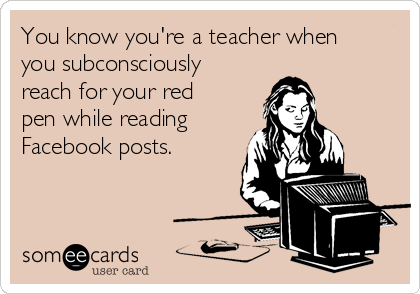
http://cdn.someecards.com/someecards/usercards/you-know-youre-a-teacher-when-you-subconsciously-
reach-for-your-red-pen-while-reading-facebook-posts-46d77.png
There are occupational hazards in being a teacher. You tend to take over in group settings, trying to organize everyone (which is not always appreciated by your adult family and friends). You tend to over-explain, assuming that the listener will need to hear it multiple ways to get it. You correct people's errors, even when it would be more polite not to do so. You're chronically busy, stressed, and under-slept, which can make you a cranky-pants.

But as I've moved to being a teacher and an author, I've found out that there's a lot I've learned from my teaching life that serves me well in my writing life.

Comfort with public speaking. A roomful of people who voluntarily walked into your panel or book talk or reading is a far easier audience than a roomful of middle school children who are required to be there. But that doesn't mean they aren't intimidating. I'm grateful that stage fright is not an issue for me.

A lack of dignity. Sometimes you really have to be a clown to engage children. I've worn crazy hats, let people put pies in my face or dunk me in a booth, and done some pretty amazing role plays as a teacher. So far, I haven't been asked to go to those extremes as an author, but it does make it easier to put myself out there as part of an event. I'm difficult to embarrass.

Diplomacy. I deal with a lot of stupidity as a teacher, and I've learned to do so with kindness. It won't help most situations to make someone (a student, another teacher, a parent, an administrator) feel bad about whatever way they've just put their foot in it. As a writer, I have had to deflect weird responses and questions from interviewers or readers, too, and defend my artistic choices to beta readers and editors who seemed to just not get it. Not to mention participating in a critique group, where I need to kindly point out the flaws in someone's heart's work. Good thing I've got a lot of practice.

Ability to Work Alone, Unsupervised. As a teacher, I have a supervisor in the
form of a school principal. But she or he sees very little of what I actually do. In some cases, I could probably have read a book or shown movies for weeks at a time without my supervisor finding out. Luckily for my students, I have high standards for myself and a strong personal work ethic. As a writer, I am even less well-supervised. In fact, I often don't even have a clear deadline to finish by or any directions at all about what I'm supposed to be creating. Without that self-starter attitude, I could easily just play solitaire and watch Firefly all day and only dream about being a writer.

Able to Think on My Feet: No plan survives contact with the enemy. That includes lesson plans. No matter how well I think I've planned, I always have to adjust on the fly. And I'm good at that after all these years. Turns out, that happens on the page, too. No matter how well I've planned out my story, change will come. Characters will surprise me. A plot twist will blindside me. And I can roll with it, follow it where it goes and trust to revision to smooth it out for the end product. In the classroom and on the page, I've built more than one silk purse out of a sow's ear.

Listening: Any teacher will tell you how important it is to listen to your students. As much as state legislators and pundits want to make education into a nice, clean, easily measured objective process, it really isn't. It's a very messy, human process, as much about relationships as it is about expertise and technique. And you build relationships by listening. You also get a lot of writing material that way.

So, who knew I'd been in training all these years. Too bad teaching didn't make me insightful about marketing. Then I could afford to give up teaching!

Wednesday, August 12, 2015

Writer Brain

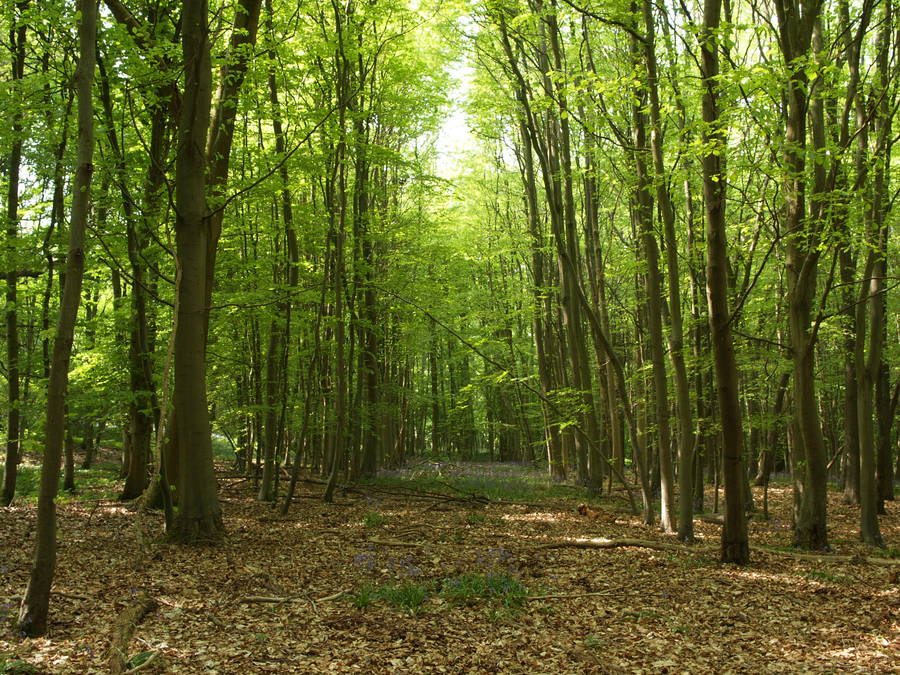
Recently I went on a walk in the woods with some friends. These were some of my higher maintenance friends. Normally I let them choose what we do, because they are more difficult to please than I am, but I thought a walk in the woods was something we could all enjoy together. They thought it sounded nice, too. So, off we went.

It was a beautiful early summer day, not too hot, and the light through the trees was gorgeous and made the leaves glow.

It didn't work out that well. The friends seemed to want to tramp through the path as quickly as possible, as if the goal was to win a race. I felt breathless, trying to keep up and, at the end of the walk, didn't feel the sort of soul-refreshment that an afternoon in the woods normally brings. They seemed fine, but I was grumpy. I couldn't figure out what was wrong.

I think I've got it now. We just don't think the same way. I have writer brain.

It's a disconnect I've run across a lot in social situations. At first I thought it was the introvert/extrovert dichotomy. I definitely skew towards introverted. I'm sensitive to noise and light and atmosphere. Setting matters as much as content. I don't like loud or crowded or busy scenarios. I can deal with them if I must, but I would never seek them out. I'm not a cocktail party girl. I'm a quiet conversation and soft music girl. I would rather spend time with one or two friends, then with ten.

But it's more than just that. I am also nearly never bored. I'm a person who can become absorbed in a pattern of light on the floorboards, or the sound of cicadas singing love songs in the night. If there's nothing there that drops entertainment in my lap, I find it in my own musings and imagination. When I watch people, I'm making up stories, backgrounds and what-ifs for what I see. In fact, I often miss the details on the surface. Not being able to remember the color of the shirt of my companion or where I parked the car is common for me. That's not where my mind was.

My friends, on the other hand, when they tell me stories about their doings and goings, tell me all about those details. How someone wore her hair. What kind of car they're going to get. Who was there and what they said. When they take a walk, they tell me how long the walk was. They like parties and seek out popular events full of boisterous people. They bore easily, getting rid of things and buying new things, changing homes and jobs at what seems like a dizzying pace to me.

Their focus is just in a very different place than mine. So far as I can tell, my friends are the normal ones. I'm the one whose brain works on its own wavelength.

I have writer brain.

It's not always a good thing. It makes me distractible. It means I overthink things that ought to be simple. I can see too many possible roads and want to think my way down all of them. It means I forget details like my neighbor's name, even when I've met her twenty times (though I can tell you all about her habit of stopping and staring up at the moon on starless nights as if she were hypnotized, or that her dog pulls to the right when he walks as if he were a minivan out of alignment).

But I wouldn't trade it. I like the world through this filter of stories, unexpected connections between disparate things and wild goose chases down rabbit holes. I'm happy here in my little dream world. Please don't wake me.