Showing posts with label literature. Show all posts

Sunday, February 5, 2023

It's Cold Outside, So Stay Inside and Read! (January-ish reads)


If you've ever read my blog before then you know that I'm a big reader. Not just that, I'm a book club junkie, because I love talking about what I've read maybe as much as I love the reading itself. 

So, since the calendar flipped a leaf, I've finished nine books. My goal is one book a week, so I'm a little ahead of schedule right now. 


For my bookclubs, I read Matrix by Lauren Groff and Native Son by Richard Wright. The former is historical fiction, based on the life of Marie de France, and the latter, at this point, I guess is historical fiction, too, though much more recent, exploring a mixture of politics, race, and culture. I'm glad I read both of them, though I had some complaints about both. I found Matrix meandering and episodic; I found Native Son unable to trust the reader and devolving into philosophical monologues in the end. But both gave me a lot to think about and some great conversations with my book club friends. 

How to Make Sense of Any Mess by Abby Covert was also a book club read, this one for my day-job. You might remember that I left teaching to work as a content strategist at a big financial company last spring. This book is about information architecture, a field I'm learning more about in my new role. I'm not sure how useful it is yet. It's more like a workbook and I think I need to apply the system to a problem and see how it serves me before I'll know what I think. Just reading about it isn't the same thing. 


Coppice & Brake edited by Rachel Brune, Doctor Watson and the Mayfair Cannibals by Alexandra Chrstian, and The Devil Makes Three by Lucy Blue, are all books by colleagues. At this point, I'm a fan of the work of all three of these women, and would probably read them no matter what, but I started reading all three of them because of our professional connections. (This is why Amazon doesn't let me review books there anymore). 

All of these run a little dark, but, if we're being honest, so do I, at least sometimes. 

  • Coppice & Brake is a collection of horror shorts. What I always love about anthologies is the chance to try on a new writer small scale, and to get a complete story in a single sitting, but know that if I come back later, I can have another story. Rachel's taste in horror is lot like my own--disturbing, thoughtful, feminist, sometimes angry--and I've loved all the anthologies she's put out with Crone Girls Press. I'm so proud to have my work in two of them (soon to be three!). 
  • Doctor Watson and the Mayfair Cannibals is a Shadow Council Archives novella. This is the third one I've read and I adore them. The series takes up Doctor Watson after the death of Sherlock Holmes and sends him out on cases with a supernatural bent. I love this version of those beloved characters, and the witty dialogue that Alexandra brings to all her work. 
  • The Devil Makes Three is a Southern Gothic, complete with generational trauma and a wonderful old house where something tragic happened. I've been a fan of Lucy's Stella Hart Romantic Mysteries for a while, but the tone of this one is definitely far darker. Turns out that Lucy is just as good at imagining what's out there in the darkness as she is at develop romantic tension. 
The other books I read this month were all "buzz books," meaning books I'd heard a lot about. 

I loved two of them, and I was interested by the third, but in the end decided it wasn't for me. 

The one that wasn't for me was Pretty Deadly. I was sure I was going to love it--weird wild west is becoming one of my favorite genres. But I guess I'm a bit more of a traditionalist when it comes to my reading--I need more of a plot through line than I got, and I need to feel like I came to understand a character rather then having my curiosity continually whetted but never satisfied. This graphic novel had wonderful moments, but didn't hold together well enough for me to really enjoy the ride.

Babel by RF Kuang seemed to be on everyone's end of year summary lists for 2022 as one of the best books they read, so I decided to bump it up my TBR. I was really glad I did. There's definitely been an anti-colonial bent to my reading life in recent years, and this scratched that itch while delivering a story of complicated friendship in an interest alternate history setting. 

Speaking of complicated, The Seven Husbands of Evelyn Hugo by Taylor Jenkins Reid was a wonderfully exploration of a complicated woman and her life-long quest to find love. I liked it so much, I wished there actually was an Evelyn Hugo and that I could go watch her movie after I finished reading. 

How has your year in books been so far? Did you find something new to love? Please, share in the comments. There's always more room in my TBR list! 

Sunday, July 3, 2022

What I Read in June

I only read four books in June, but all of them were good. I spent a goodly portion of June traveling (a long awaited trip to Ireland with my mom, sister, and aunt--I'll post about it soon). So here's a quick peek into my summer reading life. 


I started the month already in the middle of an audiobook which I finished in the first day or two: The Final Girl Support Group by Grady Hendrix. I'm becoming a bit of a Grady Hendrix fan girl. He won me over with My Best Friend's Exorcism, which was pretty much liquid nostalgia for me--channeling both the teenager I was, and the books I read at the age. 

The Final Girl Support Group scratched that nostalgia itch again, and gave me a wonderful story of women's friendship and the ways we help one another survive. You might not expect a book about the survivors of horrific violence to have such a heart of empathy and kindness, but it absolutely did and I loved it. 

After that, I picked up George Orwell's Animal Farm, which was the June pick for my First Monday Classics Book Club. I read it as Kindle/Audiobook, going back and forth between the two, which I often do with Classic reads. 

I'd read it before, as a teenager, and it really helped me understand Russian communism--I've always apprehended history better through fiction. Re-reading it as an adult, I was struck by the deep-seated cynicism. Sure, it's a story about the failure of the Russian attempt communism. But more than that, it's a fable about the inability of humanity to build a system that doesn't rely on the exploitation of someone, regardless of the best of intentions. Depressing. But, he's not wrong. 


Next for me was The Secret History of Wonder Woman by Jill Lepore, which I enjoyed as an audiobook read by the author. It's probably no surprise that a woman who writes a feminist superhero series of her own has an interest in Wonder Woman. 

I picked the book based on title alone, so I didn't know what to expect really. What I got was a really intriguing history of the social movements of the early 20th century and of William Moulton Marston, the man who created the character. 

Fascinating stuff, even if it took a long time to get Wonder Woman. It's sort of academic in tone, but I don't find that off-putting. I'm a bit academic myself. It's one of those books that extended my TBR again, because now there are so many topics I want to read more about!

The last book I finished in June was Akata Woman by Nnedi Okorafor. I started it in May, then set it aside (it was on Kindle and I was feeling screenburnt) and picked it back up for airplane entertainment on my way back from Ireland. 

It's the third and final in the Nsibidi Scripts trilogy, in which we meet Sunny Nwazue when she finds out that she is a Leopard Person (Nigerian magical person) and we watch her grow into herself and her powers while building powerful friendships with three other young people. 

I really enjoyed the series, which felt positive and light and had a sense of wonder and joy in the magic. Definitely more optimistic than grimdark. Highly recommended. 

So that was my month in books. I finished the month with a good start on David Copperfield, the August pick for my classics book club, and I'm poking at a cool horror anthology I'll tell you about at the end of the month. How about you? What did you read this month? 

And here's your reminder to review what you read! Especially if it was by a less-famous writer like me. Your reviews, no matter how brief really help with the visibility of our work.  

Tuesday, May 3, 2022

What I Read in April

April was a full month at la Casa Bryant. The youngest kid had a birthday, and so did I! There was home improvement in the form of carpet removal and wood floor installation. I had job interviews. 

But still, I made time for stories. And I scored this month. Everything I read was good!

Octavia Butler is an author I only learned about relatively recently, like in the past ten years or so. Her name just kept coming up, and I knew I had to try out her work. 

So far, I've read Kindred, Wild Seed, and Lilith's Brood and I intend to eventually read everything she wrote. Her work really speaks to me with its combination of grappling with large philosophical ideas and very individual, personal stories

Blood Child is a collection of some of Butler's short fiction. I hadn't yet read any of her shorter work and I really enjoyed these stories. The title story was heartbreaking and horrifying at the same time, which can be a hard balance to strike. Several of the other stories have stuck with me after the reading as well. 

Last month, I read Akata Witch by Nnedi Okorafor, and this month I jumped into Akata Warrior, the second book in the Nsibidi Scripts series. This book picked up not long after the end of book 1, and brought the same characters back into the fray. I enjoyed it a great deal and will be back for book 3 soon. 

My classic this month was The Invisible Man by HG Wells, a book I was rather surprised to realize I had never read before. 

I have a great fondness for the old movie adaptation and have enjoyed several other adaptations on the small and large screen. 

The most interesting part of the novel to me was how funny it was. Wells definitely appreciated the absurdity of the situation his main character had ended up in. 

Between the World and Me was a thoughtful and thought-provoking work. Written as a letter to his teenaged son, Coates crafted a narrative that places his own experience as a black man in America in the geography and history of the wider nation. 

Fevered Star, I technically finished in May, but I hadn't written this wrap-up post yet, so I'm going to count it :-) Fevered Star is the follow up to Black Sun, a novel I read last year and loved. In fact, I loved it so much that I had this one on pre-order and started reading it the day it dropped to my devices! And once again, I'm left with bated breath, anxious for the next book, but having to wait. Dang it. 

It's a sweet kind of frustration though and I love that feeling of really anticipating a good book. 

What did April bring to your reading life? I'd love to hear about it in the comments!

Thursday, April 21, 2022

The Dangers of Revisiting Foundational Books

Some friends and I were talking the other day about books that we have loved since childhood/youth, and the trepidation that comes with re-reading them as adults. 

What is they're not as good as you remember? What if--even worse--they're not very good at all? Is it better to just let them glow in your memory rather than risk tainting that warm, happy place in your heart that they hold? 

What do you think? 

Some books I have revisited and how it went: 


A Wrinkle in Time
by Madeline L'Engle. When I read this as a child, it was a game-changer for me. It was one of the first times I really saw myself in a protagonist. 

Meg wasn't pretty, perfect, sweet, or nice. But she was smart and fiercely loyal to those she loved. 

I read it again as an adult a couple of years ago, when my classics book club picked it. We tend to read a "children's classic" each December. 

Overall, it held up well. The witches are still wonderful, Meg is still grumpy and difficult and complicated, the Nothing is still terrifying, as are all those organized children bouncing balls in unison.

It was more overtly Christian than I had remembered, and that was a little off-putting, but otherwise, still good. I read it out loud to my teenager, who also really enjoyed it, so getting to share something that mattered to me with someone who matters to me was a nice bonus.

"The Lottery" by Shirley Jackson was one of those moments when something I read in school really got to me. 

That didn't happen all that often. A lot of what I was asked to read in school was very safe, and kind of boring. 

But this short story was unnerving, disturbing, visceral and…I loved it. 

In fact, I fell in love with Shirley Jackson's work with that story and it led me to two of her novels in my school's library: The Haunting of Hill House and We Have Always Lived in the Castle. 

Both of those remain among my favorite books to this day and I have read them both several times. Obviously, I must think these hold up well if I keep going back. Jackson's characters are complex and dark. She really highlights the horror in ordinary situations. 

Here lately, I've been reading some of her other work, stories that aren't horror-adjacent, and they're amazing in similar ways. Jackson always leaves me thinking. 

Another author I loved in my younger years was Ray Bradbury. And, in some ways I still do. Such creative imagery, such imagination. 

Again and again, he has amazed me and filled me with wonder and delight, especially in his short stories. 

But, recently I read Fahrenheit 451 and Something Wicked This Way Comes

And, well…the women. 

Both of these books portray women with 1950s paternalism at best, with a pat on the head and a "sit over dear and don't worry your pretty head." 

At worst, it's outright misogyny. 

Mildred Montag, the wife of the main character in Fahrenheit 451, is a caricature of the most insulting nature…and yes, I'm aware that he's exaggerating on purpose to highlight how bad a world without books really can become. 

But no male character is portrayed with the same antipathy. No male character descends into such utter inanity. And plenty of other books from the same era (and even older!) do a better job with female characters, so I'm not giving him a pass for being an old guy either. Bradbury could have done better and should have. 

Clarisse, our most sympathetic female character, isn't much better. She is just shy of a manic pixie dream girl, only in the story as a catalyst to our male lead. In fact, after she inspires his insurrection, she is promptly killed off--practically fridged

Plus, she's seventeen, so there's a squick factor for me with the suggestion of romance between them. Reeks of those literary novels about aging professors who find their joy in life by screwing an undergrad. Yuck!

Gotta say, all that sailed over my head when I was a teenager, but it's much harder to see past now. 

Have you revisited any books that you loved in your youth? How did it go? Do they hold up? I'd love to hear about your experience in the comments! 

Saturday, January 1, 2022

My Year in Books, 2021

Each year, I set a goal of 52 books a year, averaging out to one a week. I usually beat that, and I did it again this year, finishing book #85 right before midnight last night: 


I read a huge variety of books (scroll to the bottom to see the covers for the whole set): nonfiction, literary fiction, horror, romance, science fiction, fantasy, women's fiction, mystery, holiday themed work, classics, young adult, children's, poetry, graphic novels, commentary (you can click on the links on the book titles to see my review for each one). 

Some on paper (six, mostly graphic novels), some on Kindle (about thirty), some on audiobook (about forty-nine). Those last two intermix, as I often buy a kindle edition AND an audiobook edition of a book and go back and forth between the two. 

According to Goodreads, I read 16,048 pages, with the shortest work (The Best Girls by Min Jin Lee) coming in at 18 pages and the longest (The Count of Monte Cristo by Alexandre Dumas) coming in at 1,276 pages. 

Classics: One of the great pleasures of my reading life is my First Monday Classics Book Club, which meets once a month on the first Monday to discuss a work of classic fiction. 2021 was rough going for keeping the group together, since our library closed during the pandemic and still hasn't fully reopened, but we met via video and then later outdoors, and finally in a small business's sitting area.

This year's reading list included The House Behind the Cedars by Charles W. Chesnutt, Kindred by Octavia Butler, The Hound of the Baskervilles by Sir Arthur Conan Doyle,  A Tree Grows in Brooklyn by Betty Smith, North and South by Elizabeth Gaskell, Main Street by Sinclair Lewis, 100 Years of Solitude by Gabriel Garcia Marquez, The Count of Monte Cristo by Alexandre Dumas, Brave New World by Aldous Huxley,  and Black Beauty by Anna Sewell. 

Mrs. Dalloway by Virginia Woolf is our January pick, and I finished it a few days ago. 

On my own, separate of the club readings, I also read a few other books that might be considered "classics":  The Three Musketeers by Alexandre Dumas, The Prime of Miss Jean Brodie by Muriel Spark, A Small Place by Jamaica Kincaid, The Wharton Gothics by Edith Wharton, The Christmas Hirelings by Mary Elizabeth Braddon, and A Christmas Carol by Charles Dickens. 

image source
People often ask me about my classics reading habit. Older books are often dense, difficult, or suffer from antiquated attitudes that are cringe-inducing to read, which can make them problematic for some readers. 

For me, though, that's part of the appeal. Classic novels reveal as much about the eras they were written in and the authors who wrote them as they do about the stories and characters, giving me a wider historical understanding and a big-picture view of how attitudes on things like race, religion, and sexuality have changed over time. 

Plus, I just have this feeling that I "ought" to read these books. It makes me feel informed and like I understand the wider context of the literary world more fully. 

The very difficulty is part of the appeal, too. Completing some of these works feels like a trophy-worthy accomplishment. The Count of Monte Cristo was like that. 

Escapism: Like many readers, I was first drawn to books by the escapism. The chance to travel and explore without leaving my house, experience things I could never experience for real. That desire has never left me, and my reading list tends to lean heavily towards speculative fiction for that reason. I read some great ones this year (a few pictured below), including mystery, romance without speculative elements, ghostly romance, and 1980s nostalgia horror. 

Here lately, clever romances have gotten a larger amount of reading time. I have a need for happily ever afters, but also need the characters to be smart and good-hearted, so I can cheer them to get together and feel good when they do. My favorite find in this regard this year was Lucy Blue's Stella Hart Romantic Mystery series. Witty dialogue, a good balance of sexual heat and relationship building, a fun historical setting, and, oh yeah, some corpses. 


Thinkers: Some books give me a lot to think about. While it's good to just shut down my brain and go for a ride sometimes, I also enjoy a meatier book from time to time, one that tackles difficult themes and lingers in my consciousness long after I've finished it. I read a lot of great books of that sort this year. 

In my fact, my top three picks for best books I read this year fit this category. Mexican Gothic by Silvia Moreno-Garcia, The Echo Wife by Sarah Gailey, and Hamnet by Maggie O'Farrell don't seem to have much in common on the surface, but they do all feature complicated, interesting heroines in difficult situations. All three also tackle BIG themes like racism, sexism, grief, and ethics. Which made all of them perfect books for me. Gorgeous prose and interesting settings didn't hurt a bit either :-)


I didn't even tell you about the great graphic novels and nonfiction that made my list this year, but if I go on much longer, this post will become a book of it's own, so I'll stop here, leaving you with the images of my reading list below. 

Did we share any reads this year? What makes your top few reads of the year? Did you read one of mine? I'd love to hear about your year in books in the comments. 


Wednesday, June 30, 2021

June Reads: Short, but not Sweet

Here I am halfway through the year, and I've already nearly met my yearly reading challenge. I always plan to read 52 books: one per week. Generally, I read a bit more. This year I'm already at 41 books. 

I read nine books this month, though to be fair, they were mostly quite short. I found my attention scattered, what with end of school year burnout and a suddenly very crowded social calendar with family obligations and writer-life opportunities now that vaccination has re-opened some possibilities. I was out of pocket for 11 of June's 30 days which is quite a lot, especially after my homebody habits of pandemic life. 


I started with Colson Whitehead's Nickel Boys, a choice by my neighborhood book club. I had previously read his Underground Railroad, and liked it overall, but was a bit put off by the intermixing of fact and fantasy. This story was much more succinct and tight and I think that's part of what kept me engaged a bit more. Now that I've had a little time to think it over, I think I prefer Nickel Boys which stuck closer to actual historical events and realistically likely events. But it was a heartbreaker. 

So after having my heart broken, I picked up Un-Girls by Lauren Beukes. At some point Audible had offered me this book and others in the Disorder series for free or at low cost (I don't remember), and since I already admired Beukes's Broken Monsters, I accepted the offer. I found both these works horrifying and creative, taking angles I'd not seen before. Her body horror is shudder inducing. 

Having peeked into the series, I became curious about the other five books in the Disorder series and quickly read the rest of them: the twisty and ever-changing The Beckoning Fair One by Dan Chaon, the fascinating but inconclusive Loam by Scott Heim, an Edgar Allen Poe retelling in Will Williams by Namwali Serpell, the all too realistic Anonymous by Uzodinma Iweala, and the deeply sad Best Girls by Min Jin Lee with its echoes of Thomas Hardy. I recommend the entire series. Each is 1-2 hours long and each takes on horror from an unusual angle. 

After that horror, I was ready for something lighter so I chose The Ghost and Mrs. Muir by RA Dick (the pseudonym of Irish author Josephine Leslie). I already knew and loved this story from the 1947 movie edition.

I was happy to find that much of what I loved about the movie was also present in the novel and was especially touched by the plight of "poor Lucy" who had to learn to stand against that most difficult of obstacles to an independent life: people who love you.  

Quite a charming and romantic story which also has a lot to say about the importance of taking charge of one's own life. 

I finished with Something Wicked This Way Comes by Ray Bradbury, a story I knew from the 1983 movie, but had never read. It, too, was a relatively short work I had purchased some time earlier and found waiting in my Audible library when I sought short books to read. 

I have really enjoyed a lot of Bradbury's short stories over the years, though some of them can feel "quaint" these days in that they are less cynical and less concerned with startling and unpredictable plot twists. His mild paternalistic misogyny can be annoying, but like Asimov, he mostly avoids the problem by having very few female characters and never focusing on them if he does have female characters. 

In trying to describe this one, I said: 

"This book is a celebration of that cusp moment of childhood into adolescence (particularly for young boys--one of Bradbury's consistent failings is creation of meaningful female characters). It's a meditation on aging and regret. It's nostalgia brewed into a fine tea that, while faintly bitter, still pleases the senses."
I finished the month with Alexandre Dumas's The Three Musketeers, which I have not yet finished, so I'll have to tell you about it next month. So far, I'll say that it holds up quite well and that much of what you know and love about these characters from all the movie and television adaptations came directly from Dumas's pen. 

How about you? What did you read this month? I'd love to hear about it in the comments!

Monday, August 31, 2020

What I Read in August


It look like I didn't read much in August. Only five books…and I'm cheating a little to claim the fifth. I still have a couple more hours on Look Homeward, Angel. But, in reality, I read a lot! It's just that one of the books to fill my August hours was more of a tome. 

Also, school started, which really crimped my style when it came to reading time. Since school is an entirely online endeavor right now, I'm suffering from screentime overload, which makes me avoid reading on Kindle--which is usually my go-to format! The good news is that I can listen to audiobooks without looking at a screen, so anything waiting in my Audible and Chirp libraries is moving up the TBR pile a little faster. 

You'll see that first three of my reads this month were more how-to sorts of things. I'm diving hard back into drafting the fourth Menopausal Superhero novel and I'm always looking for ways to increase my output speed, making the first drafts better so it doesn't take as many drafts to have a reader-worthy manuscript. So, The Emotion Thesaurus and Emotion Amplifiers are great quick reference when I'm finding myself hiding behind too many filter words, or drowning in "was." Maybe I didn't exactly "read" these, but I used them enough to be able to attest to their usefulness. 

If life lets me, I'm planning to release my first fully indie project this October, so I checked in Danielle Ackley-McPhail's Build-a-Book-Workshop for some tips and advice. It turned out to be a little more basic than I was looking for, but I will still make use of her checklists as I work my way through the project, making sure I put out the best product I can. The book seems like an excellent introduction to the business of publishing your own work and I wish I'd started with it instead of picking up everything I knew piecemeal over the past few years. 

The only book on the list that was purely a pleasure read was Maplecroft by Cherie Priest. What if Lizzie Borden killed her parents because something Lovecraftian was going on? 

That's the beginning premise of the book, which follow Lizzie, her sister, her actress girlfriend, and the local doctor into a fight against monsters trying to take over their town, and struggling to keep their sanity at the same time. 

I ran across this book because Speculative Chic (a lovely magazine that recently hosted me for a guest post) had a book club discussion about Lovecraft Country, and this book came up as a recommended read in the same vein. 

I'd read Boneshaker by Cherie Priest some time ago and really loved the post-apocalyptic steampunk alternate-history mixture, so I was excited to see what the author could do with Lovecraftian horror intermixed with historical fiction.

It didn't disappoint. It was only a shortage of funds at the moment that stopped me from buying the sequel immediately. Today's payday, so guess who's getting a new book? 

The last book of August is Look Homeward, Angel, which is actually going to be a book of September, too because I'm not quite done yet. It's the October selection for my First Monday Classics Book Club (we don't meet in September because the first Monday is Labor Day). I had mixed feelings going in. Some people I've talked to LOVE this book; others, well…hate is a strong word, but…. 

I had heard from James Maxey (the founder and other host of our club) that the book was rather plotless. That's not always a good sign for my enjoyment. This is the story of a man's life…and it started several years before he was born and I was 20% into the book before he made it to puberty. But, I haven't been bored. Even though it's a bit of a meander of a book, I still care about Eugene and his strange and quirky family. 

It's an interesting walk through the region (the book is set in Asheville, NC, mostly) and through history, peppered with all the racism and sexism you'd expect from anything telling the truth about 1929 (when it was published) in the South. 

The last book of this sort I read was Pat Conroy's The Prince of Tides, maybe less regarded as a "classic" but still widely read and touted as representative of something true about the South. I didn't like it nearly as much, and I worried that this book, too, would suffer from "woe is me" whining and annoy me. 

Good news! It didn't (at least not so far and I'm at 90% on the Kindle edition--been reading it as a combination of audiobook/kindle). 

Though the main character, Eugene, does complain about his lot in life sometimes, the book doesn't feel like only navel gazing. It feels more like a bildungsroman--and I think he's actually going to grow up and not stay an annoying boy-man. I'll let you know next month, when I've made it to the end!

So, August had some good reads for me, but not as many as I wanted. How about you? What did you read this August? 

Did you read my latest? If you did, toss a girl some stars and a few words of review. Even if you can't squee because you didn't LOVE it that much, reviews are a writer's best ticket to a wider audience and a chance to make some kind of a living, so they are *always* appreciated.  (end of PSA). 


Friday, July 31, 2020

July Reads


I'm honestly surprised to find that there are eight books in the list of what I read in July. The month felt relentless, especially when you consider that it's my month "off" from teaching life. But, teaching life has garnered way more of my attention than I usually give it in July, as there is so much to figure out about how school will operate come fall. 

I didn't feel as if I had any time to read, but looks like I still managed to read a few things, after all. 

The Hobbit, I actually mostly read in June. It's just that I finished it in July. It was a selection for the First Monday Classics Book Club, a group I help facilitate alongside author and friend James Maxey for Orange County Public Library. 

I had a little PTSD from the last time I read Tolkien, which coincided with the release of the beloved films, so I wasn't looking forward to reading The Hobbit. My memory of reading Tolkien was that I loved the world, but that the storytelling wasn't character-driven and therefore didn't really engage me. So it was lovely to be surprised by The Hobbit, which turned out to have a very personable narrative style and strong characters that popped on the page for me. Of course, I had last read The Hobbit when I was about ten years old, so I might be forgiven for not remembering that. 

The other First Monday selection I read this month was Agatha Christie's And Then There Were None. I had read this one before as well, probably when I was around thirteen or fourteen years old, in an edition that was titled Ten Little Indians. Racist considerations changed the title of this one twice--the original title used a racist slur for black people. And Then There Were None is, in my opinion, a better title anyway. Luckily, I didn't remember the plot all that well, so only figured out whodunit a few pages before the book would have told me anyway. Reading Christie isn't as much fun if you already know the answer to the mystery. 
You might notice that one of the books I read in July was my own book. Starting in June, I re-read all the Menopausal Superhero series in preparation for writing novel number 4 (working title: Be the Change). I'm still proud of Face the Change, and re-reading the series helped jumpstart my process for that fourth book, which I've now got got around 12,000 words written for. 


I read Nighthawks by Jeremy Flagg because I recently found a new group of writing colleagues in the group at Superhero-Fiction.com I'm planning to work my way across the group reading their books. I like to support other writers, but for me that process has to include reading their work myself. No matter how much I like another author personally, I only cross promote with people whose work I have direct experience with and deem worthy. Jeremy's book really grabbed me with an interesting world and diverse cast of characters. I can easily see myself heading back for more!

Similarly, I read AJ Hartley's new book, Impervious, in part because we share a publisher. We're also both educators. I already knew a bit of the backstory on why AJ wrote this book going in, and I won't tell you about it here because it's a story better read blindly--letting the book reveal what it is as you go through rather than spoiling it with too much description. I will say that it handled difficult topics with grace and I highly recommend it. 

Silver Moon also came to my attention because of a professional connection. Catherine Lundoff offered a class on Book Marketing that I sat in on, and of course I became curious about her menopausal werewolves, since I also write about power and change in midlife for women. I enjoy werewolf and shifter stories, and this one took a unique spin on some of the tropes. 

I guess that only leaves two books that I read without ulterior motives, but just because I wanted to read them. Interestingly, both are also the third books in a series that I enjoyed the other two volumes of. 


Becky Chambers's Wayfarer series is such a positive, optimistic vision of humanity that it should be offered as a vaccine for all the ugly underbelly 2020 has revealed. Record of a Spaceborn Few was just the jolt of optimism I needed. 

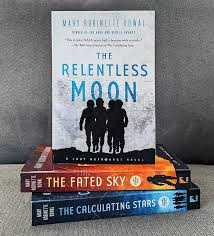
On the surface, the Lady Astronaut series isn't as optimistic, but it's also a series that gives me hope when things seem dark. The series created an alternate history in which Earth was impacted by a catastrophic meteor strike that necessitated a whole new kind of space race and the formation of off world colonies. We follow the stories of women in the new society this creates and I love how Kowal is able to imagine how a group of impressive women would have broken boundaries if something like this had really happened and present these stories in a way that feel accurate to that bygone era and the roles women would have been juggling at the time. 

So, what did July bring me? Hobbits, Murderers, Superheroes, Werewolves, and Pioneers. What a month! No wonder I'm tired :-) I'd love to hear about what you've been reading. Despite the fact that my TBR will outlast my life already, I'm always up to learn about new books to love!


Tuesday, June 30, 2020

June Reads

I'm pretty far ahead on my yearly reading challenge now. I aim at 52 books a year: one a week. As I write this, I've finished 37 books, which Goodreads tells me is 12 books ahead of schedule. 

I read seven books in June and only two of them were novellas, so I think I may finally be past my reading slump. Maybe it's because school ended, alleviating some of my stress and anxiety, at least in the short term. 

I still don't know what teaching will look like come fall, and I'm still worried about my students--especially the ones I didn't hear from often enough during our weird quarantine school-from-home situation--but I *usually* don't hear from them in June, so that doesn't constantly bump against my consciousness like it did in March, April and May. 

Or maybe I've adjusted to the low-level anxiety all the time now, enough to be able to read through it. 

I read quite a variety this month: 


We've got comedy, cyberpunk science fiction, magical fantasy, nonfiction supernatural study, and my own superhero novels. (I'm re-reading my own books because it's been two years since I wrote new material in this series and I'm refreshing my feel for the world before I dive back into writing book four). 

Magic for Liars by Sarah Gailey is a book I'd heard a bit of buzz about and when a friend proposed we discuss it as part of a book club he was starting, I jumped in. If you're a fan of distinct narrative voice, then you'll love this one, about a non-magical woman working to solve a crime in a magical school, where her magical twin sister teaches. So much relationship healing and moving forward through pain, along with romance and a fabulous setting. 

image source
Someone once describe the Shingles series to me as "if Goosebumps had been written for adults." That seems spot on to me. Slow Ride was written by my publisher, John Hartness, and others in the series are written by his friends from Authors and Dragons. This is the first of these comedy-horror novellas I've read, but I have a feeling it won't be the last. I giggle-snorted my way through it.  

Altered Carbon has been on my list for a while. I watched the first season of the TV show with my husband, which spoiled the book for me a little (much of the plot is similar), but I still really enjoyed the world. I loved the intermixing of cyberpunk and noir tropes, even if I was also annoyed by the adolescent casual misogyny. 

Like Mulder of X-Files fame, I want to believe. Though in my case, it's ghosts more than aliens I want
image source
to believe in. For that reason, I found Alex Matsuo's book about her paranormal investigation of a purportedly haunted theater intriguing. Really interesting for learning how such investigations are done without the sheen of hysteria and exaggeration that often surrounds "ghosthunter" books and programming. 

I won't comment here on my own books other than to say that I am happy to report that these works by past-Samantha do not embarrass me. I still think they're solid--entertaining, thought-provoking, and fun all in one package. Can't wait to see where the next book in the Menopausal Superhero series takes me!

How did your reading month go? What kinds of books are you seeking out during these strange times? I'd love to hear you thoughts in the comments!

Sunday, May 31, 2020

May Reads

Reading has always been my escape, well, as long as I can remember anyway. But like a lot of readers I've talked to recently, falling into a story has been harder than usual for me during quarantine. 

That got worse here at the end of May with police violence leading to protests that became riots. My low-level restless anxiety and imagination full of what-ifs whipped into something larger and harder to ignore. I know a lot of creatives are struggling similarly, with creation as well as consumption of art. I'm managing slow forward progress on my writing still, and am hopeful I can pick up my pace again when the school year ends here in a couple of weeks. 

Despite my struggles, I still read eight books in May, and I really liked six of them. 

I read three books written by friends and colleagues: Gidion's Hunt by Bill Blume, Chasing the Dragon: A Sherlock Holmes Romantic Mystery by Alexandra Christian, and The Reckoning by DM Taylor. 


I've read other books by Alexandra, and I know from being there for some of her readings that her work is clever, sexy, and spiked with humor. Chasing the Dragon: A Sherlock Holmes Romantic Mystery was no exception. Her imagined love story for Sherlock Holmes plays beautifully in the known world of those stories while bringing Alexandra's strengths into play. I hope she writes more in this universe! 

Bill and I have been on panels together at conventions for a few years now, but I hadn't yet read any of his work. Gidion's Hunt  was sweet in a wholesome sort of way, especially considering that it's a story about a teenaged vampire hunter. I loved the family relationships and it looks like Bill has a great foundation for future books in the series in this first volume. 

DM Taylor is a writer I know from Instagram. The Reckoning is a time travel thriller with elements of women's fiction. I enjoyed it quite a bit! It took me a little longer to read this one because I read it as a Kindle edition, and I'm suffering from screen-time overload right now, which is making me prefer paper and audiobook reading to ebooks. 


I also read three graphic novels this month. Graphic novels can be read quickly, often in a single sitting, and the combination of art with narrative really works to suck me in when my attention is scattered. The Sixth Gun, Volume 3: Bound really pleased me. I read the first two in this series last month and loved the way this volume took the focus to Gord and deepened his backstory. I'm looking forward to reading more in this series!

Newprints and Endgames by Ru Xu were passed my way by my thirteen-year-old daughter who loved them. She's a huge fan of Blue, the main character, and I can see why--she's so forthright, scrappy, and determined. Unfortunately, the storytelling disappointed me in that the narration pulled back from hard emotional moments, avoiding conflict that the story really needed. 

The second volume in particular felt rushed, like two books worth of story had been crammed into only one. Still, it evokes a Little Orphan Annie feel in a wonderful steampunk setting and there's a lot to recommend them, especially to younger readers. 


My last two reads were disappointments. I'd been looking forward to reading The Starless Sea by Erin Morgenstern. I loved the cover and the premise of a secret society surrounding story and books intrigued me. I had positive memories of The Night Circus, so thought I might enjoy another book by the same author, but it really just didn't grab me at all. All atmosphere (gorgeous, beautifully rendered atmosphere) and no substance. Too light on plot and characterization to keep me, especially under current circumstances. 

Steppenwolf by Hermann Hesse was my First Monday Classics Book Club choice for the month and it was a slog for me. I kind of had a feeling it was going to be, just remembering the kinds of people who touted its praises back in my undergrad years--almost exclusively entitled young men I didn't like all that much. But, still, I tried to go in without bias and give it a go. 

I found some beauty and insight in the text, but was left with the overall yucky feeling that I get from reading literary representations of male academics having midlife crises which they overcome by having affairs with far younger women. 

There's nothing for me in a story like that. I can't sympathize with the main character, and often can't sympathize with the young woman either because she's a manic pixie dream girl or a complete cypher. Maybe this one was the first novel of this type? I don't know. But it didn't feel innovative or interesting. I've seen this story many times and it's irritated me every time. 

Luckily I'm finishing May in the middle of two good books I'll tell you about in June: Magic for Liars by Sarah Gailey and The Haunting of the Tenth Avenue Theater by Alex Matsuo. 

What did you read in May? What's next on your list? I'd love to hear your thoughts in the comments. 

Sunday, May 24, 2020

Art is Essential: Shakespeare in Quarantine

Critical Read put out a call recently for short nonfiction posts about art that is seeing you through the pandemic. They rejected my submission, but were kind about it and invited me to submit something else, with a focus on an American artist. I probably will. In the meantime, I highly recommend checking out the posts on their site (and, of course, mine below).
_________________________

Shakespeare in Quarantine

I often turn to poetry when my soul is troubled, especially older, metered poetry. The rhythm soothes me while the language pulls me out of my here and now and transports me to another time and place. This time, it’s Shakespeare seeing me through the quarantine.

Shakespeare’s birthday, April 23, is also the day that my husband and I had our first date, on which we watched a movie production of one of the Bard’s plays, 10 Things I Hate About You. We’ve made a tradition of celebrating our anniversary with a Shakespearean performance every year since as near to the day as we can manage, live when possible, recorded when not.

So, it seems apropos that it is Shakespeare in a thoroughly modern context that is pulling me through right now. Each day, I wait for Patrick Stewart to upload his daily sonnet video to social media and I find a quiet space to sit and listen alone, just me and Sir Patrick and the day’s verse. As I write this, he’s been recording a sonnet a day for nearly two months.


He began with Sonnet 116 “Let me not to the marriage of true minds/Admit impediments” which of course, I already loved. I fell in love with it when I first read it as an undergrad, and again when Kate Winslet’s Marianne of Sense and Sensibility quoted it breathlessly, and yet again when Sir Patrick Stewart read it to his wife who held a phone to record the moment for us.

Words written more than four hundred years ago are performed for me by a spaceship captain in the privacy of my own home. What a gift!

__________________

What art is seeing you through quarantine? I'd love to hear about it in the comments!