Normally, it's pretty easy for me to build up a head of steam and some excitement about Christmas. What's not to like? Pretty lights, time off of work with people and dogs I love, an excuse to spoil those people and dogs with gifts and food. It sounds lovely.
But when you're the mom of the family, it also sounds like a lot of work--those lights, gifts, and special moments don't happen without some preparation and planning and this year . . .well, I'm pretty darn crispy.
See, last school year, I worked two jobs at the same time because my school district decided that one teacher could teach both children physically in the room and children attending class from home via zoom at the same time, with no change in pay or other responsibilities. People left the profession in hoards.
But I didn't. I'm back in the classroom this year, but I'm a shell of my self and struggle with energy and empathy exhaustion.
I did my best to give myself recovery time. I didn't take any summer teaching work despite HUGE pressure to do so, and I kept my writing life low-commitment, too. But seven weeks off didn't do it, and I started the school year still burnt-out from last year.
So, as holidays approached, my feeling about them was more exhausted-before-I began than excited.
Chanukah helped.
Years ago, we decided that instead of nightly gifts, we'd do nightly family activities, sitting by our candles and remembering what we do this for. The eldest was able to join us for first and eighth night this year, quite a coup in her final year of college crazy-times. We baked, drew, listened to music, played games, and watched movies. One night though, we had to declare "introvert night" where we spent time ignoring one another and going to our separate corners.
My latkes were perfect this year, and we started a new tradition of JFC (Japanese fried chicken). The prayers and candles still brought me a peaceful contentment.
Then, we started making the shift into Christmas, and . . . I just wasn't feeling it. Even as I ticked things off my list in anticipation of all the good times (Christmas Eve pajamas, stocking stuffers, once-a-year treats), it felt like stress management more than joy.
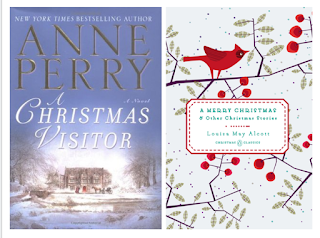
So I decided to turn to books to save me. Up until Christmas, I'm reading only holiday-themed books. Here's what I've read so far: a mix of nonfiction, classics, and romance.
A Christmas Carol read by Tim Curry was perfection itself, and on a scale of zero to holly jolly, The Christmas Hirelings by Mary Elizabeth Braddon gave me all the right feels. The light romance approach of The Dreidel Spinmade me feel like I'd just watched two deserving friends find one another, and the magic of food and kindness made the Moonglow books a delight. There are seven of those, and if I don't fit more of them in this year, I'll come back for them next Christmas.
I'm in the middle of two more right now:
A Christmas murder and some sweet morality tales. Quite a contrast. Still in my Kindle are a few Christmas reads written by friends and colleagues as well that I'm hoping to read before the 25th arrives:
I'm grateful that my winter break starts a few days ahead of Christmas this year, giving me time to sit by the fire reading and continuing to try to stoke the fire of my holiday spirit, so I can really enjoy the gifts the season brings. I'm grateful, too, that my family understands how tired and crispy I am and doesn't expect me to travel or host guests, but just to rest and recoup.
Are there any stories or activities that help put you in the holiday spirit, even when your candles are burning low? Tell me about them in the comments! I'd love to know.
Reading has always been my escape, well, as long as I can remember anyway. But like a lot of readers I've talked to recently, falling into a story has been harder than usual for me during quarantine.
That got worse here at the end of May with police violence leading to protests that became riots. My low-level restless anxiety and imagination full of what-ifs whipped into something larger and harder to ignore. I know a lot of creatives are struggling similarly, with creation as well as consumption of art. I'm managing slow forward progress on my writing still, and am hopeful I can pick up my pace again when the school year ends here in a couple of weeks.
Despite my struggles, I still read eight books in May, and I really liked six of them.
I've read other books by Alexandra, and I know from being there for some of her readings that her work is clever, sexy, and spiked with humor. Chasing the Dragon: A Sherlock Holmes Romantic Mystery was no exception. Her imagined love story for Sherlock Holmes plays beautifully in the known world of those stories while bringing Alexandra's strengths into play. I hope she writes more in this universe!
Bill and I have been on panels together at conventions for a few years now, but I hadn't yet read any of his work. Gidion's Hunt was sweet in a wholesome sort of way, especially considering that it's a story about a teenaged vampire hunter. I loved the family relationships and it looks like Bill has a great foundation for future books in the series in this first volume.
DM Taylor is a writer I know from Instagram. The Reckoning is a time travel thriller with elements of women's fiction. I enjoyed it quite a bit! It took me a little longer to read this one because I read it as a Kindle edition, and I'm suffering from screen-time overload right now, which is making me prefer paper and audiobook reading to ebooks.
I also read three graphic novels this month. Graphic novels can be read quickly, often in a single sitting, and the combination of art with narrative really works to suck me in when my attention is scattered. The Sixth Gun, Volume 3: Bound really pleased me. I read the first two in this series last month and loved the way this volume took the focus to Gord and deepened his backstory. I'm looking forward to reading more in this series!
Newprints and Endgames by Ru Xu were passed my way by my thirteen-year-old daughter who loved them. She's a huge fan of Blue, the main character, and I can see why--she's so forthright, scrappy, and determined. Unfortunately, the storytelling disappointed me in that the narration pulled back from hard emotional moments, avoiding conflict that the story really needed.
The second volume in particular felt rushed, like two books worth of story had been crammed into only one. Still, it evokes a Little Orphan Annie feel in a wonderful steampunk setting and there's a lot to recommend them, especially to younger readers.
My last two reads were disappointments. I'd been looking forward to reading The Starless Sea by Erin Morgenstern. I loved the cover and the premise of a secret society surrounding story and books intrigued me. I had positive memories of The Night Circus, so thought I might enjoy another book by the same author, but it really just didn't grab me at all. All atmosphere (gorgeous, beautifully rendered atmosphere) and no substance. Too light on plot and characterization to keep me, especially under current circumstances.
Steppenwolf by Hermann Hesse was my First Monday Classics Book Club choice for the month and it was a slog for me. I kind of had a feeling it was going to be, just remembering the kinds of people who touted its praises back in my undergrad years--almost exclusively entitled young men I didn't like all that much. But, still, I tried to go in without bias and give it a go.
I found some beauty and insight in the text, but was left with the overall yucky feeling that I get from reading literary representations of male academics having midlife crises which they overcome by having affairs with far younger women.
There's nothing for me in a story like that. I can't sympathize with the main character, and often can't sympathize with the young woman either because she's a manic pixie dream girl or a complete cypher. Maybe this one was the first novel of this type? I don't know. But it didn't feel innovative or interesting. I've seen this story many times and it's irritated me every time.
Luckily I'm finishing May in the middle of two good books I'll tell you about in June: Magic for Liars by Sarah Gailey and The Haunting of the Tenth Avenue Theater by Alex Matsuo.
What did you read in May? What's next on your list? I'd love to hear your thoughts in the comments.
I lean towards optimism in most circumstances, trusting that time and energy spent can improve most situations. At least I believe that nothing gets any better if you don't try something.
Looking at our leadership in my country right now, holding onto that optimism has been harder. But at least I'm in this with an intelligent and thoughtful partner, who has a very useful skillset for managing an isolationist life for a while.
And we're lucky, truly, on a lot of fronts. We're all still healthy. Both adults are able to work from home and are still being paid. The kiddo at home is introverted and digitally connected to her friends, so is handling social distancing pretty well for someone her age. The dog is old enough to appreciate a slow life.
So, looking to the sunny side: here are some plus sides to the pandemic at our house.
1. We're playing with our toys. Over the years, we've collected a lot of them: video games, board games, legos, musical instruments, books, craft supplies, DIY project tools, recipe books, etc. An embarrassment of riches really: more than we can realistically use.
But with extra time at home, we're digging into all these wonderful things and enjoying them. Go past us! For buying things even though we didn't have time for them? At least we're occupied now, without having to shop while we're money worried.
2. We're getting out in nature more. I'm a walker. If you follow me on Instagram, you'll see that my feed is full of pictures of beauty I spot on my daily nature walks. It's my main stress relief.
Because I'm a teacher and my hours are early, even during the winter months, I can usually make it to a trail with a little daylight left to burn. But, my daughter is not so much a walker, and my husband isn't usually home in daylight, so it's usually just me and the pup.
But, without commutes to worry about and with the kiddo legit needing a stretch of the legs, we're able to get out into the woods together. It's a real joy to me to share this love with my people (and still the pupper).
3. Lots of family time. My husband and I have been feeling the rush of time whooshing past us in recent years, as our baby turns into a teenager and our older child becomes an adult.
We've struggled to arrange our days so that we get time together as a family, time for each of us with our daughters, time for just the two of us, etc. all while still holding down demanding day jobs and handling the business of the household.
It's been lovely to be right there for our daughter when she hits a bump in completing her school-from-home assignments, to help her problem solve or just be amazed by how well she does this on her own.
We're playing games and watching shows together. We're really in tune with how everyone is feeling and doing a good job balancing the needs of each of us.
I think we'll miss this part when the speed of life picks back up.
4. The house is getting cleaner and better organized. When it's time to "take a break" from our work from home situations, we're each handling household tasks: cleaning up messes that have been allowed to linger, changing out loads of laundry, running the dishwasher, re-organizing storage situations, sorting things, etc. It gets us moving and clears mental space as well by making our surroundings more pleasant.
It's lovely to slip these tasks into down moments of the work day, instead of struggling to do them *after* work when we're exhausted and wanting some relaxation and more playful togetherness.
We're even making progress on our giant attic project (building an entire new room up there for game storage). The supplies were mostly already purchased, and now we can repurpose that commuting time for mudding, sanding, and (hopefully soon) painting!
5. We're eating better. We're planner-aheaders, the sort of people who usually have a deep freeze full of meats and boxes and cans lining the shelves waiting for use. So, without panic shopping or hoarding, we've stayed pretty well supplied.
Since I'm not coming home from school emotionally and physically exhausted from managing 160 children across the day, our dinners have become more luxuriant affairs, rather than the "what can I make in 30 minutes that is palatable?" trick we'd mastered so well.
So, new recipes, and old favorites that "take too long" for a school night. Cooking together because we're all there. Dancing to music while the potato pancakes fry. I'm enjoying the prep time as much as the eating.
What's a plus side to isolation time for you and yours? Anything you'd like to hold onto when life returns to something more like normal? I'd love to hear from you in the comments.
To put these in perspective for my daughter, I told her that these films were new when Grandma and Grandpa were little. I'm glad we're finally back in feature length films. The shorter pieces collected in anthologies were not my jam in the same way. Most of this next slew of films I actually remember pretty well from childhood.
Even though I'm not as old as these films, they all had theatrical re-releases and at one point or another, I (or my parents) have owned them on VHS or DVD. So, since our last report, the littlest Bryant and I have watched: Cinderella (1950), Alice in Wonderland (1951), Peter Pan (1953).
My daughter thought she would like Alice, but was lukewarm on Cinderella and Peter going in. I remembered Cinderella the most fondly.
Surprisingly, Cinderella was the one we both liked best. The character gets a bad rap in some ways, being lumped in with other, more passive princesses waiting for their prince to come and rescue them.
But this version of Cinderella is a hard-working girl. In fact, you get the feeling that, even had her father lived and protected her from the harsh treatment of her stepmother, she would still have been an industrious young woman, using her positive energy to make a difference in the world.
She doesn't waste time bemoaning her lot. It's the mice who complain on her behalf (in song, of course).
Even when she expresses a wish to go to the ball, it's not about changing her lot in life permanently. As my daughter said, "She didn't ask for a prince. She just wanted to put on a pretty dress and go to a party."
The part of the story that's always been hard for me to believe is that a beloved little rich girl who is demoted to housemaid in her own home harbors no resentment or ill will towards those who abuse her. That impossibly kind "heart of gold" element was helped a little in this version.
After the stepsisters tear up the gown the mice made for our heroine, she weeps in the garden and you learn that her positive attitude has been a conscious choice, one that she's now having trouble maintaining in the face of another disappointment. That's a very real set of emotions and won the respect of two Bryant women watching. We hope the prince proves worthy of her.
Alice, on the other hand, was not very interesting at all. The cartoon still charms, with its presentation of a cast of madcap characters and crazy scenarios, but Alice herself?
Meh.
She's petulant and mostly passive, just pushed along by the world she falls into. My daughter liked this one better than I did, but her focus was on the animation--things like the playing card soldiers, the disappearing cheshire cat, and the size changing experiments.
Honestly, Alice herself is rather incidental to the story.
Still Alice was a model of fortitude and feminism in comparison with all the characters in Peter Pan. Oh my! The racism and sexism was rampant.
The over-riding view of girls in the story is that they're here to serve boys. They are petty and jealous, squabbling with each other over the affections of boys because that's all that apparently matters--not what the girls themselves might want, but who can win the attention of the best boy.
Peter himself, well, he's a jerk.
I don't understand why anyone would want him, and my daughter felt the same way. He's a show-off, and only cares about garnering attention for himself. Even his Lost Boys only seem to hold value for him as an audience for his exploits. The kiddo does say that there are several boys with this kind of self-aggrandizing attitude in seventh grade, and she hopes that they grow out of it. I hope so too! She'll have to work with those people someday.
The element that had her gasping with dismay though was the part with Tiger Lily and the "Indians." From pigeon-English to stereotypes of dress, it was horrifyingly racist.
I guess I can be glad that these kinds of depictions are shocking to younger audiences.
That shows some progress.
When my parents were children, kids commonly played "Cowboys and Indians" using these types of characters thoughtlessly.
Even when I was a kid, in the 1970s, we didn't think anything of calling someone an "Indian Giver" or by the use of actual contemporary people as mascots for athletic teams.
The lyrics to "What Makes the Red Man Red" combine racism and sexism into one ugly little tune. Yikes! I'm kind of surprised that Disney airs this one. I wonder why Peter Pan doesn't get the censure that Song of the South does?
About the only saving grace to the film was the Darling family. The children's affection for one another, the push and pull of the wife and husband, the dog who served as a nanny. All lovely and charming. We liked when dad decided that Wendy didn't have to grow up so fast after all. It was nice that he got to end the story remembering the fun and magic of his own childhood, something he had apparently not held onto as he grew up.
Lady and the Tramp is up next! Looking forward to that one. I hope it's still as charming and romantic as I remember it!
If you've been reading these posts, you already know my husband got us a subscription to Disney Plus, so my daughter (age 12) and I have taken on a project of watching all the Disney animated features in order. I'm writing about the movies and our reactions here on the blog.
Since the United States was kind of busy in the 1940s, thanks to WWII, Disney produced mostly collections of short animations during this period. Even though the release dates are largely post-war, the artists must have working on these pieces during some tumultuous times, and the Disney studio did a lot of government propaganda work, leaving less time to develop popular features.
The compilation/anthology movies don't appeal to me as much as the more extended movies that tell a single story. My daughter doesn't mind though. She's a bigger animation fan in general, though, seeking out animators on YouTube in her spare time and drawing still images in the various styles she sees there. So, she enjoyed these more than I did.
The next one on our list was Make Mine Music (1946), and I was disappointed to find that it wasn't on Disney Plus. I know I've seen it because when I read the description on wikipedia, I remembered Casey at the Bat, Peter and the Wolf, Johnny Fedora and Alice Bluebonnet, and that one with the singing whale. I'll check back for it in the future. Maybe there's a distribution rights problem or something.
On the other hand, I wasn't at all surprised that Song of the South (1946) wasn't there. That one already felt weird in terms of race depictions in the 1970s when I was a little kid. It would probably be even stranger now.
I told my daughter about it, and we both wished we could have watched it for the animation study, to see if the integration of live action and animation had gotten any better after The Three Cabelleros in 1944. I remember thinking it was pretty amazing at the time, but then I wasn't the animation connoisseur she is.
Having learned about Uncle Remus stories, though, my daughter had an a-ha moment about the reference her dad and I sometimes make to being thrown in the Briar Patch, so hey--educational moment :-)
So, we jumped to 1947 with Fun and Fancy Free, which features several famous names of the era alongside two cartoons: Bongo and Mickey and the Beanstalk. I didn't remember Bongo at all, though I remembered Mickey and the Beanstalk quite well. The retelling of Jack and the Beanstalk has been released in other forms and shown on television over the years, though, so it's entirely possibly that I really never had seen Bongo.
My daughter and I both enjoyed Dinah Shore's reading and singing of Bongo, but were more than a little perplexed at the whole "Bears Say I Love You With a Slap" thing. My daughter's reaction was pretty much: Wait? What? Still, it was a fairly charming story and we enjoyed it, even if we didn't find anything especially memorable about it. We both enjoyed seeing Jiminy Cricket again. He's a charmer, that little bug.
Edgar Bergen introduced Mickey with his dummies Charlie McCarthy and Mortimer Snerd. Now I've never found Bergen's schtick funny, but I tried to hold my tongue and let my girl decide what she thought uninfluenced by me. I guess she's my kiddo, after all, because she also wished they would just hush up with the creepy dolls and staged conversations and get back to the story.
Mickey and the Beanstalk was a charming telling and does a good job integrating the normal personalities of Mickey, Donald, and Goofy into the familiar fairy tale. The giant was such a goofball that he wasn't scary at all. We were happy to see him again at the end, pulling the roof off Edgar Bergen's house and then stomping off into the city to put on the Brown Derby restaurant as a hat.
Next we made it to 1948 and Melody Time, which was a string of music-centered stories: Once Upon a Wintertime, Bumble Boogie, The Legend of Johnny Appleseed, Little Toot, Trees, Blame it on the Samba, and Pecos Bill. I remembered Johnny Appleseed and Little Toot from childhood, and was happy to recognize The Andrews Sisters and Roy Rogers among the narrators.
My daughter knew Johnny Appleseed, too--having had a babysitter in her preschool years who showed that cartoon alongside lots of Veggie Tales to the children when she needed a break. And I'm proud to say that she knows who The Andrews Sisters were, too. She's a fan of an electro-swing rendition of Mr. Sandman, which sent her down a historical music rabbit hole, so she's now probably the only twelve-year-fan of a musical group her great-grandmother used to love.
Among the other stories, we were both mostly just annoyed by Once Upon a Wintertime and couldn't figure out why in the world Jenny and Joe were all cuddly at the end when their disastrous ice skating date should have taught them both that they are ill suited for one another. The music didn't really go with the animation either. It looked slapstick and sounded melodramatically romantic.
Bumble Boogie was fun visually and would have been at home in Fantasia, but it's good that it's short.
The Legend of Johnny Appleseed was way more overtly Christian than I remembered, but still managed to be pretty charming, even though both of us don't usually enjoy art that proselytizes too much. Johnny was just so earnest and grateful for his blessings that it's hard not to like him.
Little Toot definitely benefitted from the Andrews Sisters' talents, because the story is a bit of a muddle. My daughter that Little Toot's parents were the ones were needed a talking to, maybe something about age-appropriate expectations and child supervision.
Trees was really pretty to look at onscreen. According to wikipedia, "To preserve the look of the original story sketches, layout artist Ken O'Connor came up with the idea of using frosted cels and render the pastel images right onto the cel. Before being photographed each cel was laminated in clear lacquer to protect the pastel. The result was a look that had never been seen in animation before." It truly was striking visually! We oohed and ahed over that one, but again we were glad it was short because the poem wasn't very interesting and there wasn't really a narrative hook.
Blame it on the Samba was a repeat of The Three Caballeros in that Donald Duck and José Carioca are panting over beautiful human women again. Eye-rolling 1940s sexism. Dullest bit in the film. Who knew Donald was such a horn-dog?
Pecos Bill was the silliest piece. A tall tale story you might hear alongside something about Paul Bunyan or John Henry, it told the story of a cowboy who had been raised by coyotes, wrestled cyclones, and fell in love with a cowgirl named Slue Foot Sue.
We giggled quite a bit during this section, but its silly-ness really brought out how all over the map the tones were in this collection. It was very much a kitchen-sink production, probably having something for everyone since we threw everything in willy-nilly.
Next should have been So Dear to My Heart, 1948, but it too was unavailable on Disney +. So onward we went to The Adventures of Ichabod and Mr. Toad, 1949. Neither of us was sure why these two stories were paired for release. There's really nothing to connect them, though both are fun in their own way. I remembered both stories with some fondness from childhood. My daughter had never seen either one.
Mr. Toad is about, well, Mr. Toad. He's a madcap frog with an enthusiasm for speed and adventure that gets him into trouble. The portrayal of Toad's mania with the hypno-spinning-wheel eyes was entertaining, as was the whole frog running around the countryside dressed as a country gentleman from the turn of the century.
It was a light and entertaining story and we both enjoyed it, but thought it rather forgettable. (The introduction by Basil Rathbone delighted me, but unfortunately my daughter doesn't know who he is, so we'll have to try some old school Sherlock Holmes on her soon.)
Ichabod was a delight. Bing Crosby was perfect and we were both delighted by the portrayal of Ichabod (already a familiar character to both of us) as socially graceful despite his gangly appearance. The scene where he's dancing with Katrina at the party and stuffing himself with pie without ever missing a step and Brom is trying and failing to switch partners so he can squire Katrina around the dance floor? Priceless. So many moving parts in that scene and all so deftly handled. Brilliant.
Talking afterwards we wondered if Katrina's ploy worked and made Brom work harder to win her heart or not. We hoped that Ichabod found a warm hearth and good food in another town. He was a man of simple enough wants after all.
We're both glad to be done with the anthology pieces now. Check back soon to see what we think of Disney in the 1950s. I'm anxious to see how Cinderella holds up!
We're up to 1941 and The Reluctant Dragon, an interesting piece consisting of a live action narrative that gives behind-the-scenes access to the animation process at Disney interlaced with shorter animated features.
I didn't remember this one, so it might be one I missed in my youth, or one that I only saw once.
My daughter enjoys nonfiction, informational kinds of shows. I know this, but I was still surprised with how pulled she was by the live action component. I think she may have enjoyed that more than the animated bits. I guess that makes sense given her own love of drawing and animation. It's really right up her alley.
For my part, I found Robert Benchley too smarmy and the narrative that he was wandering the Disney complex avoiding meeting with Walt Disney an odd choice. But I also liked seeing the color mixing, maquette making, storyboarding, expression studies, sound effects, and other aspects of the craft we explored in his adventures.
There was one cringe-inducing moment with an asian woman in the life drawing class with an elephant, and way too much of Benchley flirting with young women trying to do their jobs, but we were both able to just roll our eyes at those sections and move on.
It was very cool to see the face of the man who voiced Donald Duck and a pleasant little treat to find Alan Ladd portraying one of the storyboard men. I loved learning that Clara Cluck was voiced by an opera singer. How fun!
I learned in reading about this movie that it was released during an animation strike, which might explain, at least in part, why it was the sort of piece it was and why several of the people we see in the movie are not actually animators.
The title is a little misleading in that The Reluctant Dragon story itself only makes up the last fifteen or so minutes of the feature. It's a charming story about a dragon who is uninterested in fighting and would rather drink tea and recite poetry. We both enjoyed it immensely.
Other stories included a black and white segment from "Casey Junior" (from Dumbo), "Baby Weems" told partly in storyboard and partly fully animated, and Goofy's "How to Ride a Horse."
The song from Casey Junior has been running through my head since our watching--it's a darn catchy thing. Baby Weems was just okay, not really charming either one of us, but we both loved How to Ride a Horse. If you're already a Goofy fan, then you know what to expect and won't be disappointed. Lots of good natured foolishness and hilarious physical comedy.
Alongside this one, we also watched a couple of older shorts including Ferdinand the Bull, a childhood favorite of mine that is still pretty fun (though I wonder if I would feel that way if I were a Spaniard) and The Plausible Impossible, a feature in which Walt Disney talked about the concept of making impossible things seems plausible in animation.
Next we're taking on Dumbo and Bambi, more traditional full length features. It's funny that my daughter has seen neither of these films, but already knows that we're in for a rough go in terms of sad stories. I guess the stories are just that engrained in American culture that she knows them to some extent even though she hasn't viewed them. I'm looking forward to finding out what she thinks!
The company has created a lot of stories that I've enjoyed in my life, but they have also helped feed a narrative of women either as helpless and needing rescue or objects of censure for being anything not considered "wholesome."
Even as a little girl, I chafed at some of the underlying messages. But there's a magic about this films, especially when they get you at a young age.
I'm a sucker for a musical, and Disney has more than a few out there that made up the soundtrack of my childhood. Even if I don't always like how the "princess" narrative goes--Disney has a long history of female led stories that garnered huge audiences, crossing generational lines. The cultural significance of that can't be ignored.
Since Disney now owns Star Wars and Marvel--two fandoms that dominate our household, we got the new Disney+ service.
So, I've decided to watch the Disney animated features in chronological order with my younger daughter. She's into animation, and hasn't seen some of the older ones at all, so I think it'll be an interesting view on the body of work.
So, that starts us out in 1937, with Snow White and the Seven Dwarfs. We'll need to watch 11 films to get to 1950, the year my parents were born.
Those first five I know well. I've seen them all many times, starting in early childhood, and moving through VHS and DVD and streaming services with my cousins and friends and eventually my elder daughter. We don't think our youngest has seen any of them before, though she's seen a lot of Disney's more recent movies.
I don't remember ever seeing Saludos Amigos, Make Mine Music, or Fun or Fancy Free, at least not by title. The Three Cabelleros, Melody Time, and The Adventures of Ichabod and Mr. Toad ring only vague bells.
At this writing, the youngest Bryant and I have watched Snow White and Pinocchio.
Some thoughts:
Snow White is weird-looking. She is portrayed as neither a woman nor a child, but some sort of hybrid: adult-sized and apparently considered marriageable drawn as if she is wearing eye makeup and lipstick, but with a chubby baby-fat kind of look more like a toddler, no womanly curves, and a very childish voice.
It's disconcerting. The animation on the dwarves is more expressive than on our princess.
We noticed that sometimes when Snow turns her head, something strange happens to the planes of her face, as if it does not actually have three dimensions. It reminded us of hieroglyphic art in that the face was always to the front, no matter what. We began to wonder if there were any ears under her hair because of all the moments when her movement made us expect to glimpse them, but none were seen.
Obviously animation of human-appearing characters has come a long way since this first feature film.
The Blue Fairy has a similar plasticity, but it is less disturbing since she's a supernatural character: a
fairy who lives in a wishing star. Pinocchio only looks "real" for a couple of minutes at the end, so there wasn't time for him to pull us too far into the uncanny valley.
Story-wise it was interesting the parts of the story that weren't portrayed.
My daughter and I are very familiar with Snow White in thousands of iterations, from the Grimm fairy tale telling through hundreds of reinterpretations in books, movies, and other media.
In the Disney animated feature, we never see Snow White interact with her stepmother until the stepmother comes to the dwarves' cottage disguised as the apple peddler. That's an interesting storytelling choice that really adds to the stepmother/witch's malice.
Neither of us has read The Adventures of Pinocchio by Carlo Collodi, however. When we talked it through, we realized that the only other version of Pinocchio either of us could remember seeing is the character in the Shrek movie series. We did both feel like we already knew this character well, though, despite exploring him far less thoroughly. We must have absorbed him through cultural osmosis.
In the movie, we wondered why we didn't get to see Geppetto get swallowed by the whale. His whole adventure happened off screen. Both of us agreed that would have been more interesting than the whole Pleasure Island sequence that went on too long.
Some parts of the stories didn't age that well.
The ick-factor of Snow's awakening by a kiss from a complete stranger is alleviated by having the prince meet her early in the movie with the wishing well scene. Thank goodness. It really did help with that moment.
The evil gypsy puppeteer Mangiafuoco in Pinocchio definitely made the movie feel old, and not in a good way. Racial stereotypes like that don't play as simply as they once did and we both felt squiggy watching that part. And the cartoon logic of having a pet cat that acts like a cat in the same movie as a talking fox who acts like a human is something we don't often see any more.
Also, is Geppetto the worst dad ever? He sends a boy who was literally a block of wood yesterday off to school alone and wonders why he doesn't get there? I mean, I don't like the helicopter parenting we see these days either, but a little preparation and leading the way might have been a good idea.
"Heigh-Ho", "Whistle While You Work", and "I Got No Strings" still had our feet tapping. Those songs hold up well. The warbling love bits, less so.
I'd love to hear what you memories and experiences surrounding these films are like and hope you'll come back to talk about the rest of the project. There are more than 50 movies in the list, so it might take us a year or so to watch them all!
Today's writer is Laura Ingalls Wilder
_____________________________________
Dear Ms. Wilder,
History can be a hard sell, especially when you're trying to talk to the young. Though I've always loved story, I had a tepid interest in history, thanks to years of lackluster presentation. Elementary school textbooks in the seventies definitely left out anything I might have found interesting.
But somewhere along the way, I discovered historical fiction and you were one of my first loves in that regard. I read all the Little House books when I was a kid, imagining myself out on the prairie alongside you. When the television show based on your books came out, my fascination only grew because the actress who portrayed you looked like me. After all, I was a slip of a girl with freckles and braids, too.
I know there's been a bit of controversy about your books here of late, in particular the portrayal of Native American characters. Since I read them as a white child in the 1970s, I didn't notice that at the time. Given the time you wrote about and the time you wrote in, it's not that surprising that contemporary readers would feel differently about some things now.
I've only re-read the first book as an adult, sharing it with my own daughter. She, like me, was fascinated with the level of detail. I remember us stopping after reading a part about smoking meat. The sheer amount of labor it took astonished us both and made us feel very spoiled and lazy in our contemporary lives, where you just go to the store and buy whatever kind of meat you want, cleaned, measured, and packaged for you.
Your books will always be important for that: for showing children what your childhood was like, in a time and place very different than any of us live in now.
Thanks for helping me learn that history isn't boring if it's told right.
Today's writer is Anne Frank
_____________________________________
Dear Anne,
I'm still so sad that you didn't get to grow up. Clearly, you were going to be an amazing person. Your kindness and thoughtfulness shone through your words. I'm so grateful that you wrote them, even while the circumstances make me sick. Your diaries have been so important to helping generations understand the experience of Jewish people during World War II.
It's a hard topic, especially for children. But your personality came through your diaries so strongly. Reading them, a child like me could easily find herself in the pages and imagine what it might have been like to go through what your family did. You could have been us. We could have been you.
You held onto hope in the darkest of circumstances. So many of us could learn from you in that way. We become bitter and ugly when we've faced so much less. But not you. Hiding, at risk of your life, you still wrote things like:
"I keep my ideals, because in spite of everything I still believe that people are really good at heart."
"How wonderful it is that nobody need wait a single moment before starting to improve the world."
"No one has ever become poor by giving."
"The young are not afraid of telling the truth."
I haven't re-read your diaries as an adult. I'm not sure I could take it, now that I'm a mother myself. It's too horrible to contemplate. I miss you. I grieve for you and all our people. I'm grateful for your words.
Today's writer is Patricia Clapp.
_____________________________________
Dear Ms. Clapp,
I read your book Jane-Emily at the perfect impressionable age to set my tastes for life. I think I was about twelve.
Maybe I would have been a fan of gothic romance and stories with evil children in them anyway. Maybe it's just me. I also loved the Addam's Family and Dark Shadows when I was a kid, after all.
But I think you get at least some of the credit for my interest because of the vibrant world and wonderful sense of menace you created in that novel. I've read it twice since, and it holds up for me as an adult. That's not something I can say about everything I loved as a child.
The edition of Jane-Emily I read as a child came compiled with another of your books, The Witches' Children. That one came more from history, taking the reader with you back to Salem, Massachusetts, during the years that made that city a household name. It started a fascination with that case and that section of history that lasted many years in me.
But Emily! I still think of her every time I see a gazing ball in a garden. She was wonderfully malevolent, and because she attacked a child, it was so nearly a tragedy. No one ever believes the children in time!
So, thank you Ms. Clapp. You opened up a world of story for me that still bring me joy and cold chills today.
One of the family traditions we established as soon as my husband and I married was yearly watching of "It's the Great Pumpkin, Charlie Brown." It's a cartoon we both remember fondly from our childhoods, one of those things we both watched on network TV with our parents as a marker of the season.
At first, we tried to do the same: watching for when it aired and making a point of being in front of the TV on that day, but with modern options for streaming and disk and such, we quickly came to the conclusion that we'd rather schedule our watching when it was convenient and pleasant for us. (The twenty-first century has its share of problems, but I'll take freedom from network scheduling for entertainment as a total win).
It's a quiet cartoon. Sweet and innocent in a lot of ways. We get to see Lucy be a good big sister even though she thinks her little brother is a fool. We get to see Snoopy indulging his imagination in adventures. That whole idea of the "most sincere" pumpkin patch gets me right in the feels. I still hope that the sheer power of Linus's faith bring The Great Pumpkin into existence. I love that he built his own mythology that fit his world view of what kind of behavior should be rewarded.
Good job, Linus. We need more sincerity in this world.
There are a few times of year where excitement vibrates in the air, maybe especially the air around children. A kinetic joy bubbles up and it's all we can do to move forward in the ordinary things we have to accomplish before our anticipation pays off and boom! It's Halloween.
The second October began, that half-crazy energy settled on the middle school where I teach. As the month goes on, it will build. Kids will make plans for costumes, parties, and pranks. They'll tell each other scary stories and wax poetic about the good old days when they weren't "too old" to Trick or Treat (some of them will still Trick or Treat this year, "too old" or not).
Sometimes adults catch it a little, at least some of us. The playfulness of it all is contagious. The "let's pretend" license that comes with a time of year where even adults often dress up as something scary, shiny, or just really different than whatever they usually are.
The giddy energy exceeds even Christmas in some ways. Maybe it's because it's more of an everyone holiday (less tied to religious traditions), and celebrating is less reliant on how much money is in your bank account than the more avaricious commercial side of that December festival.
Eighteen years sounds like a long time, but when you spend it raising a daughter, it goes by in a blink.
I delivered my girl to college on Saturday.
I know she's embarking on another adventure, but I don't get the ringside seat I've had for her other adventures and that's leaving me a little sad.
But I know how fortunate I am.
She's healthy, smart, and capable. She's found a college that seems like a great fit that will prepare her for a future doing what she wants. Bursting with pride and feeling melancholy is a weird combination of feelings. A hard one to describe, which is an odd feeling in and of itself for a wordsmith.
So, here's a verse I wrote for her when she was still very small, and I was struggling with my feelings after divorcing her father. She still saves me all the time.
For my daughter
You save me from bitterness, sweet girl. Without you, how I might rail against heaven and rue the days I spent in your father's company as wasted days, lost time.
But if it took all those sad, difficult days to make you, it was little enough to pay. If I had to cry to bring the joy that is you into the world, it seems a fair price, a bargain. I would have given so much more had it been asked.
When my heart wants to brood on might-have-beens, my breath stops to think that you might never have been.
April and May are milestone months in the Bryant family. Three of us have birthdays (me, the youngest child, and the pup). Both our dating and wedding anniversary fall in this span, not to mention Mother's Day. And, starting last year, April became book launch month. I've launched one two Aprils in a row, choosing that date as a birthday gift to myself, and I'm hoping to keep it going as long as I can.
Different people set goals at different times of the year. For some, it's New Year's, whenever your tradition celebrates that. For others, it's the starts of school years. For me, it's birthdays. That flip forward on my personal timeline is always a time for reflection and goal setting for me.
So here are my thoughts on #45.
Writing Life: When I was turning 42, I decided to finally commit to taking writing seriously and giving it a real chance. I'm a hard worker and when I commit to something, I see it through. It's been a great run at that life goal.
When I was 43, I signed my first book contract, and when I was 44, I saw my first book in print. Now, at 45, I have two books of my own, and have my work included in three anthologies, which allowed me to take this picture at my book launch party. See that grin? That's pride and joy and gratitude for the chance to follow this dream.
Looking forward, I still have plenty of dreams to pursue here. I'd like to fund a great vacation for my family from the money earned from my words. I want to finish all the books I've started, then start some totally new ones. I want to win awards and try not to brag about them too much. I want to be famous enough to be invited as the featured guest author at a con, but not so famous as to be recognized on the street by strangers. Pie in the sky would be complaining to my writer friends about how the television adaptation changed my stories and characters, but what can you do?
Family: When I was 34, I thought my life had fallen apart and I'd never be able to put it together again. My first marriage ended. I was in financial straits that demanded that my daughter and I move back in with my parents. Then, on top of it all, I got sick and was practically invalided for an entire quarter of school, and was treated badly by my school district and my insurance company in the classic "kick a girl while she's down move."
But, when I was still 34, I re-met Sweetman, a man who had been my friend for many years. Timing
is everything, and for once the girl who is always early and the man who was always late had the right timing. Here I am twelve years later celebrating the first decade of my marriage to Sweetman and I still know how lucky I am. As I write this, I'm finishing a lovely quiet mother's day full of pictures and sunshine, and looking forward to a week in which I'll see my eldest daughter sing at a concert and finish another book with my youngest, and a weekend with an anniversary date to see Civil War! Lucky girl, indeed.
My family and writing career goals are all wrapped up in each other. I want flexibility and time to be able to be there for my girls, my husband, and my dog in the ways they need me.
Teaching Career: This is my twentieth year of teaching. I've taught in small places and large places,
kids from grade six through college and adults. On a day to day basis in the classroom, I still love this. Children inspire you to be the best you that you can be. There's something about being there when they understand something for the first time, whether that "something" is irregular verb conjugation or how to organize their folder or why that one kid behaves so strangely. It's like watching the world be born again, six periods a day.
That said, it's also exhausting and repetitive and it can be hard to hold on to your positive outlook when it feels like the state of North Carolina and the United States government is out to crucify you daily to hide their own failings. Being scapegoated can make you bitter and strange. It's hard not to feel frustrated knowing that, had you chosen any other career path, you'd be making double the money or more after twenty years and that your prestige factor would have grown rather than faded.
My goals here are to find a way to keep working with young people, but in a new way that inspires me to new height and offers a little flexibility that will help me with my family and writing goals. I've got my hat in a new ring on that one, so wish me luck!
So, the TL; DR version:
In my 45th year, my goals include: finding inspiration and flexibility in my paid work, making more money off my writing so it can become my paid work, and writing yet more!
I'm a modern woman. I bring home the bacon (at least the part my husband doesn't bring home), fry it up in the pan…and all that jazz. Mostly this means I feel like I'm holding back an avalanche all the time, constantly on triage to deal with whatever just exploded. Day job, writing life, children, dog, house: it all takes more "me" to manage than there is, so on any given day I'm only managing it some it well. Choose your metaphor: treading water, running through soft sand, juggling. It all comes down to more to do than there is time for.
Then come snow days. And I'm stuck at home. I can't go to school and teach other people's children. I tell you, snow days can really be a blessing. Sure, they add a level of chaos to our lives, but while I'm snowed under outside, I can push a plow through some of the messes in here!
Teaching is rough in that taking a sick day doesn't let you out of the work--you still have to prepare the lesson for your substitute, fever or not! But on a snow day, no one is teaching. So unlike my husband who can and therefore had to work from home, I was free to work on other things. I can't work from home (except on a few of the myriad tasks). My classes aren't here.
This year's snow days were beautifully timed for me. I had just received two sets of edits on two different projects, both due at almost the same time. (They weren't supposed to come at the same time, but, you know: life and delays). Even though snow days mean that my own children require more attention and that neighborhood children will become part of the fray, it still meant that I could spare several more hours for writing projects than is normal on a workday.
Heck I even had time to watch a couple of movies with my children.
Am I caught up? Heck no! But I think I've uncovered the top third of my head, including my nose. I can almost breathe! Hurray for snow days!