Wednesday, June 14, 2017

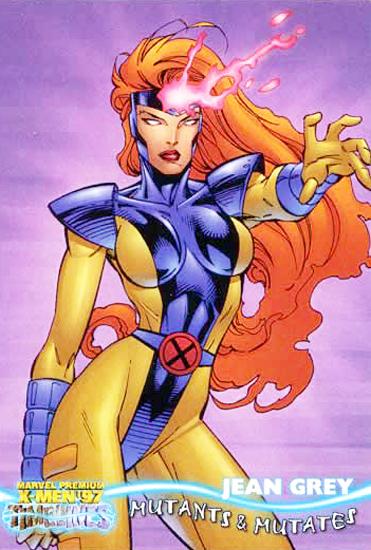
Teachers are Superheroes

Ah, another year over and what have you done? Well, I completed my twenty-first year as a teacher, and, is often the case when I'm finishing a school year, I've got mixed feelings about the sustainability of this as a career choice.

While I watched students take state and federally mandated tests for days on end and tried not to the let the rage and heartache of all that wasted energy eat me alive, I considered the idea that teachers are superheroes.

Now, I don't mean anything very touchy-feely by that, though, of course, we do change and save lives. But I'm at the cynical end of the year, and will need to spend summer recapturing my optimism and faith. Right now, I'm just thinking that you *have* to be a superhero to do this work.

There are so many similarities!

Teachers need secret identities. Remember that time you saw your second grade teacher at the grocery store and just about had a heart attack thinking that teachers might go shopping? There's also the way people FREAK OUT if it turns out that a teacher (who is old enough) drinks a beer in public, or is photographed wearing a bathing suit (at the beach) or cusses in a social media post.

It's changing, and is definitely better from the days when you couldn't teach if you had a husband and being a teacher was akin to being a cloistered nun in the public eye, but many of us still build a protective persona and keep our private life as separate from the work as possible. It's not quite a cool domino mask and a cape, but there is a whole separate me hidden from my work life.

It's a job, but it's also a calling. Just like being a superhero.

Teaching is also one of the few professions where people who have no qualifications, expertise, or experience beyond having attended school themselves feel free to pass judgment on how the job should be done. I try not to be bitter about this and dwell on the idea that this is because teaching, at least through high school, is a female-dominated field.

Like superheroes we are vilified or lauded in the press and public discourse with very little in between, and we are expected to do the job for very little material gain because we're supposed to have a nobler, higher calling (which apparently matters more than whether you are a college educated professional who qualifies for food stamps).

So, if get the vitriol and criticism of superheroes, do we get the powers? Here are some of the superpowers you need to handle this job.


Endurance: Depending on what's going on in your school building on any given day, you may have to go as many as six hours in a row without any kind of break--bathroom, food, coffee, silence, and personal time are for wimps! You also have to be "on" for six hours a day, responding with grace under serious pressure and dealing with every curve ball thrown your way.


Speed: Teachers in my building get 90 non-supervisory minutes a day (if you don't have any meetings
taking up that time) in which to prep 2-7 lessons (depending on your course load), complete any assessment and correspondence, research and collaborate with colleagues, eat and see to personal needs. I can get more done in 90 minutes than many people can do with an entire day.


Extra-sensory awareness: Alone in a room with 30 tweens? You'll need eyes in the back of your head AND a sixth sense for trouble. A little ability to foresee the future wouldn't hurt either. I'd stay away from mind-reading though. You *don't* want to know what they're thinking.


Bullet-proof flesh: Kids are mean. Adults are worse. You'll need that bulletproof flesh to protect you
from attacks of all kinds. (Sadly, some of these bullets are literal, but we'll keep the focus metaphorical for this blogpost).

Reflexes. Emergencies, real or imagined, abound in buildings full of children. A teacher has to be able to jump in with no preparation and build a functional airplane before we hit the ground, all while calming panicking people.


Flexibility. Make all the well-constructed lesson plans you want. They WILL change, usually at the last minute. Resources will fall through, disaster will strike. The wifi will fail.


Wealth. Okay, this one's a pipe dream, but you'll have to teach with fewer and fewer resources every year, because this country likes to SAY it values education, but if you go by where our dollars are spent, we value LOTS of things more highly than education. So, it would help to be independently wealthy, so you can afford to buy all the clothing, food, and school supplies your students come to school without. If I *were* Bruce Wayne or Oliver Queen, you can bet my students would be spoiled rotten with all the best equipment, trips, and experiences.

Wednesday, June 7, 2017

#IWSG: I Quit (Or Do I?)


Recently a man I vaguely know on social media published his first book. It was not an instant bestseller. In fact, he got some critical reviews. With three days of releasing that book, he posted that he quit and would no longer be a writer.

Watching this unfold, I was gobsmacked. He gave up so fast! And so easily. Why? Was he just of the "instant gratification takes too long" mindset? Or that fragile? Or so lightly invested that he could just drop it without a second thought?

The IWSG optional writing prompt this month is about quitting: "Did you ever say “I quit”? If so, what happened to make you come back to writing?"

It's a good question. There are times when it might be good to quit. When what you're trying to do really has no chance of success or if failure is eating you instead of inspiring you to try harder or differently. When there's no joy. But sometimes, quitting is doing yourself a disservice, not giving it long enough to find out what your limits are and what you can do.

So, did this guy do the "right" thing by quitting? Or was he just being a special snowflake and reacting childishly to criticism? I don't know! I've never walked in his shoes, but it did feel like a fast trajectory to me.

I've never actually quit writing altogether, though my level of commitment and follow-through has varied over the years, building to what I have now which is steady, if slower than I'd like, progress.

I have, however, quit a particular piece of writing.

The first novel I ever tried to write is now abandoned. Really abandoned. Like left in the dumpster
behind the supermarket in another town across the country, wiped of DNA evidence so it can't be traced to me. I won't be picking it up again, ever.

See, it was the first novel I ever tried to write. It suffered from a lot of incurable flaws. It didn't have any kind of clear plot; it just sort of meandered all over the place. It was WAY too autobiographical, with characters who were thinly veiled cyphers for people in my life. It was unbelievable wish fulfillment, with everything going the way of my main character even though nothing in the story made that logical or reasonable. In other words, it was crap.

But I learned SO MUCH from trying to write it, so even though the months I invested in that work didn't lead to a finished product, I don't regret the time. My writing group was so supportive and kind. I'll always be grateful to them for that.

I don't think continuing to work on it would have helped me. I would only have become more and more frustrated, trying to make a silk purse out of that sow's ear. So, quitting that book was smart.

The next book I wrote was much better. It's not published, but I think it could be, if I pick it back up again and revise it with what I've learned since.

The third book I wrote is now published, and pushed me into what could now be described as a fledgeling writing career with three novels and several short stories out there. She *can* be taught!

But I never gave any serious consideration to stopping writing altogether. It's too much at the heart of me to simply set down like a less-than-delicious sandwich.

I don't quit easily.

Good thing! Building a writing career is  a hard row to hoe. Which makes it all the more satisfying when something starts to bloom. It wasn't easy, and continues not to be easy. Not just anyone can do this. It takes dedication, hard work, and perseverance. So I'm special :-) (My mother says so).

I'm interested to hear how the rest of you know when to quit. Like Kenny Rogers once sang, "You gotta know when to hold 'em/ know when to fold 'em/ know when to walk away/ know when to run." What he didn't tell us was HOW you know. Please comment below!
___________________________________________________

If you're not already following #IWSG (Insecure Writer's Support Group), you should really check it out. The monthly blog hop is a panoply of insight into the writing life at all stages of hobby and career. Search the hashtag in your favorite social media venue and you'll find something interesting on the first Wednesday of every month.

Wednesday, May 31, 2017

On the Road Again: Find me at ConCarolinas!

It's convention time! I'm heading out to ConCarolinas this weekend. ConCarolinas is a multi-genre multi-media convention held in Charlotte, North Carolina since 2003 or so, and pulling together a little more than 1300 area geeks and creatives to talk, play, and laugh together for a weekend.

I'm going as an author guest this year for the first time. It's been a big year for me in that way. I added Mysticon, Ravencon, and ConCarolinas to my plate. I really enjoy participating in conventions. It's a chance to connect with readers and other authors and just to indulge all my geekiest loves for a few days.

So, if you're in the Charlotte, North Carolina area, come and talk menopausal superheroes and other geeky joys with me. Or if you just want to see the fun you're missing, here's what I'll be up to. You can find my schedule and those of others guests here.

Friday 2 June @ 3:00 Writers Groups: Pros
and Cons:
Some writers swear by their writing group, some just swear. What should you look for in a writing group, and should you look for one at all?

I'll be moderating this panel discussion with Val Griswold-Ford, Chris A. Jackson, Darin Kennedy, and Margaret S. McGraw.

Friday 2 June @ 4:00 The Dreaded
Synopsis: 
Almost as bad as the query letter is the synopsis. Our authors will go through the process they follow when writing a synopsis, including differences in techniques used when writing the synopsis before the manuscript versus after the manuscript.
I'll be participating in this panel discussion with moderator Rick Gualtieri, Quincy J. Allen, David B. Coe, Jason T. Graves, and Gray Rinehart.


Friday 2 June @ 7:00 Broad Universe Rapid Fire Reading: Join our authors from the Broad universe as they read from their latest works.

Broad Universe is an international, non-profit organization dedicated to promoting, encouraging, honoring, and celebrating women writers and editors in science fiction, fantasy, horror and other speculative genres. A Rapid Fire Reading is an event where you can hear several members of this organization read from their latest releases. It's a great way to get to hear from several writers in a short amount of time and find you next read! I'll be there, along with moderator Gail Z. Martin, Alexandra Christian, Melissa McArthur Gilbert, Nickie Jamison, Emily Lavin Leverett, and Margaret S. McGraw.


Saturday 3 June @ 9:00 a.m. When Does it End?: Are you writing a stand-alone, a trilogy or a multibook epic? How do you know how long your series should run?

I'll be participating in this panel discussion with moderator Joseph Brassey, AJ Hartley, Drew Hayes, Dave Schroeder, and Tiffany Trent

Saturday 3 June @ 7:00 p.m. Sexual Identity in Speculative Fiction: Have we finally reached an era when the protagontist's sexual identity has no affect on the book's readability? Or do queer characters still run the risk of marginalizing the book into a "niche" shelf?

I'll be participating in this panel discussion with moderator J.D. BlackroseQuincy J. Allen, Alexandra DuncanRick Gualtieri, and Margaret S. McGraw

Sunday 4 June @ 12:00 p.m. What Good is the Library?: With books being cheap and easily ordered online, what does that mean for libraries? Do they still have importance to today's writers and readers, or are they big brick dinosaurs?

I'll be participating in this panel discussion with moderator Gail Z. MartinAlexandra DuncanMelissa McArthur Gilbert, and Drew Meyer. 

Sunday 4 June @ 1:30 p.m. Board Games!: What
are some of the newest board/card games you should be playing?

I'll be participating in this panel discussion with moderator Jim Ryan, Jodi Black, Christopher DeLisle, Mikki Marvel,  and Puvithel

Wednesday, May 24, 2017

Being the Judge

I've had the opportunity to serve as a judge in a few different kinds of contests in the past few months. I provided feedback and voted for writers to move to the next level in a pitch contest (#SonofaPitch), a contest I've now worked with twice. I read and ranked stories by young writers for a brand new fiction contest (Lune Spark). Next, I'm returning to judge a second year for the Women's Fiction Writers Association Rising Star contest for unpublished novels. 

None of these roles came with a gavel or a cool black robe with a lace collar, but they did come with the opportunity to re-connect with my passion for writing.

You see, writing is work. Hard work. Especially if you want to make a career of it. You've got to produce a lot of words, good ones, and find publishing homes for those. You have to get out there and
shake your tailfeathers trying to get people to notice, buy, and praise your work. In the midst of all that nose to the grindstone, a girl can forget that the reason we do this is because it's fun, because we are passionate about words and story. 

It's a joy to spend time with writers who are fresh to the passion. They can reignite your own fire. 

It's also good for your own word-smithing. 

I've been participating in and facilitating a writers critique group for some years now, and I value the giving of advice and feedback as highly as receiving it. Serving as a judge or critic can really help you learn to articulate what is and isn't working in a piece.

As a casual reader, I might just say, "I like this" or "I don't like this." But as a writer-who-reads, I want to understand why a story is or isn't working for me, whether or not I'll be providing feedback
for the author in question. What's pulling me out of the immersive experience of reading? Is it something I'm bringing to the experience, like exhaustion, distraction, preconceptions, or biases? Or is it something in the piece itself, like poor structure, clunky dialogue, or undeveloped characters? Is it something I can imitate or avoid in my own writing?

Doing this as a judge is the same, but amplified. The pace is more intense, and I have no relationship with the entrants, who are all strangers to me: no history to pull from or basis for trust. Yet I still need to articulate the flaws in their work in a respectful and supportive manner that helps them take their work to the next level. It's a special challenge to do this very quickly, over the space of only a few days. The turnaround time can be quick in a contest setting.

Serving as a judge really helps me look at my own craft in a new light. Participating in events like the
award-giving and talking with the other judges challenges me to define my terms and articulate my views clearly. It's an experience I recommend for any writer looking to take her game to the next level.

Besides, it's always good to spend time with other people living the life of words. They speak your language.


Wednesday, May 17, 2017

May Should be Optional

May is not my favorite month. This might be a side effect of my day job (teaching middle school), but this month is always a struggle. I'm tired, overwhelmed, and fighting apathy (my own as well as my students').

In fact, I usually feel like my tail's on fire and the radio's broken, so I'm just screaming out the window: Mayday! Mayday! 


It's called May, right? May which means that are allowed to do something, but don't have to. As in "you may proceed" or "you may discard two cards." Or it has to do with permission: "come what may" or "mother may I?"

Try as I may, I can't summon a devil-may-care attitude about this. So, I declare the the entire month should be optional. What do you say? May I be excused?


Wednesday, May 10, 2017

How to Be a Fabulous Panelist

As I move deeper into my writing life, I'm getting invitations to do a variety of things. It's proving to be almost as much fun as writing itself is! 

My favorite is probably participating in discussion panels. I get to indulge my vanity by acting as an expert on a topic, as well as the more altruistic side of me that wants to help others move towards their dreams AND I get to connect with other people with similar interests. 

Since I started doing this (at conventions, libraries, and literary events), I've participated in discussions about writing craft (dialogue, action, characterization, etc.), writing tools (software, storyboarding, editing programs), marketing (social media, blogging, sales), paths to publishing, time management, superheroes, concepts like honor, the importance of diversity, and so much more. 

So, if life hands you the opportunity to be on a panel, here are a few pieces of advice about how to make the most of it: 

1. A little research helps. If you know ahead of time who you are sharing panel conversation with and what the topic is, spend a little time looking into who the other people are and considering questions and topics you might raise if the conversation needs a nudge. This can also really assist you if you're introverted or don't consider yourself as good as thinking on your feet as others. You don't want to go too far and write a speech, but a few notes can be a nice support and keep long lulls from happening. 

2. Be generous. Talk kindly of anyone you mention (if you can't talk kindly about something/someone . . .maybe don't mention it at all). Give the other panelists an "in" to the conversation by throwing them a bone from time to time. If you notice someone is quiet, try to bring them in (even if you're not the moderator) by riffing off of something they said or using what you learned about them in your research. We all benefit if the conversation flows well and stays interesting for the audience. 

3. Be aware. Pay attention to the social cues your audience and fellow panelists are giving you. Are you talking too much? Interrupting or over-talking? Stay focused and "in the moment" giving your companions the courtesy of your full attention. Listen to the other panelists rather than just waiting for your turn to talk. 

4. Take care of you. Self care is especially important when you're going to be in
the public eye. I learned the hard way about accepting too many panels at a convention, then having to struggle to keep myself wakeful and positive by the last one of the day. Plan ahead by bringing layers you can add or remove for temperature comfort. Lip balm, water, and portable snacks like protein bars can be a lifesaver. Allow yourself enough time between events to rest your voice and your mind (especially important if you're more introverted). 

5. Show gratitude. Thank your panelists, audience, and organizers both on the spot and afterwards. Give some social media love by sharing pictures and tagging the other participants. Even if there are only a few audience members, you never know what ripples you've created that will feed your career and networks. Be gracious, and present yourself well even if you feel disappointed. 

Wednesday, May 3, 2017

#IWSG: Moving Targets are Hard to Hit!

It's the first Wednesday of the month, so time to talk about our insecurities . . .

So, what am I insecure about this month? It's really the same thing that I'm insecure about every month: getting it all done!

I see other writers out there who have multiple releases every year, and I wonder why I can't work that fast. Some of these other writers are full-timers with no day jobs, but not all of them . . .which leads me to wonder what I'm doing wrong that I've only been able to manage one book and a couple of anthology stories a year.

On the one hand, I'm proud of myself for managing that much. After all, I have a demanding day job and a family. That doesn't leave much time for slacking, and I definitely work hard to hold onto my dream of "being a writer."

What I've noticed though is that my definition of "being a writer" keeps shifting into something I'm not quite doing yet. At first, it was being published. Then, it was having a novel published. Then it was being accepted as an author guest at a con. Then, winning an award. Now, I'm aiming at being the special guest at a convention and selling enough books each month to pay my mortgage.

As I hit each milestone, I just changed the definition of "being a writer" into something I haven't yet done. I'm mean to me that way.

I keep moving the target, which keeps me feeling like I never get there.

I guess there's a good side to that, in that it keeps me striving forward, aiming higher and holding myself to a high standard.

The bad side is that it can be hard on your confidence when you forget to celebrate your accomplishments along the way.

So, yeah. I am my own worst enemy . . .and my own best friend. Does that make me my own frenemy?
___________________________________________________

If you're not already following #IWSG (Insecure Writer's Support Group), you should really check it out. The monthly blog hop is a panoply of insight into the writing life at all stages of hobby and career. Search the hashtag in your favorite social media venue and you'll find something interesting on the first Wednesday of every month.

This month the group asked: What is the weirdest/coolest thing you ever had to research for your story? I tend to fall down the research rabbit hole way too often. There's so much cool stuff out there! Some recent favorites: learning about fireproof materials so that my henchwoman Helen Braeburn could create some fireproof clothing for herself; learning about different methods of flight (birds, machines, balloons, etc.) so I could decide what the mechanics of flight are for my flying hero Jessica "Flygirl" Roark; and learning about discrimination and acts of violence against German-Americans during WWI to decide what might be realistic for my characters in a women's historical fiction trilogy I'm working on. Sometimes I think half the fun of writing is the reading you do to support it.