I've been pondering the word "haunted." As a word nerd, I like the word quite a bit. It's got that fairly unusual "au" sound that feels good in my mouth, but drags the eye and makes you wonder if you've spelled it correctly. It sounds wonderful in a variety of regional accents.
It's versatile as well, serving as a verb or a noun, an adjective or an adverb in its various forms. Haunt. Haunted. Haunting.
It's both a good and a bad thing.
If I am haunted by my past misdeeds, then I get a hunted look in my eyes. (More word need joy for the connection between Haunted and hunted.) I might come to look kind of ghostly version of myself: pale and hollowed out.
But I can also be captivated by a haunting melody that lingers in my mind long past the moment of listening.
The heart of the word seems to be in this context of lingering. In many stories, ghosts haunt because they haven't let go and moved on. In fact, a trope of that genre is finding out what they've left unfinished and helping the ghosts move on. I'm a fan of the genre and the way horror and sadness and mystery all meld to form a tight little package. They often have a wonderful sense of true closure.
Of course, the word isn't limited to ghost stories.
If I am visiting my old haunts, I am lingering in places that I used to go to often, but probably don't commonly go to anymore. In a way, I am visiting the ghosts of my past selves, the people I was at various ages and times of life.
Emotions, too, can linger past the welcome point. Generally, we don't describe ourselves as haunted by the more explosive emotions like rage, but by the quieter, more internal and melancholy ones like guilt or grief or despair.
Come to think of it, even that haunting melody isn't all good. If I'm describing the music as haunting, as opposed to, say, catchy, I probably feel a little unquieted or unsettled by the music. Even while I admire its beauty, I am bothered by it, disturbed.
These days, I am mostly haunted by words. Guess it's time to write some more!
________________________________________
This post is part of the Blogging from A-Z Challenge.
Wednesday, April 9, 2014
Tuesday, April 8, 2014
G: Gross (A-Z Blog Challenge: Evocative words)
Children are gross. If you don't have any in your life, maybe you don't have first hand knowledge, but you've still seen it.
They ooze strange substances from every orifice. They are often mysteriously sticky. Mysteriously sticky is the most disturbing one: you can't quite be sure what that little urchin just smeared on you.
Because they haven't yet learned to take care of a lot of things for themselves, the grownup caretakers deal with a fair amount of bodily fluids: urine, vomit, snot, and drool just to name a few. Under some circumstances, even feces qualifies as a bodily fluid.
This is not one of the things people warn you about when they talk about how children will change your life. Sure, they require a lot of attention and time, but they also require a whole new array of housecleaning products and an iron stomach.
They don't have the strongest handle on hygiene either. Their definition of washed hands may not be the same as yours. The same for brushed teeth and combed hair. After all, they are learning, and the learning curve is steep when you're under four foot tall. Like climbing a mountain.
Luckily, they're also cute. Mine are so cute, they are even cute while being disgusting. If you have them, I bet yours are, too. At least we think so.
If you have any of those single friends that are afraid of children, or DINKs who've decided not to have any in your life, then you've probably seen this expression of horrified withdrawal. You can see them wanting to yell "Unclean!" as they back away making the religious symbol of their preference.
To these folks, I always want to say: "You're right. They are gross. But you're missing out. Engaging with life means getting your hands dirty. And, children? That's the very definition of life right there."
Still, children are not for the faint of heart. They require strength of heart, will, mind and soul. Real fortitude. Some people don't have the stomach for it.
________________________________________
This post is part of the Blogging from A-Z Challenge.
They ooze strange substances from every orifice. They are often mysteriously sticky. Mysteriously sticky is the most disturbing one: you can't quite be sure what that little urchin just smeared on you.
Because they haven't yet learned to take care of a lot of things for themselves, the grownup caretakers deal with a fair amount of bodily fluids: urine, vomit, snot, and drool just to name a few. Under some circumstances, even feces qualifies as a bodily fluid.
This is not one of the things people warn you about when they talk about how children will change your life. Sure, they require a lot of attention and time, but they also require a whole new array of housecleaning products and an iron stomach.
They don't have the strongest handle on hygiene either. Their definition of washed hands may not be the same as yours. The same for brushed teeth and combed hair. After all, they are learning, and the learning curve is steep when you're under four foot tall. Like climbing a mountain.
Luckily, they're also cute. Mine are so cute, they are even cute while being disgusting. If you have them, I bet yours are, too. At least we think so.
If you have any of those single friends that are afraid of children, or DINKs who've decided not to have any in your life, then you've probably seen this expression of horrified withdrawal. You can see them wanting to yell "Unclean!" as they back away making the religious symbol of their preference.
To these folks, I always want to say: "You're right. They are gross. But you're missing out. Engaging with life means getting your hands dirty. And, children? That's the very definition of life right there."
Still, children are not for the faint of heart. They require strength of heart, will, mind and soul. Real fortitude. Some people don't have the stomach for it.
________________________________________
This post is part of the Blogging from A-Z Challenge.
Monday, April 7, 2014
F: Frenetic (A-Z Blog Challenge: Evocative words)
Do you ever feel like life is speeding up on you? Not gradually, but rapidly, like a boulder rolling downhill behind you? I definitely do.
Last week was like that. I was out in the evening four out of the seven days! Don't even talk about what the house looks like now, with no Mom at home for four evenings. (Samantha steps over baskets, shoes and toys, pretending not to see them). Luckily, it's my spring break and I can catch up a little.
Like many contemporary Moms, I have trouble figuring out how to keep up, how to balance it all and not go crazy. Sometimes, I do well, other times, well, less so.
How is that my mom and my grandmother never seemed to feel like this? Grandma had six children to manage, but she never seemed like she was in a hurry. (Though, come to think of it, when they went somewhere, they were always late).
So, what's different?
Expectations for the roles of women: My grandmother didn't hold down a job outside the home once she married. The home and children was her job. That's kind of amazing when I think of it, because they had six children and my grandfather didn't make that much money. In the same situation here in 2014, there'd be no question that both parents would work. But, in the 1950's and 1960's? Not so much. The kids just had less food and went without shoes if they had to. Either poverty didn't have the same stigma, or they just soldiered on through the stigma.
More mothers worked outside the home by the 1970s, when my mom started the mom-ing game, but mine worked at home. She drove my grandmother and great-grandmother around because they didn't drive, so, in a way, she managed three homes.
I'm a schoolteacher, so I get a taste of this life on school holidays and summer "vacation." It's definitely true that I am less overwhelmed when running the household is my only job. It's easier to find time to grocery shop and wash the clothes when the day is my own to structure, instead of only 3-4 waking hours of it.
Expectations for what children do: Did my uncles take lessons in this and that growing up? Did they have playdates involving transportation needs? Um, no. Neither did anyone else. You played at home, in your neighborhood, with whatever children were nearby. Maybe richer families did things like piano lessons, but, even that usually meant that the teacher came to the children, not the other way around.
By the time I was a kid, child leisure time was becoming more organized. I took dance lessons, swim lessons, piano lessons and gymnastics (not all at the same time) and played league-organized sports. So did my sister. My mom spent a lot of time in her car and in the bleachers or chairs waiting on us.
Compared to many of my friends and their children, I feel like my kids are less scheduled. The big one does schools sports now (so simpler transportation situations) and guitar lessons in our home. The little one doesn't take any lessons right now, but used to do dance and tumbling. We hope to put her martial arts soon.
What might be new to the scenario is "me time" for parents. My husband has a once a week gaming group. We take a sword class together once a week. I have writing critique group twice a month, and sometimes I go to the movies or book club or a reading or dinner without my family and with friends.
My parents and grandparents didn't do that. Some people's moms and dads have a poker night or a sewing circle or something, but mine didn't. Some people's parents did church-related things, but that usually included the kids, so it wasn't separate from the children the way our individual activities are. But parents, mostly, went out very occasionally, for special things. They didn't seem to put the same value on keeping up a social life.
The result for us, is a color-coded google calendar that we check all the time. Every time one of us is invited to do something, we check there to see if it's possible. My husband and I are masters of coordination and negotiation. We know days in advance if we've hit a snag and need to arrange for our children to ride with someone else or arrange for hired babysitting. This life is why my blog is called "Balancing Act." I'm always trying to balance kids, family, friends, work, husband, self and dog.
The pace definitely feels frenetic. More than once, I have fallen and been run over by the boulder. I get up, dust myself off, and start running again. Because, what would I willingly give up? Really? Not anything. I love all these things. So, pass the coffee, because the boulder is going to keep on coming.
________________________________________
This post is part of the Blogging from A-Z Challenge.
Last week was like that. I was out in the evening four out of the seven days! Don't even talk about what the house looks like now, with no Mom at home for four evenings. (Samantha steps over baskets, shoes and toys, pretending not to see them). Luckily, it's my spring break and I can catch up a little.
Like many contemporary Moms, I have trouble figuring out how to keep up, how to balance it all and not go crazy. Sometimes, I do well, other times, well, less so.
How is that my mom and my grandmother never seemed to feel like this? Grandma had six children to manage, but she never seemed like she was in a hurry. (Though, come to think of it, when they went somewhere, they were always late).
So, what's different?
Expectations for the roles of women: My grandmother didn't hold down a job outside the home once she married. The home and children was her job. That's kind of amazing when I think of it, because they had six children and my grandfather didn't make that much money. In the same situation here in 2014, there'd be no question that both parents would work. But, in the 1950's and 1960's? Not so much. The kids just had less food and went without shoes if they had to. Either poverty didn't have the same stigma, or they just soldiered on through the stigma.
More mothers worked outside the home by the 1970s, when my mom started the mom-ing game, but mine worked at home. She drove my grandmother and great-grandmother around because they didn't drive, so, in a way, she managed three homes.
I'm a schoolteacher, so I get a taste of this life on school holidays and summer "vacation." It's definitely true that I am less overwhelmed when running the household is my only job. It's easier to find time to grocery shop and wash the clothes when the day is my own to structure, instead of only 3-4 waking hours of it.
Expectations for what children do: Did my uncles take lessons in this and that growing up? Did they have playdates involving transportation needs? Um, no. Neither did anyone else. You played at home, in your neighborhood, with whatever children were nearby. Maybe richer families did things like piano lessons, but, even that usually meant that the teacher came to the children, not the other way around.
By the time I was a kid, child leisure time was becoming more organized. I took dance lessons, swim lessons, piano lessons and gymnastics (not all at the same time) and played league-organized sports. So did my sister. My mom spent a lot of time in her car and in the bleachers or chairs waiting on us.
Compared to many of my friends and their children, I feel like my kids are less scheduled. The big one does schools sports now (so simpler transportation situations) and guitar lessons in our home. The little one doesn't take any lessons right now, but used to do dance and tumbling. We hope to put her martial arts soon.
What might be new to the scenario is "me time" for parents. My husband has a once a week gaming group. We take a sword class together once a week. I have writing critique group twice a month, and sometimes I go to the movies or book club or a reading or dinner without my family and with friends.
My parents and grandparents didn't do that. Some people's moms and dads have a poker night or a sewing circle or something, but mine didn't. Some people's parents did church-related things, but that usually included the kids, so it wasn't separate from the children the way our individual activities are. But parents, mostly, went out very occasionally, for special things. They didn't seem to put the same value on keeping up a social life.
The result for us, is a color-coded google calendar that we check all the time. Every time one of us is invited to do something, we check there to see if it's possible. My husband and I are masters of coordination and negotiation. We know days in advance if we've hit a snag and need to arrange for our children to ride with someone else or arrange for hired babysitting. This life is why my blog is called "Balancing Act." I'm always trying to balance kids, family, friends, work, husband, self and dog.
The pace definitely feels frenetic. More than once, I have fallen and been run over by the boulder. I get up, dust myself off, and start running again. Because, what would I willingly give up? Really? Not anything. I love all these things. So, pass the coffee, because the boulder is going to keep on coming.
________________________________________
This post is part of the Blogging from A-Z Challenge.

Saturday, April 5, 2014
E: Elegance (A-Z Blog Challenge: Evocative words)
I am not an elegant lady. I am a Converse and smart-aleck tee shirt sort of gal. I like my clothes to allow
for a walk in the woods, some housework, crawling on the floor after legos or other such endeavors at any time. When the wind blows, so does my hair and if I laugh until I cry, I just wipe it with the back of my hand. There's no makeup to smear across my face.
I just can't stay interested in things like hair, makeup, clothes and fingernails. There's a lot of other, more interesting things out there.
Mostly, I'm comfortable with this. It's who I am.
But I admire elegance in others, and sometimes I wish I knew how to be elegant.
Some women just seem to have an automatic elegance. Especially women of my grandmother's generation. Women who are now in their 80s, if we're still fortunate enough to have them. They knew a kind of style that I just don't get. How does one even get hair to do that? How do you walk in shoes like that and make it look like something other than a weird balancing exercise?
Take Audrey Hepburn, for example. She was elegant, even when she wasn't trying, or seemed to be actively trying not to be elegant. It wasn't in the clothes alone, though she wore some beautiful things. She could make a bath towel with frayed edges elegant.
Is it something in the bones? If I had aristocratic cheekbones and a super long neck, would that turn me from a cute and fuzzy duck into a swan?
Is it money? Elegance often seems expensive. Pearl earrings and flowing gowns are hard to come by on a schoolteacher's salary. As are occasions on which one might wear such things.
Is it something more physical? A way of holding yourself? A grace of movement and gesture? If so, I don't think there's any hope for me. I am clumsy and charmingly awkward at best.
My grandmother would have said it was poise. She also claimed that could be learned, even though she herself couldn't define it for me well. When she tried, she talked about self-respect and a unruffled, serene demeanor. But she agreed that it wasn't cold or distant from others. We both knew elegance when we saw it, but can't explain it.
At times, I have tried to put on elegance, but it doesn't fit me well. I feel and look like I'm trying. My unease and discomfort shows. I pull at the clothes and pick at my nails. Elegant people never seem to be trying. It just happens, as simply and naturally as growing taller or having a certain color of eyes.
I'll just have to hope that not being easy in my own skin serves me well on the page. Maybe I can write someone elegant instead of trying to be someone elegant.
________________________________________
This post is part of the Blogging from A-Z Challenge.
for a walk in the woods, some housework, crawling on the floor after legos or other such endeavors at any time. When the wind blows, so does my hair and if I laugh until I cry, I just wipe it with the back of my hand. There's no makeup to smear across my face.
I just can't stay interested in things like hair, makeup, clothes and fingernails. There's a lot of other, more interesting things out there.
Mostly, I'm comfortable with this. It's who I am.
But I admire elegance in others, and sometimes I wish I knew how to be elegant.
Some women just seem to have an automatic elegance. Especially women of my grandmother's generation. Women who are now in their 80s, if we're still fortunate enough to have them. They knew a kind of style that I just don't get. How does one even get hair to do that? How do you walk in shoes like that and make it look like something other than a weird balancing exercise?
Take Audrey Hepburn, for example. She was elegant, even when she wasn't trying, or seemed to be actively trying not to be elegant. It wasn't in the clothes alone, though she wore some beautiful things. She could make a bath towel with frayed edges elegant.
Is it something in the bones? If I had aristocratic cheekbones and a super long neck, would that turn me from a cute and fuzzy duck into a swan?
Is it money? Elegance often seems expensive. Pearl earrings and flowing gowns are hard to come by on a schoolteacher's salary. As are occasions on which one might wear such things.
Is it something more physical? A way of holding yourself? A grace of movement and gesture? If so, I don't think there's any hope for me. I am clumsy and charmingly awkward at best.
My grandmother would have said it was poise. She also claimed that could be learned, even though she herself couldn't define it for me well. When she tried, she talked about self-respect and a unruffled, serene demeanor. But she agreed that it wasn't cold or distant from others. We both knew elegance when we saw it, but can't explain it.
At times, I have tried to put on elegance, but it doesn't fit me well. I feel and look like I'm trying. My unease and discomfort shows. I pull at the clothes and pick at my nails. Elegant people never seem to be trying. It just happens, as simply and naturally as growing taller or having a certain color of eyes.
I'll just have to hope that not being easy in my own skin serves me well on the page. Maybe I can write someone elegant instead of trying to be someone elegant.
________________________________________
This post is part of the Blogging from A-Z Challenge.
Friday, April 4, 2014
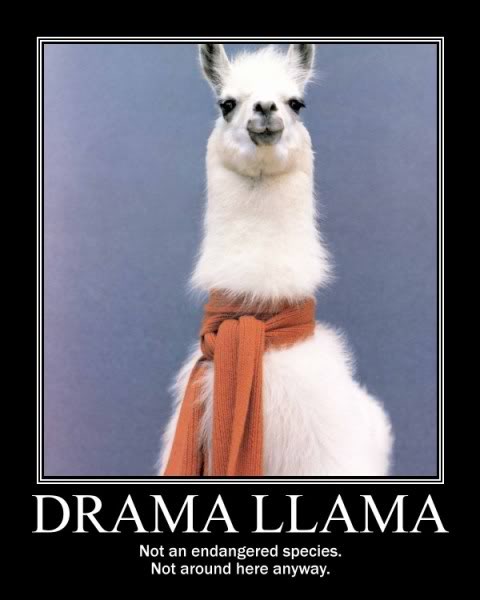
D: Drama (A-Z Blog Challenge: Evocative words)
I teach middle school, so I know a thing or two about drama.
Middle schoolers want everything to be big. They live in a hyperbolic fishbowl where every ripple in the water is amplified to a personal tsunami. Perspective is in short supply when the people are still short, but are struggling with adult emotions, situations and hormones.
I've developed a few theories about what causes the drama and how to deal with it.
Cause: Fear of being ignored: Middle school is a major transitional time of life. The things that made a person feel well-loved in elementary school do not necessarily translate into popularity in middle school. In the middle school mind, it's bad to have bad things happen to you, but it's even worse to have nothing at all happen to you. Attention is good, so good that negative attention is better than no attention at all.
Dealing with it: Make a personal connection. Help kids make personal connections with each other. Call positive attention to someone whenever you can. Provide structured opportunities for kids to compliment each other academically and personally. Model empathy and the idea that each person is important and has something to contribute to the group. Do not allow anyone to be left out, even they are trying self-exclude.
Cause: Immature reaction to mature situations: Ever tried to watch a movie with serious adult themes with a child who wasn't ready for it yet? I've taught kids who make barfing noises when two characters kiss onscreen, even if the whole film was a build up to this moment and the kiss is relatively chaste. Mostly, they're not trying to be jerks. They're trying to find a way to diffuse their own discomfort, and they go for humor. To the teacher, this is very frustrating. After all, you chose this particular film or experience for your class to meet specific educational goals, and this clown is clouding the moment. On the other hand, this child is trying the best he or she can to sort out what a person is supposed to be feeling.
Dealing with it: Watch for potential moments like this and build in a pressure valve. Warn the kids about what's coming--don't let it sneak up and surprise them unpleasantly. Ask them to write and talk about their reactions. Include suggestions of what to do if you find yourself feeling uncomfortable. Talk about why you chose the particular material and what you want your class to get from it.
Cause: Lack of Perspective: Even though some of these people appear to be adults, in size and shape, they are assuredly not adults inside. They don't have a wealth of experience to call upon when badness comes their way. It might really be the first time someone has targeted them for insults or rudely turned them away when they tried to be part of a social situation. They may not have healthy models for dealing with conflict at home. Telling them that "you'll understand someday" or "this too will pass" will only add to the feelings of isolation and distance.
Dealing with it: Perspective is a slow building thing. So, this is a long, slow struggle. Exposure is key. Anything that helps kids get a view into someone else's life, lets them walk in someone else's shoes can be helpful. Movies. Books. Personal stories. Guest speakers. Given that the kids are young, they are most interested by stories of young people. They don't really believe they will ever be old, but they believe that they will be older. Mentoring programs with high school students are highly effective for this reason.
Overall, the most important way to help a young person through drama is not to become part of the drama yourself. This isn't always easy. Parents, teachers, and other caregivers are under a lot of stress. Kids can get under your skin and piss you off, but you can't let it become personal and about you. Be the adult. Model reasonable behavior. Too many adults try to control this sort of thing as an act of will. "I will make you stop this!" That won't work. You'll just create a whole whirlwind of drama. Now besides being upset at whatever the first problem was, they'll get worked up about you and how adults treat them. It will escalate exponentially.
That said, you also can't ignore it. A summer program I once worked for at the Center for Talented Youth at Johns Hopkins University had a policy that I've always thought was brilliant: Zero Indifference. This is so much better than the idea of Zero Tolerance which is all about top-down force of will. Zero Indifference asks the adults to engage with anything they see around them that is in appropriate.
Don't walk by the child in tears or punching a wall just because you don't know them. Gather information, offer advice, seek support as needed. But don't pretend you don't see it. Remember point one: fear of being ignored? Thus starts a vicious cycle anew.
________________________________________
This post is part of the Blogging from A-Z Challenge.
Middle schoolers want everything to be big. They live in a hyperbolic fishbowl where every ripple in the water is amplified to a personal tsunami. Perspective is in short supply when the people are still short, but are struggling with adult emotions, situations and hormones.
I've developed a few theories about what causes the drama and how to deal with it.
Cause: Fear of being ignored: Middle school is a major transitional time of life. The things that made a person feel well-loved in elementary school do not necessarily translate into popularity in middle school. In the middle school mind, it's bad to have bad things happen to you, but it's even worse to have nothing at all happen to you. Attention is good, so good that negative attention is better than no attention at all.
Dealing with it: Make a personal connection. Help kids make personal connections with each other. Call positive attention to someone whenever you can. Provide structured opportunities for kids to compliment each other academically and personally. Model empathy and the idea that each person is important and has something to contribute to the group. Do not allow anyone to be left out, even they are trying self-exclude.
Cause: Immature reaction to mature situations: Ever tried to watch a movie with serious adult themes with a child who wasn't ready for it yet? I've taught kids who make barfing noises when two characters kiss onscreen, even if the whole film was a build up to this moment and the kiss is relatively chaste. Mostly, they're not trying to be jerks. They're trying to find a way to diffuse their own discomfort, and they go for humor. To the teacher, this is very frustrating. After all, you chose this particular film or experience for your class to meet specific educational goals, and this clown is clouding the moment. On the other hand, this child is trying the best he or she can to sort out what a person is supposed to be feeling.
Dealing with it: Watch for potential moments like this and build in a pressure valve. Warn the kids about what's coming--don't let it sneak up and surprise them unpleasantly. Ask them to write and talk about their reactions. Include suggestions of what to do if you find yourself feeling uncomfortable. Talk about why you chose the particular material and what you want your class to get from it.
Cause: Lack of Perspective: Even though some of these people appear to be adults, in size and shape, they are assuredly not adults inside. They don't have a wealth of experience to call upon when badness comes their way. It might really be the first time someone has targeted them for insults or rudely turned them away when they tried to be part of a social situation. They may not have healthy models for dealing with conflict at home. Telling them that "you'll understand someday" or "this too will pass" will only add to the feelings of isolation and distance.
Dealing with it: Perspective is a slow building thing. So, this is a long, slow struggle. Exposure is key. Anything that helps kids get a view into someone else's life, lets them walk in someone else's shoes can be helpful. Movies. Books. Personal stories. Guest speakers. Given that the kids are young, they are most interested by stories of young people. They don't really believe they will ever be old, but they believe that they will be older. Mentoring programs with high school students are highly effective for this reason.
Overall, the most important way to help a young person through drama is not to become part of the drama yourself. This isn't always easy. Parents, teachers, and other caregivers are under a lot of stress. Kids can get under your skin and piss you off, but you can't let it become personal and about you. Be the adult. Model reasonable behavior. Too many adults try to control this sort of thing as an act of will. "I will make you stop this!" That won't work. You'll just create a whole whirlwind of drama. Now besides being upset at whatever the first problem was, they'll get worked up about you and how adults treat them. It will escalate exponentially.
That said, you also can't ignore it. A summer program I once worked for at the Center for Talented Youth at Johns Hopkins University had a policy that I've always thought was brilliant: Zero Indifference. This is so much better than the idea of Zero Tolerance which is all about top-down force of will. Zero Indifference asks the adults to engage with anything they see around them that is in appropriate.
Don't walk by the child in tears or punching a wall just because you don't know them. Gather information, offer advice, seek support as needed. But don't pretend you don't see it. Remember point one: fear of being ignored? Thus starts a vicious cycle anew.
________________________________________
This post is part of the Blogging from A-Z Challenge.
Thursday, April 3, 2014
C: Compromise (A-Z Blog Challenge: Evocative words)
As a mom and a teacher, I am often trying to help people understand the art of compromise. We
promote it as a method of conflict resolution. And it does seem to work, sort of, under some circumstances. Even if we can't come to a true compromise, we at least learn how to negotiate with each other kindly.
If I want to go the movies and you want to sit and talk, maybe we can watch a movie, then sit and talk about it afterwards. That's a nice situation. We both get what we want. Of course, if we both get what we want, maybe that's not a real compromise. We just decided to do both things. No one gave anything up.
Hmmmm . . .so let's say that you want to play Pinypons and I want to make cupcakes. If we're going to compromise, we try to find middle ground where you give something up and so do I. If we make cupcakes with a Pinypon theme, then I kind of won, because we didn't really play Pinypons, but we did make cupcakes. If we have an imaginary cupcake party with our Pinypons, then you kind of won, because we didn't really make cupcakes, but we did play Pinypons.
So, maybe that's part of why compromise is tricksy (like Hobbits). No one wins. Maybe we both end up happy enough, if the stakes were low. Or maybe neither of us is happy now. Or maybe neither of us is happy and something important is genuinely lost.
In adult life, compromise takes on some really negative connotations.
I notice, too, that the phrase comes in passive phrasing a lot. Something "is compromised" or "has been compromised." It's something that happens to a person, rather than an action a person takes.
So, what do I teach my baby? I guess I'll compromise on my teaching of the art of compromise: it's not always the way to go. There are times when a girl should fight tooth and nail for her side and there are times when it's okay to cave in to the other side. The trick is in knowing the difference!
________________________________________
This post is part of the Blogging from A-Z Challenge.
promote it as a method of conflict resolution. And it does seem to work, sort of, under some circumstances. Even if we can't come to a true compromise, we at least learn how to negotiate with each other kindly.
If I want to go the movies and you want to sit and talk, maybe we can watch a movie, then sit and talk about it afterwards. That's a nice situation. We both get what we want. Of course, if we both get what we want, maybe that's not a real compromise. We just decided to do both things. No one gave anything up.
So, maybe that's part of why compromise is tricksy (like Hobbits). No one wins. Maybe we both end up happy enough, if the stakes were low. Or maybe neither of us is happy now. Or maybe neither of us is happy and something important is genuinely lost.
In adult life, compromise takes on some really negative connotations.
- "I'm sorry Mr. President, security has been compromised!"
- "Senator Fathead was caught in a compromising position this past week."
- "It compromised his chances for a promotion."
- "The painter compromised his artistic integrity when he added the CEO to his work."
- "The stock he own in the company compromises the impartiality of the judge."
- "She had to compromise her dream and accept a smaller garden."
- "You can't compromise when it comes to your health!"
- "She compromised her principles and accepted the new deal, even though it didn't include her partner."
- "The stability of the entire structure is compromised by the shifts after the earthquake."
I notice, too, that the phrase comes in passive phrasing a lot. Something "is compromised" or "has been compromised." It's something that happens to a person, rather than an action a person takes.
So, what do I teach my baby? I guess I'll compromise on my teaching of the art of compromise: it's not always the way to go. There are times when a girl should fight tooth and nail for her side and there are times when it's okay to cave in to the other side. The trick is in knowing the difference!
________________________________________
This post is part of the Blogging from A-Z Challenge.

Wednesday, April 2, 2014
B: Benefit (A-Z Blog Challenge: Evocative words)
Let's talk about the word "benefit."
A good job comes with benefits. You might also be friends with "benefits." If there's need to raise funds, we might hold a benefit.
I might give you the benefit of the doubt or do something for your benefit. Then again, I might be concerned that you are benefiting unfairly. Maybe you are doing something only for your own benefit.
It's a complicated little word, full of negative and positive associations. It's all about advantage, and whether it's considered appropriate for you to seek or hold an advantage in the circumstances at hand.
There's a lot of politics of power in these few letters. Who has the ability to bestow or take away a benefit? How are they judging whether a recipient deserves the benefit they are receiving?
It's an old word, full of the baggage of a system of patronage. For an artist, independence is important to freedom of expression, but refusal of benefits comes with its own cost in quality of life.
A quick googling of word origins shows me a Latin root (bene facere) meaning do good to. Looking at the word with my contemporary eyes, I see "bene" which means "good" and "fit" which implies a suitability, a fitness. So to get a benefit, someone needs to judge my fitness.
The noun form also has connections with charity and gift giving. Recipients of charity and gifts know the unspoken but important component of showing gratitude, especially if you want to receive further benefits. That takes us back to patronage, and the level of sycophancy required.
That gets tricky when benefits are part of payment made for services rendered. The terminology, at least, still seems to make things like insurance and sick leave into gifts, for which we should be properly grateful, rather than rights that can be negotiated and fought for. Hmmmmm, that has a certain political ugliness, doesn't it? Something that smacks of patriarchy and don't you worry your pretty little head, miss. "Patronizing" after all, is not a compliment. It's a comment on where respect is and is not given.
It's probably true in many fields. I wouldn't know as I've only ever worked in mine. But teachers run into the attitude a lot. If you dare to suggest the benefits and salary are not commensurate with the workload, people freak out. They call you avaricious and question your commitment to the work. Many people seem to think we should be doing this work for free. After all, it's for the benefit of the children, isn't it?
When I'm feeling especially cynical, I chalk it up to sexism. After all, one of the ways that teaching became a "women's profession" was through the argument that women were cheaper labor, that it wasn't necessary to pay us like you would men because men would take care of us. Notice that the number of men in the field grows the older the students are. So does the salary.
Like so much in our educational system, the reasons we have the system we do have changed, but we still have the vestigial pieces, clogging up the works. Women no longer expect to be "taken care of" financially by men. But it's still harder for us to earn the same dollars for the same work.
So, the question becomes, whose benefit is this system for? More and more each year, I become certain that it's not the children. After all, children are a long term investment. The short-term yields can't be counted in dollars. But the cost? Well, eventually that will be very high indeed. How's that for a cost-benefit analysis?
________________________________________
This post is part of the Blogging from A-Z Challenge.
A good job comes with benefits. You might also be friends with "benefits." If there's need to raise funds, we might hold a benefit.
I might give you the benefit of the doubt or do something for your benefit. Then again, I might be concerned that you are benefiting unfairly. Maybe you are doing something only for your own benefit.
It's a complicated little word, full of negative and positive associations. It's all about advantage, and whether it's considered appropriate for you to seek or hold an advantage in the circumstances at hand.
There's a lot of politics of power in these few letters. Who has the ability to bestow or take away a benefit? How are they judging whether a recipient deserves the benefit they are receiving?
It's an old word, full of the baggage of a system of patronage. For an artist, independence is important to freedom of expression, but refusal of benefits comes with its own cost in quality of life.
A quick googling of word origins shows me a Latin root (bene facere) meaning do good to. Looking at the word with my contemporary eyes, I see "bene" which means "good" and "fit" which implies a suitability, a fitness. So to get a benefit, someone needs to judge my fitness.
The noun form also has connections with charity and gift giving. Recipients of charity and gifts know the unspoken but important component of showing gratitude, especially if you want to receive further benefits. That takes us back to patronage, and the level of sycophancy required.
That gets tricky when benefits are part of payment made for services rendered. The terminology, at least, still seems to make things like insurance and sick leave into gifts, for which we should be properly grateful, rather than rights that can be negotiated and fought for. Hmmmmm, that has a certain political ugliness, doesn't it? Something that smacks of patriarchy and don't you worry your pretty little head, miss. "Patronizing" after all, is not a compliment. It's a comment on where respect is and is not given.
It's probably true in many fields. I wouldn't know as I've only ever worked in mine. But teachers run into the attitude a lot. If you dare to suggest the benefits and salary are not commensurate with the workload, people freak out. They call you avaricious and question your commitment to the work. Many people seem to think we should be doing this work for free. After all, it's for the benefit of the children, isn't it?
When I'm feeling especially cynical, I chalk it up to sexism. After all, one of the ways that teaching became a "women's profession" was through the argument that women were cheaper labor, that it wasn't necessary to pay us like you would men because men would take care of us. Notice that the number of men in the field grows the older the students are. So does the salary.
Like so much in our educational system, the reasons we have the system we do have changed, but we still have the vestigial pieces, clogging up the works. Women no longer expect to be "taken care of" financially by men. But it's still harder for us to earn the same dollars for the same work.
So, the question becomes, whose benefit is this system for? More and more each year, I become certain that it's not the children. After all, children are a long term investment. The short-term yields can't be counted in dollars. But the cost? Well, eventually that will be very high indeed. How's that for a cost-benefit analysis?
________________________________________
This post is part of the Blogging from A-Z Challenge.

Subscribe to:
Posts (Atom)
