Wednesday, March 19, 2014

Giving up Teaching

I'm planning to leave teaching at the end of this school year (assuming I can find something else to do for a living). In all honesty, it scares the heck out of me. It feels like looking over a cliff and deciding to step off without knowing what's beneath me.

I've never not been a teacher.

I decided to be a teacher in first grade, when Mrs. Aldsorf paired me with another student who was having trouble understanding something. I helped her. She understood. I was hooked.

I've been a public school classroom teacher for eighteen years, pretty much all of my adult life. The only other jobs I've ever held were brief, and long ago. I took them because I couldn't get a teaching job and dropped them as soon as I found a classroom. I was a tutor, a secretary, a receptionist, a librarian, a teacher's aide (even in that list, two of those jobs are arguably teaching). But I was always going to be a teacher.

There are a lot of reasons to leave teaching. The hours are long. The pay is laugh-so-you-don't-cry poor. The stress is high. The work conditions are atrocious. The basic rights any worker should be able to expect are not guaranteed. I could bore you for several days with my frustrations with my field, my state, my country and my school. When I successfully talked my daughter out of becoming a teacher herself, the relief was palpable. I want better for her than this.

The reason I've always stayed is that I believe in the work. That old saw about being there to watch the lightbulb go off in some kid's mind is totally true. It's magical every time. And my work matters. I'm not manufacturing goods no one needs and trying to get people to spend money they don't have to buy them. I'm *helping.* One starfish at a time.

So, why now? Why quit work that I still love?

Because all the external stuff is getting to me. I'm hearing that burnout tone in my voice, that bitterness that I have seen in many the colleague who stayed too long over the years. So, I need to leave. I need to leave before I'm not good at it anymore, before the bitterness starts to spread to the children.

In a way, it's like breaking up with an abusive lover. I still love him, but he's not good for me. He treats me poorly, blames me unfairly for things that are out of my control, even outright beats me down at time.  I don't like who I am when I'm with him. He separates me from my friends and other things I love. He manipulates with guilt and blame to get me to do more with less. He thinks he owns me.

But that doesn't mean that it's easy to leave. Ask any woman who has had to do it. It's easy to say you'd leave if someone was abusing you, but how many of us stay? More than would like to admit it. Especially when our financial well-being is tied up with the abuser.

We stay because we are afraid. We're afraid that whatever we leave for isn't going to be better. We're afraid that we haven't given it fair shot. Some part of us hopes that it will get better if we are just patient. The devil you know vs. that hidden devil out there in the deep blue sea. We stay because we don't know where else to go.

Good bye, teaching. I know I will miss you, but I deserve better.


Saturday, March 8, 2014

Holy Ice Storms North Carolina!

I live in North Carolina. It's a very temperate place. Even in winter, I don't expect much of what the rest of the country thinks of as winter.
Not here.

If we see snow once a winter, that's good. Just a taste to remind us, remember the tingle of a snowflake on the tongue and the magic feeling of seeing the world transformed overnight.

Perhaps a day off school. Honestly, I don't even own winter boots or a real coat anymore. There's just no need.

Not usually.

This winter has been downright bizarre. By my count, we have missed five days of school, and had two early release days due to snow.  The entire state is making a face like Burt Ward's over there. WTF? Seriously?

Then, just when we thought it couldn't get weirder, we had an ice storm. Not even the whole area. Just my little town and *some* of the other little towns nearby . . .not all mind you. In fact, when we had been without power for twelve hours or so, and got hungry, we were able to drive twenty minutes north to the nearest mall, and find that the roads weren't even wet, let alone icy.

Then, by the next morning, it's so warm that I'm not even wearing a jacket and when the ice particles fall from the trees that are bowed with their weight and hit the ground, they become steam without even taking time to turn liquid first.

So, in the space of twenty-four hours, there was ice and snow, breaking branches and fallen trees, no electricity or heat, sunshine, mud, and steam.

It was so localized and so brief, this bizarre little ice storm, that I suspect it is not natural in its origins. Perhaps there's a wizard living here who has a strange sense of humor. Or perhaps Löki is visiting and brought one of his Frost Giant relations along. It has to be something more than nature.

Friday, February 28, 2014

Read Like a Writer

I didn't exactly make New Year's Resolutions this year, but there is a new habit I'm trying to build. I want to read like a writer.

My daily writing habit is still going strong. I've only missed one day since I started that experiment, around a year ago now. It's undeniably effective. I've finished two books, gotten good starts on two more, finished a short story and written drafts of three or four more (oddly, I think short stories are harder than novels), and written lots of blog posts. Writing is easier for me now. I can produce more words in one writing session, and more of them are words I can keep.

Rearranging my life to make time for all this writing is cutting into my reading though. And I would argue that reading is essential to a writer's practice. It's important to see what others are doing, to have models to aspire to. It's not that I want to write like someone else; I'm not wanting to imitate anyone.  I want to read more and think hard about what works in the books that work and what doesn't in the ones that don't and apply those lessons to my own work.

So, to that end, here's what I've been reading so far this year: I've finished six books so far this year. (I'm a notorious book-starter, often reading four or five books at the same time, but getting distracted and not finishing them). Four of the books I've finished are worth considering from a writer's perspective:

Breadcrumbs by Anne Ursu was brought to my attention by a reading circle of middle school teachers I work with. I read it in paperback, purchased from Amazon. It's a quiet book, and, at times, I wasn't sure I liked it. Maybe this is, in part, because I haven't read many middle grades book. I've read a fair amount of Young Adult, but this was obviously gauged a bit younger. I was genuinely surprised when magic came into the story as a real element. The first half of the book made me think the magic was all in Hazel's mind.

What kept drawing me back in to the story were the little moments in which the narrator described some small aspect of life with a haunting accuracy and sadness. "School was very easy, it turned out, if you just disconnected your heart." Poetic. Heartbreaking.

The Life and Times of Persimmon Wilson by Nancy Peacock came to me from another reading circle--a neighborhood group. We've decided to read books with a connection to North Carolina, our home state. This one was by a local writer. I read it in paperback, purchased from Amazon. I was genuinely surprised by how much I liked this book. Nothing about the cover or the title made me expect what I got.

It's a great example of the curiosity-building opening line that Stephen King is so fond of: "I have been to hangings before, but never my own." It's a sentence that packs a wallop, emotionally, and definitely made me want to know more. This is something I've been thinking about in my own work. I tend to ease into my stories slowly, but readers seem to appreciate being grabbed in the opening paragraph.

I also admired Peacock's ability to keep the story interesting in first person. So far, I don't write in first person. I like close third, sort of the "over someone's shoulder" view. First person brings a lovely immediacy, but it's also limiting--you can't show anything the character doesn't see or know. Persy's life took some interesting turns and Peacock integrated her historical research beautifully, providing detail without ever making me feel like the story had stopped so she could show me what she had learned.

My Name is Mary Sutter by Robin Oliveira came into my life from the public library's online collection
of audiobooks. I choose audiobooks almost at random. I just go the website, click the search option that shows me what's available for checkout and choose the first book that has any appeal for me. So, I listened to this novel not having any idea at all what is was about, but just drawn in by the cover and title.

It turned out to be a Civil War story, set in the North and focused on Northern characters. I've not encountered much of that in my life. Most Civil War stories I've read or viewed have been set in the South. It was fascinating. One of my own projects right now is a historical novel set mostly in the early twentieth century. Oliveira and Peacock both have strong lessons for me about incorporating research and factual detail without letting it overwhelm the narrative.

In Mary Sutter, the key was Mary herself. She was both a woman of her time, and out of her time. I was instantly intrigued by her and cheering for her in her quest to become a surgeon at a time when medical training was not available to women. Oliveria also handled the complicated feelings of disappointed love beautifully.  Since my own character, Freda, is disappointed in love, I hope I can handle it as well.

Lastly, there's The Book Thief by Markus Zusak. This one came to me from the same reading circle of middle school teachers, in a paperback copy borrowed from another teacher. I should state upfront that I have a hard time with Holocaust literature. It eats at me in a way that reading about other tragedies does not. So, I wasn't sure I wanted to read this book at all.

I read it very slowly. A chapter at a time, with breaks for other reading in between.

At first the narration fascinated me. What an interesting idea! Having the story told by Death personified. It brought to mind The Lovely Bones  by Alice Sebold for the creativity of the narration.

Partway through, though, that narration began to feel contrived and false to me. I almost wish the author had found a way to let Death slip away once he had introduced us to the players and just let the story play out for itself. Death, after all, didn't change or grow, and his fascination with Liesel was unexplained.

I felt the same way about some of the neat poetic/not quite sense-making descriptions Death used. They were striking, like the moments of insight in Ursu's book, but maybe too much so. They started to feel precious and removed me from the story. "You will be caked in your own body." Trying too hard? I'm still not sure.

I also couldn't decide how I felt about the cues to future events. This was more than mere foreshadowing. The ending was basically announced several times before it actually arrived. Was this a function of being a book intended for younger readers? Was it supposed to lessen the shock? Or build anticipation? It didn't do either for me. Again, it pulled me from the story to wonder what he was after by that tactic. If I'm thinking about the tactics, they are probably not working.

So, what have I learned?

  • Historical fiction has to be accurate, but not call attention to the accuracy. It's the characters that make you care. Don't lecture. Know the details, but don't tell them all. 
  • First lines are very important
  • An interesting narrator is a blessing and a burden
Now, off to read some more and see what else I can learn. What should I read next? 


Friday, February 7, 2014

An Autobiography in Cars

My mother tells me that the first car she drove when I was a baby was a '62 Dodge Dart, but I don't remember that car, not even from pictures. The first one I remember was her '66 Oldsmobile Cutlass. 

I thought it was beautiful, and she was beautiful. When I grew up I was going to be tall and blond and beautiful and drive a red fancy car like my mother. (I'm medium sized,  brunette and drive a black SUV . . . so 0 for 3, I'm afraid). 

After that car, Mom drove a series of utterly unmemorable Honda Civics, each one interchangeable with the one it replaced. But given the miles we covered with dance classes, band competitions, and tennis matches, it was probably good that she went with cars that got good mileage. 

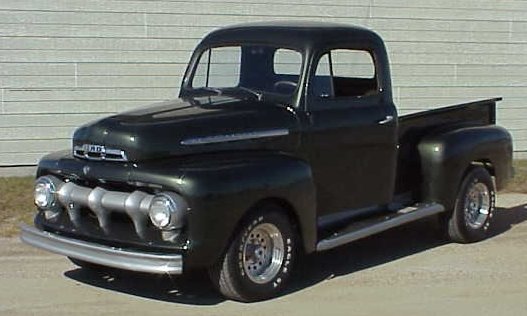
The other vehicles I remember from childhood are all trucks. There was my grandfather's truck, a '52 Ford. What I remember best about it is the really wide flat running boards. I was a skinny kid. 
When I played hide and seek with my cousins, I could hide in one of those running boards and cling to the side of the truck. If I timed it well, I could keep moving from one side of the truck to the other without being seen by the other kids. 

My dad had a truck we called El Porco, because of the amount of gas he consumed. I can't explain why the truck had a Spanglish name. My sister and I thought he was awesome, though. He was big and tough and strong, and had little fold down seats behind Mom and Dad's seats for us. 

After El Porco, Dad had a series of Toyota trucks, mostly red, mostly interchangeable with the one that came before just like Mom's Hondas. Though, there was one that got dolled up by an uncle who was into body work and perhaps a little stuck in the '70s.  

It looked like they had won it at the fair. It was blue with sparkles in the paint and had an airbrush-looking window that had my parents names in a heart, like a teeshirt bought at a beach vacation. I was just old enough to find this mildly embarrassing, and redneck enough to imagine someday having such a thing myself. 

After that, we get into my own cars. My first one was a red Honda Civic that I called Gertrude. My mom always said it was a glorified roller-skate. True, Gertrude wasn't powerful, but she never let me down, and, for her size, she held an incredible number of my friends on the way to King's Island Amusement Park. Certainly more than the legal limit. 

Gertrude went to college with me, but was replaced by something a little newer and arguably better in my sophomore year. Etsuyo was a grey Honda Accord. I never took to her, though she served me well. I let the then-husband (yes, I married stupid-young; that's part of why it didn't last) name the car. He named her after a girl from Japan he had known. Thinking back on things, that was probably a bad sign. 

After that came my Alaskan adventure. Dad helped me find the perfect truck. Of all the vehicles I have ever owned, this might be my heart's wheels. His name was Beauregard, Beau for short. He was a '77 Sierra Grande GMC truck (which made him only a few years younger than me). He had 6 cylinders, and 3 on the tree. I felt like such a gearhead for knowing things like that about him, and, believe me, I am not a gearhead. When I looked in his old and simply designed motor lacking any computer-based parts, I understood what some of the parts were, and even replaced some of them myself, standing on his bumper to be able to see into the cavernous engine area. It was an empowering feeling. 

Beau held all my wordly possessions (books and clothes, mostly--you should have seen the guy's face when we crossed the Canadian border) and I drove him to Kodiak, Alaska with two college friends. We took turns sleeping in the back in a sort of bunk on top of all my tubs of books. He explored that island with me and moved with me to the mainland a couple of years later. 

Beau died saving the life of my then-husband in a winter-roads car accident that surely would have killed the man if the vehicle in question had been a modern chunk of plastic instead of an old piece of metal. Beau had an honorable death, and I still miss him. 

Beau was replaced by a Mazda truck that I never liked as well, but got good mileage out of.  I didn't name her, but knew she was female. The Mazda had belonged to a friend named Marcia, and it was one of those help each other things. She needed to sell it due to a change in her marital circumstances; we needed wheels. The Mazda was the truck that I explored mainland Alaska in, with my German Shepherd/Husky mix dog, Häagendog. 

When I moved to Nome, it would've cost too much to take the Mazda, so, instead, I took it on a cross country trip with my mother. We traveled the Alcan down into the Dakotas, then went to Yellowstone, and eventually brought the truck to Kentucky, where an uncle took her over and drove her until she literally broke in half. He said that she smelled of my dog for the rest of her life. 

I arrived in Nome with no wheels, so the principal at the school gave me an old Ford Bronco he had to beat around in. It was really beat up. Only one door opened, the windshield was cracked, and the seats were torn and covered in towels, but at least I didn't have to worry about whether he'd be upset at me for damaging it with muddy footprints and the smell of a dog who rolled in dead Walrus. 

After a few months, I was able to get a Suzuki Sidekick. It was cute, and we set it up with a gate to keep the dog in the back section, away from the child, when he ate a moose leg he found somewhere. The Sidekick served us well for a few years, though getting body work done in rural Alaska is interesting. The then-husband backed the car into a telephone pole one sleepy morning. They had to fly in a new back door from Anchorage, so it took a while. Luckily, it was summer. 

When we left Alaska in a last-ditch effort to save the marriage, we moved to Kansas. As part of the compensation package, I got a beautiful old house and the newest car I'd ever had: a 2000 New Volkswagen Bug. (I had to part with both when I parted with the husband, but they were nice while they lasted). 

The Bug was Kermit green. Darn it was cute. We called it the Bubble Car and the little one and I drove it to every zoo, farm, apple orchard and other kid-pleasing thing in the whole darn state. There are an inordinate number of small zoos in Kansas, by the way. The seats flipped up and I could stand inside the back of the car when getting the kiddo in and out of her carseat. The seats were also leather and heated. I felt spoiled as heck. I got a speeding ticket or two in it, too, because that thing had zip. That, and hay trucks make me impatient. 

The divorce car was another Honda Accord. It had been my sister's. It was another help each other car. She was moving to Hawaii and needed to get rid of her car. I needed a car. It was a perfectly reliable and serviceable car. I never liked it. I don't miss it, but I was grateful for its years of service. One of my uncles has it now--the same uncle who took the Mazda. I wonder if it smells like our new dog. 

Now, I drive Duncan. He's a Toyota Highlander, hence the name. He's posh, with heated seats and such, like the Bug was. But he feels like a truck, like Beau. I like him so much that my now-and-forever-husband is jealous of him. I think I'll keep him as long as he runs (that's the car . . . and the husband). 


Wednesday, February 5, 2014

Shooting my Uncle: a Memorial

My Uncle Don died recently. Actually, it's probably the third or fourth time that he died, but this time he meant it. Another of my uncles used to call him Lazarus, in honor of his propensity for coming back to life when all hope was supposedly lost. He was tenacious that way.

When Don was still a young man, before I was born, he was in a horrible car accident with two of his brothers. He went into a coma and the doctors told my grandparents that he would never wake from that coma. But wake, he did. And walk. And speak. And live, fully and happily. All things the experts said he would never do.

When I was a child, he was very active for a man who was never supposed to wake from a coma. He would sit, smoking cigars and drinking coffee at family parties and telling dumb jokes that even us children rolled our eyes at.  It never ceased to amuse him to remark that us "kids" were a bunch of goats.  I thought it was the brain damage talking, but my mom says he always had kind of a dumb sense of humor.

He liked us kids. He'd ask us to show him our schoolwork and the various things we were learning to do. He loved it when we did cousin talent shows at holiday parties. He'd invite us to watch Lassie and The Lone Ranger with him on the little TV in his room. Sometimes we would.

He was generous, too. Though he had only a limited income from his VA benefits, he bought me, his first niece, two of my most treasured childhood toys: the very creatively named Big Ted and Little Ted, which, as you might guess, are two teddy bears of disparate sizes. I've had them as long as I can remember.Those poor bears are bare in patches and lack much stuffing, but they are still mine.

He liked to paint and write letters. The mail arriving was one of the highlights of his day, when he could still work his way to the mailbox and gather it himself. He had an obsession with the mailman and made all kinds of jokes about him, too.

When I went to college, then away to Alaska, he was my correspondent. I sent him pictures of the places I was living and letters about what I was doing. His handwriting got harder and harder to read, but we kept it up for a long time.

I'm not sure when exactly we stopped writing to each other. Declines are like that. Gradual, hardly noticed at the time. The past twenty-five years have seen that kind of decline in my uncle, bit by bit, little by little. First, there was his hand-eye coordination. He was no longer able to do the paint-by-number kits we used to buy him for every holiday or write letters. His hearing and eyesight diminished. Later, his mobility was affected.

There were medical problems of various sorts and trips in and out of the hospital. More than once, doctors thought he wasn't going to make it. But he always did.

He still lived at home, among the hustle and bustle of all of us. He still went to every family party, though now it took two brothers to maneuver him in and out of vehicles and into his wheelchair. His brothers still took him out target shooting.

After my grandfather died, some of the wind went out of his sails. I think it did for all of us, for a while. Money was tighter, so that probably didn't help. What money he had went to my grandmother to help support the house and the two of them. More years went by and he lost his ability to balance well enough to walk. He began to crawl around the house like some six foot something baby, still determined to get around, and out to the porch where he could watch the goings on of the neighborhood.

Even this time, this last time, when he was in the hospital, I didn't think this would be the end.  As I received messages from various members of my family, I could see that all of us thought he would rally, that he would thumb his nose at death yet again.

But not this time.

We've got a great memorial planned for you, Uncle Don. You'd love it. There will be food and drinks, of course, and a bonfire. One of your brothers has worked out a way to mix your ashes with gun powder and let us shoot you. I think you would love this idea.

I hope you're having fun, Uncle Don, wherever you went from here. I hope there are cigars and cheesy fifties TV shows and letters for you in the mail every day. I hope this one makes it to you, too. I miss you.

Saturday, February 1, 2014

Why I'm a Small Town Girl


The smallest place I ever lived was Kenny Lake, Alaska, population 400. I taught in a school of 100 children, grades K-12. My Spanish class had four students in it.

I loved it.

I knew nearly everyone, when I'd been there only a year. The people I didn't know by name still knew me, because I was a teacher at the school. The life of the community was around the school and the children. Everyone came to the hockey games.

We dealt with each other as individuals. None of this crap of making a blanket rule about something because there's a problem with one person. You would just talk to the one person, directly. I miss that.

The biggest place I ever lived was Madrid, Spain. That was just for a summer tour of study. For the summer, it was fine. Though I was intimidated at times, especially since I was living in a country that I only kind of spoke the language of, I really enjoyed walking everywhere, exploring gorgeous public parks, taking trains, living a public life. I enjoyed the feeling of life and vitality, like there was something exciting around any given corner.

But, when I got back to small town Kentucky afterwards, I was glad to be home. Madrid was exciting, and exhausting.

Cities are nice to visit. I kind of like living within reach of one, where I can drive there when I want to take advantage of what they have. It's nice to go hear a variety of types music, go to good art museums, see professional theatrical productions, or eat really specific ethnic foods. But I am not a city girl.

I don't like traffic. I get grumpy if I have to wait more than a few cars worth of waiting. This is bad enough that I generally stay off the road between 5:30 and 6:00 in my current hometown (population 6200), because you might have up to ten minutes in traffic getting through town.

I also don't like crowds. They are loud, and there are always at least a few truly obnoxious people in them. Crowds make it hard to move because there are always people in your way. Crowds make it hard to hear the person I'm walking with. The energy of a crowd worms its way into your psyche and influences your mood. This makes me feel stubborn. I want to feel what I feel, not get sucked into a group feeling.

Related to the crowds thing, I don't like being forced into physical proximity with people I don't know. Whether this is jostled around in a crowd, or just sharing a bus seat with a stranger, I don't like it. My personal bubble is large. If I don't know you, stay out of it!

While I do like people, individual people that I know by name and face and build a relationship with, I don't like PEOPLE as a big anonymous group of individuals I may not ever encounter again in my life. It makes me happy to walk into a small business and be recognized by the sales clerk, to know to ask about her new grandchild or puppy or home improvement project, because we talked about that last time I was in. It makes me feel connected.

I'm bad at meeting people. City life strikes me as transient, full of new people all the time. It stresses me out. I told my husband that one of the best things about starting to date him a decade or so ago was that I didn't have to meet him. We had already met a decade or so before that and were friends.  Maybe familiarity breeds contempt, but I'm more worried about stranger danger and making first impressions. (shudder)

They're putting a hospital in, here in my small town. They knocked down a bunch of trees for it, and built three big brick buildings that would look at home in a much larger, more modern place. I hate it. I get how it's good for the community, but it's bringing changes I won't like. It's already added a traffic light to my life, with a turn arrow and everything. What's next? A Starbucks?

Yeah, it might be time to start thinking about my next home. I can breathe in a small town. I can be myself in a small town. And that's good enough for me.

Friday, January 17, 2014

Friday Flash Fiction: Pink Socks


Having just finished a big rewrite, I'm having a little trouble making myself focus on my new WIP, so here's a bit of Flash Fiction based on a picture. The prompt comes from +Flash Fiction Project, a community I enjoy run by +Becket Morgan.

 http://www.flickr.com/photos/114262873@N04/11975747186/  


Pink? Really? He'd been in charge of the laundry for exactly one load of laundry and somehow he had managed to turn his socks pink. Raymond stared down at his feet in disbelief. Maybe they were more sort of orange. Somehow orange didn't seem as bad as pink.

He was pissed at pink right now. All the little pink ribbons he had worn in all the events his wife had wanted to go to hadn't really made any difference in the end had they? She was still gone. A name on a new scholarship fund for medical students and no more than that to most people.

It had been almost a week now. He had finally convinced his daughter to go back home and let him work through his grief alone. He had yet to return to work, but he knew he would. Soon. Really. Just not quite yet.

Right now, it was still hard to get out of bed, knowing that he wouldn't find Ellen in the kitchen when he got downstairs, waiting for him to make them both some eggs. He found himself unable to go to sleep at night, unconsciously waiting for her to come to bed.

He understood, of course. He wasn't an idiot. He knew that she wasn't coming to bed ever again. But what the brain knows is different than what the heart understands. Sitting down on the end of the bed, he pulled off the socks and tossed them into the trash can.

In the process, he knocked a book off the nightstand, on her side of the bed. Hesitantly, he bent to pick it up. He hadn't ventured into her side yet and had not allowed his daughter to disturb her things. The objects on the nightstand were still the same ones she used each night: her hand lotion, her chapstick, her cell phone charger, her stack of books to read.

The fallen book was a collection of poetry. She'd been fond of poetry at the end. She said it was short enough to hold in her mind even when it was fuzzy, and meaty enough to feed her in the silence. He would read them to her, when she asked, and often she would murmur along, having committed the words to memory long ago. He opened the book to one he remembered: "To My Loving Husband." She had read it to him often.

I prize thy love more than whole mines of gold,
Or all the riches that the East doth hold.