Tuesday, April 15, 2014

M: Mendacity (A-Z Blog Challenge: Evocative words)


Mendacity.

What a word! Most dictionaries define it simply as untruthfulness, but the connotations are stronger than that. This is no mere fib we're talking about, no white lie, no innocuous sin of omission. This is big, powerful and persuasive lying. Audacious lies that can break a person on the soul-level. Lies with evil intent.

Sheer mendacity.

Put this word with its common bed-mate and it's even worse. Sheer mendacity. Utter, unmitigated, unadulterated.

Or maybe it's sheer in the sense of steep and abrupt. Sheer like the drop from a cliff.

Or sheer as in transparent. Mendacity that doesn't even try to hide behind a screen. Entirely visible. Just pushing and pushing and seeing if anyone will step up and call it what it is.

Mendacity is a kind of lying that requires a real commitment. It's not for the shy or weak-willed. It takes a big personality.

That what makes the word work so well in the scene above. Tennessee Williams, writer extraordinaire of scenery-chewing emotionally harrowing speeches for his characters, loved the word, most famously used here in Cat on Hot Tin Roof.

His are not works of quiet emotion or subtlety. No, the pain is unbearable, the protest over the top.  The emotions are all at full volume. A woman can't be just upset in a play by Tennessee Williams. No, she's distraught. A man is not merely saddened, but devastated.

It's not melodrama. The anguish is quite real and honestly felt. But it is assuredly dramatic.

The lies are big, too. Big enough to hide a wealth of other dark emotions inside. Mendacious.

Thank you, Tennessee Williams, wordsmith extraordinaire.
________________________________________
This post is part of the Blogging from A-Z Challenge.

Monday, April 14, 2014

L: Languid (A-Z Blog Challenge: Evocative words)

Today was a beautiful spring day. The kind full of the promise summer and long hours full of fun and freedom. The kind I remember from childhood as long, lazy and languid. Lovely.

Of course, I was busy. I had life errands to run that kept me indoors too much of the day. Responsibilities to meet.

When I finally got out to enjoy the day, it was already early afternoon. I took my dog for a long walk, which is good for both of us, in heart and body.

On our walk, we passed a community green space, just one of those side of the road patches of grass and greenery that don't belong to any particular person. It was overgrown with wildflowers and pretty flowering weeds. I had this desire to lie down in the little patch of greenery and stare up at the clouds for a while. To maybe pick some of the weed-flowers and weave them into a crown.

I didn't do it. Neither of my kids were with me--kids are an excellent excuse to do things adults aren't supposed to do anymore. Plus, if I laid down in the side of the road, someone would call 911 thinking I'd had a heart attack or something. My dog would go nuts. It wouldn't end well. So, sadly, there were no flower crowns in my spring afternoon.

In the midst of what my mother terms "the busy years" with two school age children, a dog, a husband, a family, a career, and a little bit of social/personal life to manage, I miss languid days. Daydreaming. Not keeping track of time, knowing my mother would come fetch me when it was time to rest up for another long, flowing day the next day. Sometimes it sucks to be a grown-up.

Yesterday, my baby was seven. May she have many languid days in her future!

________________________________________
This post is part of the Blogging from A-Z Challenge.

Saturday, April 12, 2014

K: Kleptomaniac (A-Z Blog Challenge: Evocative words)

I think I was an older kid or an earlier teenager when I first heard the word kleptomaniac.

I misheard it and thought is was Keptomaniac. That made sense to me since my parents were talking about a visitor to our home who had stolen some small items of mine. I think they were talking about what to say to the girl's parents and how to get them back. She had Kept my stuff, and I thought she was a Maniac.

Sometime later, I learned the real word. And that it was a real thing. That idea that you could have an uncontrollable compulsion to steal was new to me and fascinating. Even cooler that we had a word for that.

Then I learned there was other "manias." Tons of them in fact. It was almost as fascinating a list as the list of phobias I had been collecting.

Language can be so specific at times. Who knew that we needed a word that means "excessive desire to stay in bed"? (It's clinomania, BTW) I mean, isn't that just called adolescence?

For a while, I thought I wanted to be a psychiatrist because I was so interested in these kinds of words to describe our obsessions, peccadilloes and predilections. But really, I was just in love with words.

I loved how some of these terms seemed so obvious as to be made up on the spot. Scribbleomania: obsession with scribbling? Really?

Others made me feel smart because I recognized the word parts. Xenomania (inordinate attachment to foreign things) and her sister xenophobia (unreasonable fear of foreign things).

A whole lot of the words were about sex in one way or another. Andromania, Cytheromania, Erotomania, and, of course, Nymphomania.

I'm still fascinated, both by the words and the obsessions they describe. All of our messy little quirks formalized in language. I guess that means I made a good choice in writing. I could wallow in this stuff all day.
________________________________________
This post is part of the Blogging from A-Z Challenge.

Friday, April 11, 2014

J: Juxtapose (A-Z Blog Challenge: Evocative words)


Juxtapose.

Neat word. It totally looks made up. Pose, I get. "To place in a desired position." But "Juxta"? Probably excellent for Scrabble with J and X in the same word, but what a weird combination of letters! It sounds like the name of a Star Wars alien.

Juxtapose.

It's an interesting concept as well, the way a simple rearrangement of objects can make you perceive them very differently.

I can look at my almost seven year old girl and think, "Gosh, she's still so tiny." But then, if we juxtapose her position on the sofa, so she's next to her brand new baby cousin, she's going to seem huge. The contrast really changes your perspective.

It's an important concept in art and ideas as well.  What paintings are displayed next to what paintings makes a difference in how I view them, in what I notice. How I feel about what I'm reading or viewing is colored by whatever else I have recently viewed or read.

It's vital as a writer. A writer-friend of mine advises that writers need to read a variety of things. The magic happens, he says, when disparate ideas bump up against each other in your brain.

I agree.

My first novel came from this sort of juxtaposition. The idea came when that almost-seven-year-old was a newborn. We were at the supermarket. As many mothers do, I placed her carseat in the car, left the car door open and crossed the few feet to the cart corral, then returned. I had this unreasonable fear though that I would be hit by a car in the parking lot.

So, that was one idea.

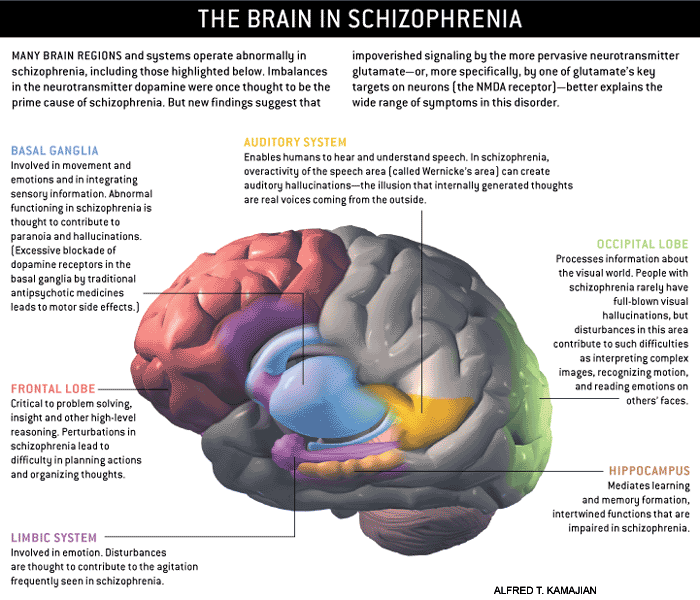
I had been reading a bit about schizophrenia, hoping to better
understand what was going on with some people I care about.

That was another idea.

Someone else I care about was trying (unsuccesfully) to get pregnant. So, I was thinking and reading about fertility as well.

That was the third idea.

Juxtapose these ideas in Samantha's brain and press "blend." Voila! You have yourself a novel. His Other Mother (currently in its next round of publication limbo, being considered for publication).

I love how the brain works!
________________________________________
This post is part of the Blogging from A-Z Challenge.

Thursday, April 10, 2014

I: Individualism or My Inner John Wayne (A-Z Blog Challenge: Evocative words)

I place high value on individualism. Idiosyncrasy. Independence. Being yourself even when there is pressure to mold yourself into something else.

It gives me a great sense of self-worth to think that I can take care of myself and my own, rather than relying on others. It's one of my core values as a person. The Duke and I probably wouldn't have liked each other in person. I'm way too liberal for his taste. Nonetheless, my inner John Wayne is loud and proud.

When I do have to ask for and accept help, I'm much more comfortable with a trading of favors (I'll watch your kids, then you can watch mine), or asking family members who are then free to ask me for help.  It's a balance. It falls apart if I'm asking more favors than I am giving or vice versa.

The older I get and the more I learn about the world, the more I realize that this focus on the self (as opposed to the collective or the whole group) is a very western thing. Very American of me.

This world-view is at the center of many inter-cultural conflict moments.  It's part of why and how we judge each other as parents, workers, and people.

As the world becomes a more global place and people with disparate backgrounds, values and expectations come into interaction with each other, we see this conflict more and more. It's disconcerting. It can make you feel really uncomfortable and make you judge others harshly and unfairly. It's really not about right and wrong, just about different expectations.

For example, my daughter was in a choral group with a girl whose family is from Korea.  (See chart: Korea, low on the individualism scale).  We both also had younger daughters, so, often, while our older children were rehearsing, we'd take our little ones to the playground. Several other mothers were in the boat and our children would run around and play together while we all talked to each other or played with our phones.

The other United States-born mothers and I might leave the playground briefly, but we would turn to one of the other mothers and directly ask them to keep an eye on our little ones and would admonish our little ones to listen to Mrs. So-and-So.  In this way, we still took individual responsibility for our children.

The Korean-born mother didn't do this. She, to our American eyes, seemed to just drift away from the group and assume all would be well. When intervention was needed (child conflict or injury), none of us was sure who should step in and what she should do. No one had individual responsibility for that child, you see, and we had not experience of a true collective society experience. Awkward, to say the least.

I've watched this happen among my colleagues at various schools, too. People born Up East can have a hard time here in North Carolina.  Social cues are very different. Confrontation is handled much more quietly and you are expected to keep your individual agitation to yourself.

I do okay in these situations. I don't take personal offense, and tend to try to look at the broader picture. Maybe it's because I am a foreign language teacher, so inclined to think about culture. Maybe it was those broadening effects of travel my parents were promised when they helped me travel in my youth. Maybe it's just that I've lived in more than one place and had to adjust to how they do things there.

Whatever it is, I wish I knew how to share it. I think we could avoid a lot of ugliness (hate speech, racism, violence) if we could stop trying to make everything black and white and assume the good intentions of others. Approach with an eye to understanding rather than an eye to judgment.

If you figure out how to teach that, please let me know. I've got a lot of children I'd like to help.

________________________________________
This post is part of the Blogging from A-Z Challenge.

Wednesday, April 9, 2014

H: Haunted (A-Z Blog Challenge: Evocative words)

I've been pondering the word "haunted." As a word nerd, I like the word quite a bit. It's got that fairly unusual "au" sound that feels good in my mouth, but drags the eye and makes you wonder if you've spelled it correctly. It sounds wonderful in a variety of regional accents.

It's versatile as well, serving as a verb or a noun, an adjective or an adverb in its various forms. Haunt. Haunted. Haunting.

It's both a good and a bad thing.

If I am haunted by my past misdeeds, then I get a hunted look in my eyes. (More word need joy for the connection between Haunted and hunted.) I might come to look kind of ghostly version of myself: pale and hollowed out.

But I can also be captivated by a haunting melody that lingers in my mind long past the moment of listening.

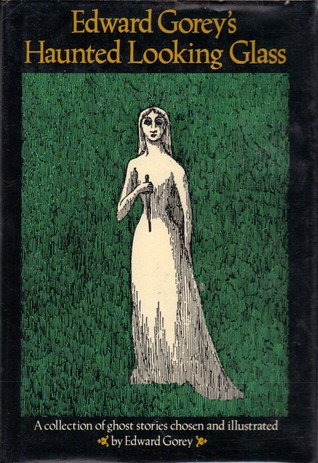
The heart of the word seems to be in this context of lingering. In many stories, ghosts haunt because they haven't let go and moved on. In fact, a trope of that genre is finding out what they've left unfinished and helping the ghosts move on. I'm a fan of the genre and the way horror and sadness and mystery all meld to form a tight little package. They often have a wonderful sense of true closure.

Of course, the word isn't limited to ghost stories.

If I am visiting my old haunts, I am lingering in places that I used to go to often, but probably don't commonly go to anymore. In a way, I am visiting the ghosts of my past selves, the people I was at various ages and times of life.

Emotions, too, can linger past the welcome point. Generally, we don't describe ourselves as haunted by the more explosive emotions like rage, but by the quieter, more internal and melancholy ones like guilt or grief or despair.

Come to think of it, even that haunting melody isn't all good. If I'm describing the music as haunting, as opposed to, say, catchy, I probably feel a little unquieted or unsettled by the music. Even while I admire its beauty, I am bothered by it, disturbed.

These days, I am mostly haunted by words. Guess it's time to write some more!
________________________________________
This post is part of the Blogging from A-Z Challenge.

Tuesday, April 8, 2014

G: Gross (A-Z Blog Challenge: Evocative words)

Children are gross. If you don't have any in your life, maybe you don't have first hand knowledge, but you've still seen it.

They ooze strange substances from every orifice. They are often mysteriously sticky. Mysteriously sticky is the most disturbing one: you can't quite be sure what that little urchin just smeared on you.

Because they haven't yet learned to take care of a lot of things for themselves, the grownup caretakers deal with a fair amount of bodily fluids: urine, vomit, snot, and drool just to name a few. Under some circumstances, even feces qualifies as a bodily fluid.

This is not one of the things people warn you about when they talk about how children will change your life. Sure, they require a lot of attention and time, but they also require a whole new array of housecleaning products and an iron stomach.

They don't have the strongest handle on hygiene either. Their definition of washed hands may not be the same as yours. The same for brushed teeth and combed hair. After all, they are learning, and the learning curve is steep when you're under four foot tall. Like climbing a mountain.

Luckily, they're also cute. Mine are so cute, they are even cute while being disgusting. If you have them, I bet yours are, too. At least we think so.

If you have any of those single friends that are afraid of children, or DINKs who've decided not to have any in your life, then you've probably seen this  expression of horrified withdrawal. You can see them wanting to yell "Unclean!" as they back away making the religious symbol of their preference.

To these folks, I always want to say: "You're right. They are gross. But you're missing out. Engaging with life means getting your hands dirty. And, children? That's the very definition of life right there."

Still, children are not for the faint of heart. They require strength of heart, will, mind and soul. Real fortitude. Some people don't have the stomach for it. 
________________________________________
This post is part of the Blogging from A-Z Challenge.