Friday, April 25, 2014

V: Villain (A-Z Blog Challenge: Evocative words)

A good villain can really make a story.

This seems especially true in Disney animated movies. I was watching Sleeping Beauty with the smaller monkey recently. Aurora or Briar Rose was completely uninteresting. The personality of a puddle. Even the monkey thought so.

But Maleficent? She was magnificent. Scary. Rocking that hat that makes it impossible to tell if she actually has horns or just an interesting sense of fashion.

Eleanor Audley did some amazing voicework in that character. And the animators understood the power of a good arched eyebrow.

Take Maleficent from the story and you have no story. Oddly enough, Aurora and Prince Phillip probably still end up married, since they were betrothed as children, but no one cares. There's no romance, no conflict, nothing to overcome. Two pretty, boring, rich people grow up easy and marry. That's no story.

This tradition of the villain making the story in Disney animated movies (especially the Princess ones) goes back to the first one. Snow White is so sweet she rots your teeth. It's the evil stepmother and her mirror that live in your memory. Cinderella pales next to her imposing and authoritarian stepmother. Alice is far less engaging on the screen than the mad Queen of Hearts. Captain Hook, even in his campiest moments, has more charisma than Wendy. And Ursula from the Little Mermaid!

In fact, I think we get all the way to Belle in 1991's Beauty and the Beast before we have a heroine who is interesting in any way. The heroines have gotten better as the years have gone on. Merida (from Brave) actually seems like someone I might like to know, and how refreshing that the romance storyline was secondary to the sisters' story in Frozen.

Come to think of it, Frozen didn't exactly have a villain. Hmmmm. Maybe there's hope for the heroines yet!
________________________________________
This post is part of the Blogging from A-Z Challenge.

Thursday, April 24, 2014

U: Utopia (A-Z Blog Challenge: Evocative words)

Dystopias have been in fashion here lately, especially in Young Adult literature. In my middle school, stories like The Hunger Games, Divergent, and Matched are jumping off the library shelves.

It makes sense that dystopias would appeal to children this age. They are, after all, living in a world they didn't create, with systems in place that may or may not serve them well. Punishments seem draconian and capricious.

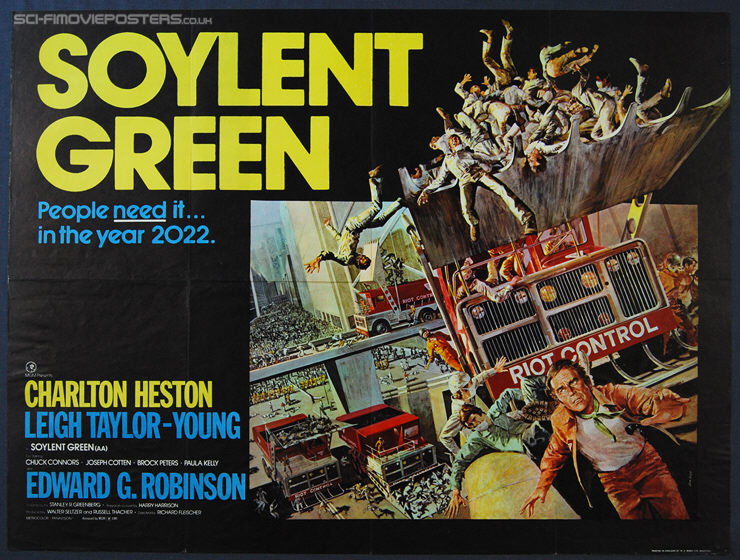
A really good dystopian story is often a story of disillusionment, of learning that the fairy land you thought you lived in isn't one. There's a dark underbelly you didn't know about. A cost. (Soylent Green is people!) Maybe the system was put in place with the best of intentions, but but it falls apart or becomes something very different than what was intended.

My heart says that there is no such thing as a utopia because there's no one way that will work for every citizen.  My utopia could be your personal hell.

Just for contrast, I went googling for utopian novels. The most recent one on a wikipedia list of such things was 1962 (Aldous Huxley's Island). There wasn't anything on the list I had read.

From another list, I found a few I had read: The Giver by Lois Lowry, Snow Crash by Neal Stephenson, The Mars Trilogy by Kim Stanley Robinson. Again, though, I run across this theme of utopia not being utopia for everyone.

Maybe that's why no one seems to write an unambiguous utopia these days.  We understand too well that it all depends on where you stand whether you see paradise or purgatory.
________________________________________
This post is part of the Blogging from A-Z Challenge.

Wednesday, April 23, 2014

T: Tegucigalpa (A-Z Blog Challenge: Evocative words)

Tegucigalpa and Guadalajara are two of my favorite Spanish words. They are place names, in particular the capitol city of Honduras and the largest city in the Mexican state of Jalisco.

I've yet to get to visit either place, but I love the words themselves.

I'm a long time student (and teacher) of Spanish. Since I first began to study the language as a college student, I was drawn to the sounds of it. It was foreign to my ear, but attractive, so flowing and lovely in its vowels. I think I like these two words for their vowels.

Teh-goo-see-gahl-pah. Say it. Doesn't it feel nice in your mouth? I understand that its originally a Nahuatl word, changed by Spanish influence into the form we know it in today. There's some serious disagreement about what the word means. Some say it refers to the silver in the hills; others say it means something about painted rocks or sharp stones.

But my love for the word is solely about the sound, not the meaning. Being able to pronounce it correctly requires a good facility with Spanish vowels. It has nearly all of them in the single word.

Guadalajara (gwah-dah-lah-har-ah), on the other hand, is all A's.  I think it's the J in that word that makes it
so much fun to say. Spanish J's sound like English H's. Add a flipped R into the end and you've got yourself one beautiful sound. It's almost a song just in the one word.

Obviously, I'm a word nerd. Why else would I choose to write 26 posts all about words I find evocative?

It's interesting to me that the Spanish words I love are all about sound, and the English words I love are mostly about meaning. Maybe it's because I'll always be a visitor in Spanish, but I'm a native in English. Maybe it's because my first literary love was poetry, which is all about sound. In any case, my love affair with words shows no sign of slowing down after all these years.
________________________________________
This post is part of the Blogging from A-Z Challenge.

Tuesday, April 22, 2014

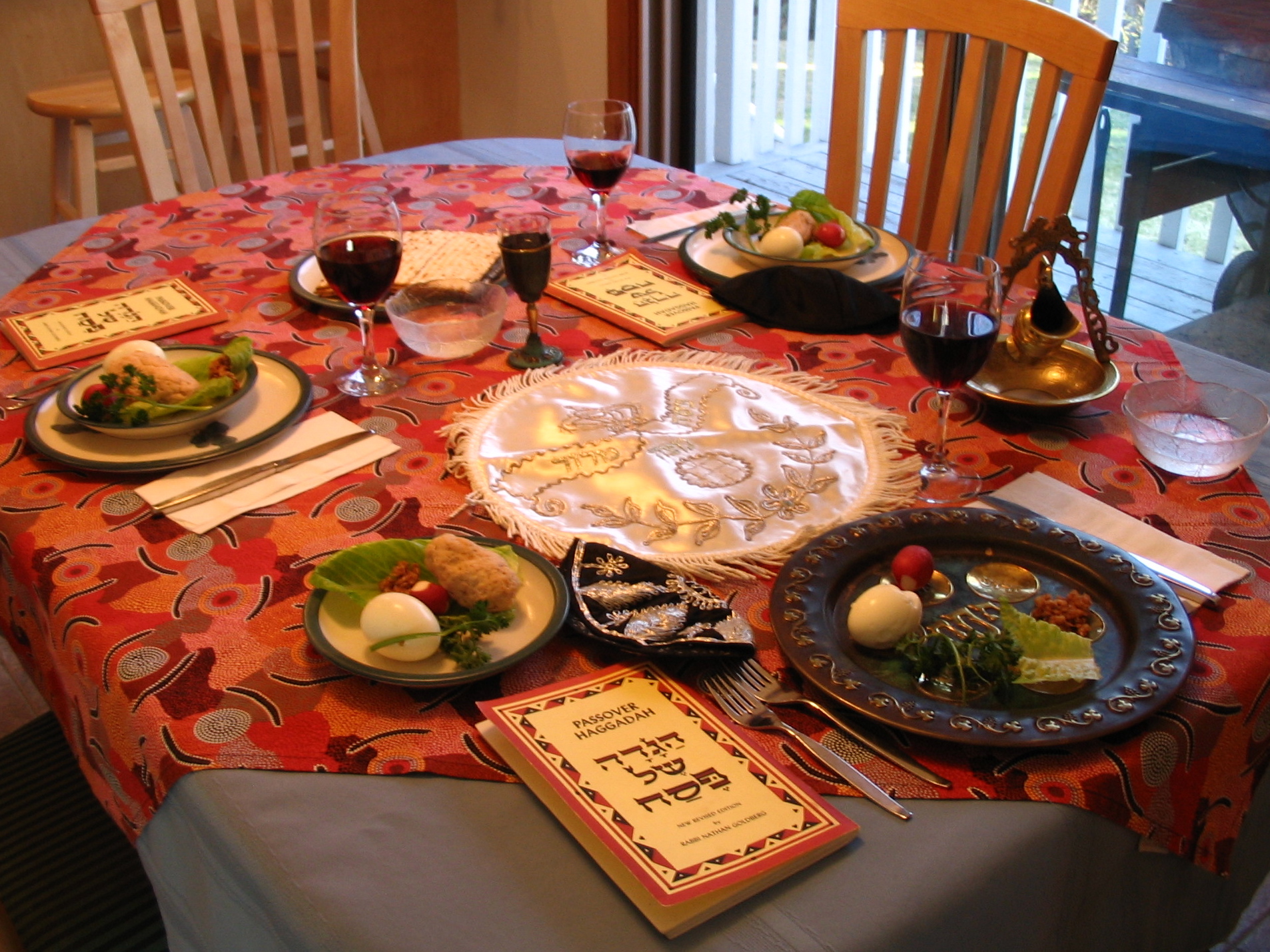
S: Seder (A-Z Blog Challenge: Evocative words)

As I write this, Passover has just begun (though it will already be over when I post it).

Although I identify strongly with my Jewish heritage, I wasn't raised in the traditions of the faith. Observations of holy days and traditions . . . well, it's something I'm putting together as I go, trying to figure out what parts are important to me and which are not.

I've struggled in particular with the Passover Seder. It's one of the more specific and prescriptive holy days, with rules and expectations about what will be done. While I've found my own way to observe other holy days like Yom Kippur, Rosh Hashanah and Hannukah, I haven't found my way through this one.

In part, it's a problem with my work-life. Living a Jewish life is difficult when you work on a Christian calender.  I can only take so many unpaid days without failing in my financial responsibility to my family. This time of year is high pressure at school, our last chance to make a difference for our students before they face the trials of state testing. It's not a good time to miss school and hand my students to a substitute (not that there ever really is a good time for that). This makes it hard to prepare properly.

A Passover Seder is like a Thanksgiving dinner in a way. You can really build up a lot of pressure (even if it's all in your own mind) to do it "right." Because I don't feel I can do it right, I often don't do anything at all, even though that also feels wrong.

It's a great narrative, and the wonderful, deep and resonant stories are part of what draw me to this part of my heritage in the first place.It's a celebration of survival and freedom, and a lesson in our responsibilities to the world. It's a parable and a history all at once.

This year I am still the simple son. Maybe next year I will find my way.
________________________________________
This post is part of the Blogging from A-Z Challenge.
Monday, April 21, 2014

R: Rapacious (A-Z Blog Challenge: Evocative words)

When Rapunzel's mother was pregnant, she became rapacious with hunger for the rampion in her neighbor's garden, so the story goes. That ravenous hunger was arguably responsible for the whole sordid affair. It led to her husband's thievery, which angered the witch, which cost the couple their daughter.

The moral of the story: the appetites of women are dangerous.

Even in this generation, long past the first edition of Our Bodies Ourselves, and deeply entrenched in the pseudo-science of self esteem and positive body image, the appetites of women are under scrutiny.

Once, it was so unseemly for a woman to appear hungry that Scarlett O'Hara was asked to eat in her room before the party, where no men could see her stuffing her face.  We've come a long way; I eat at picnics alongside the men now. But there's still an expectation that women will be daintier than men, both in girth and in appetites.

This extends into other kinds of appetite as well. A woman described as rapacious might also be called devouring or insatiable, predatory. In other stories, a succubus. While men might find such a woman fascinating, in stories she is never the wife, but always the lover, the temptress who must be put aside for virtue's sake. She inflames the senses, but not the mind or heart.

It's not "ladylike" to want so much, so greedily, and let it be known.

Then again, a little research tells me that rampion, that plant so coveted by Rapunzel's mother, has medicinal effects for inflammation. Maybe the poor woman was just hoping to keep her swelling down. Pregnancy can give you some serious cankles.

________________________________________
This post is part of the Blogging from A-Z Challenge.

Saturday, April 19, 2014

Q: Querulous (A-Z Blog Challenge: Evocative words)

We sure do love to complain, don't we? We get together and kvetch about our jobs, bellyache about our children, or grump about the state of the world in general. Are humans just querulous by nature?

It's strange, because complaining often does really make us feel better--even if nothing changes.  Just "getting it off your chest" can help. There's a release in having expressed your discontent, in finding sympathy from others who agree. We call it venting, because that's what it really does. It releases the pressure and allows some fresh air inside the room.

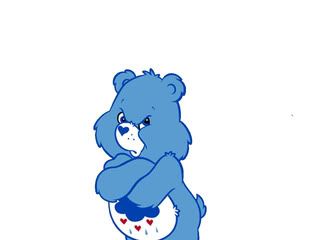
Of course, it's hard to be around someone who is always complaining. The worst is a one-note complainer, always haranguing on the same wrong that's been done them. We have other words for these folks. Harsher ones, like whiner, moody, bad-tempered, bitter.

If you give in to a desire to complain all the time, you will find that people avoid you. We are all sensitive to the moods around us to some degree and too much time around negative people drags us down.

It's a lesson I have to remind myself of daily, especially at this time of year. I'm a teacher, and this is April. In the flow of a school year, this means that I'm exhausted from the previous months of work, and looking forward into TESTING SEASON (which might as well be called teacher-hunting season). If the testing process doesn't kill me itself by sucking all the joy and love out of the school building, the blame games that come with the results will bury me alive.

Still, it is April. There's plenty to be happy about. Spring has finally arrived. There are flowers blooming in my garden and new freckles on my daughters' cheeks. I'll have a birthday soon, and, even though that will mean I'm older, it will also mean that someone will make me cake and buy me gifts.

See? It's all in looking at the bright side.

________________________________________
This post is part of the Blogging from A-Z Challenge.

Friday, April 18, 2014

P: Pulp (A-Z Blog Challenge: Evocative words)

I started my adult writing life as a bit of a literary snob. I studied creative writing at a small college. I wrote poetry. Formal poetry at that. I have an unpublished collection of sonnets called "Divorce Letters" for goodness sake.

But I also read a lot of "for fun" things. I loved old hard-boiled detective films and comic books. Tennessee Williams. In other words, over the top drama.

While I enjoyed reading and viewing that sort of thing, I never really considered writing it. It didn't fit my image of "real" writing. I was going to be Emily Dickinson (but, you know, with a boyfriend), not Mickey Spillane.

Then, I graduated. I got a job. I had kids. Even though I teach, I'm assuredly not in the ivory tower. It's a public middle school. The tower wasn't built of ivory in the first place and now it has holes and is held up by sticks we found in the yard. In other words, life got real. I had less time to read and write, though I still did both. I found that what I was reading was not what I was writing. That seemed weird.

Someone in my writing critique group talked about having fun while she wrote. I thought long and hard about that. Was I having fun?

I was writing a serious literary novel (His Other Mother, not yet published) about a woman dealing with fertility issues and schizophrenia. I felt good about it. I loved it. It felt important and real and good. But it was not fun. It was hard. So hard that I was having trouble getting to the ending. I knew it wasn't going to be happy and that was emotionally hard to do. I loved my main character, Sherry, and it was difficult to take her to the logical and necessary ending. I thought about Thomas Hardy, and how I'd read somewhere that he used to weep as he tortured his characters. But, his books are wonderful. They haunt me. I think Sherry could haunt people like that.

I decided that after I finished His Other Mother, I would be allowed to write a play piece. Something fun. So, I wrote Going Through the Change (also not yet published). It's a superhero novel about four menopausal women who develop incredible abilities through the machinations of a mad scientist. Writing it was still hard work--any good writing requires structure and rewriting and lots of real work--but it was fun. I laughed while I wrote.

So, now I'm working on two new novels. One is another serious literary novel, historical fiction this time. I think it will be called Cold Spring and it's about two sisters in rural America in the early twentieth century. The other is a sequel to Going Through the Change. I don't have a good title for it yet.

I'm finding that I need both sides of my literary brain. I need to lose myself in both tragedy and comedy. I need literary, beautiful language in my pulp and I need large, dramatic moments in my literature. The two kinds of writing aren't so completely separate after all, though their readerships are quite different.

I'm not sure what this means for my publishing life. My guess is a pseudonym for one or the other type of writing. But, for now, I'm pleased with the balance, letting both sides of my soul roll out onto the computer screen. So maybe I am Emily Dickinson and Thomas Hardy.  And maybe I'm Mickey Spillane, too . . .or Stan Lee. Just call me Emily Spillane. :-)
________________________________________
This post is part of the Blogging from A-Z Challenge.