Monday, April 28, 2014

My Writing Process

I've been invited to be a part of a blog tour. This blog tour is where writers and authors answer questions about their writing process. My fellow Magic Spreadsheet user and A-Z Blog Challenge writer Chad Clark posted his last week. Chad A. Clark is an independent author who specializes in genre fiction, horror and science fiction in particular. You can check out his blog at www.bakedscribe.net

What am I working on?

I'm working on three things right now. I like having multiple things going so there's always something I can make progress on.
  • The sequel to my superhero novel (Going Through the Change, not yet published). It doesn't yet have a title. Like the first novel, the plot centers around four menopausal women who developed superpowers after using products developed by a mad scientist. This time, the mad scientist herself is the one in need of rescue. If you'd like to meet one of my characters, she can be seen in this short story (Patricia Saves the Beauty Queen) published on FreedomFiction
  • A historical fiction novel with the working title Cold Spring. It's the story of two sisters growing up in rural Kentucky in the early twentieth century. It pulls loosely from some pretty dramatic personal family history, and has strong themes of sisterhood and the changing expectations for women in America over time. 
  • A collection of short stories with the working title Shadowhill. They are all weird tales, with a sort of Twilight Zone or Ray Bradbury feel, all set in a suburban neighborhood a lot like the one I live in. So far, I have five. I've had one of them accepted for publication recently. It will come out in the inaugural issue of The New Accelerator, a magazine published for Apple's Newsstand. It's called "Lawn Wars" and features a man at war with his lawn--and a lawn at war with a man. 
On top of my works in progress, I also keep a blog. I'm usually a once-a-week-or-so poster, but I'm just finishing the A to Z blogging challenge, which had me writing a post nearly every day in April. Whew! It was fun, but I'll be happy to blog less often and have more time for what I consider my "real" work. 

How does my work differ from others of its genre?

I write in two distinct genres.

My literary fiction (His Other Mother, unpublished--a scene can be read here; and Cold Spring, unfinished) features female characters trying to find their way in the worlds they live in, and learning to overcome the obstacles in their way. They may or may not be successful. It's the struggle that interests me, the moral ambiguities.

My speculative fiction (Going Through the Change, unpublished; its untitled sequel, unfinished; the short stories in Shadowhill) is unlike a lot of what I read elsewhere in that it features strong female characters over thirty, living in small, ordinary places. So, not urban and not young.

Why do I write what I do?

The more I write, the more I realize that writing is my therapy. It's how I deal with all my issues. I realized halfway through the writing of His Other Mother, for example, that I was working out my relationship issues and analyzing what went wrong in my first marriage. It also let me work out some of my worries about mental health and mothering. I didn't realize the depth of my issues with the American medical system until I created Dr. Liu for Going Through the Change.

So, I'd say I write what I do to deal with whatever is bothering me at the time. 

How does your writing process work?

I always write on my Apple laptop with the cool superhero decals on the keyboard while sitting at my dining room table, often with a warm drink (caffeinated or not depending on time of day). I make paper notes in bound books or pieces of scrap paper that I tack to an art banner in my dining room so I won't lose them. Novels are written in Scrivener. Short stories, poems, and essays are written in Word. 

I always begin as a pantser. I have some piece of an idea and I just sit down and write from there for a while. I write this way until I hit my first stall. That might be one scene or several chapters. 

Then, I go back and look at what I've done and think about where it could go from there. I take long walks and think. I talk to my husband, daughter, sister and mother (my favorite sounding boards for this early stage). I make a lot of charts and graphs. I do a lot of reading either of work in the same genre or of research materials that apply. 

Then, I try to write an ending. It really helps structure the rest of what I do if I know where I think this is going. Often, the ending changes between this early draft and actually arriving there in the narrative, but it still gives me a ballpark and helps keep me on track. Then, I start writing from where I left off in the first part and try to get to the ending. 

I'm a part of a writing critique group called WIP (works in progress). I joke that it should be called WHIP for the beatings they administer, but truly, they are all worth their weights in gold. We share excerpts of our works in progress, and ask questions and give reactions and advice that I find invaluable to my process. They also serves as my first round beta readers when I have a complete draft I feel good about. 

I'm a mother and a teacher, so my writing time is limited. If I can get out of school early enough, I can write from 4:00-5:00 before I have to pick up my kids from their after school stuff. If I can't, I can write from 8:00 (littlest kid's bedtime) until I fall asleep, to the extent that the teenager, dog, husband, and sad excuse for a social life allow. 

About a year ago, I committed to a daily writing habit, using a tool called the Magic Spreadsheet (you can find them on Facebook).  Basically, it's a gamification system and a support group.  You get points for meeting your daily word count, which then eventually up your level and your expected daily word count. This was vital to me finally finishing some things. I started at 250 words per day, and am now at 600 words per day as my minimum. That adds up into a substantial piece of work pretty quickly. It's been just over a year, and I've written over 300,000 words that way, one little chunk at a time. That's probably why my first novel took four years to write and the second only took about six months. 

Thanks for reading my post! You can read the posts of some of my writing friends next week: 

Holli Moncrieff is a world-traveling kickboxing writer with a taste for adventure and a great love for animals. She blogs about how to live a life less ordinary at www.thekickboxingwriter.blogspot.ca.

Marlene Moss writes young adult and middle grade novels, based in our reality, but with a fantasy or scifi twist. Her education is in physics, which, historically has given onlookers a sense of hte fantastic. She lives in Colorado and trains and compete endurance horses--which explains the title of her blog--On Writing and Riding. Her current WIP is called MIGHTY MIKE AND THE INTERGALACTIC CANDY DISPENSER and is about a boy who has to save the future of space-flight by helping an alien catalog the potential results of humans visiting other planets. Sounds boring? Each test candy gives Mike a temporary superpower!

Colin D. Smith is an unpublished writer and blogger who has written a few novels, some novellas, and a lot of flash fiction. He hopes to be in the query trenches soon with his latest story about a teenage alien stuck in Victorian London.

X: Xenophobia (A-Z Blog Challenge: Evocative words)

I wrote earlier in this alphabet about mania and phobia words. Like many a future word-nerd, I went through a phase of being in love with these types of words as a child. I still think they are fascinating words.

Xenophobia is an especially interesting word. A good "X" word is hard to come by. Ask anyone who's ever try to do an alphabet theme.

Xenophobia comes from the Greek words ξένος (xenos), meaning "strange," "foreigner," and φόβος (phobos), meaning "fear." So "fear of strangers."

To some degree, fear of strangers is a healthy thing. Don't we spend hours haranguing our children about the dangers represented by people we don't know? Stranger danger! 

But, a true xenophobe takes this pretty far.  Anyone who is unlike them is a cause for fear. That could
be people who have a different color of skin, lifestyle, style of dress, or just a different way of pronouncing words.  It's a very short step from here to outright hatred and persecution. 

So, that's the line we all have to learn to walk: between self-protective caution and bigotry. 

As a Spanish teacher, I am often faced with people who are standing on this line and trying to figure out where to stand. Kids who feel frustrated by language learning or are just parroting what they hear at home will complain that "they should all just speak English." 

That generic "they" or worse "you" is the first step towards ugly. When you can think and talk about people in generic terms like this, it's easy to think of them as less human. If you can think of people as less than human, then it's easier to abuse them. 

Us and Them is dangerous territory indeed. Tread lightly. 

________________________________________
This post is part of the Blogging from A-Z Challenge.

Saturday, April 26, 2014

W: Wendigo (A-Z Blog Challenge: Evocative words)

I first heard of the Wendigo was I was a college student in eastern Kentucky. I had a summer gig working for the college's public radio station and was sent to cover a storytelling festival. Storytelling festivals were big in Appalachia in the 1990s. I hope they still are because they are wonderful.

A woman came to the stage and told this story that had us all spellbound. What I remember about it now is the high, mournful voice she used as the voice of the wendigo. In her story, it was sad, tormented creature, forced to move at incredible speed that burned off its feet.  It was looking for rescue.

I've since run across this creature in other stories (it was even on Supernatural). It's not one of those myths that gets explored to death (like vampires and werewolves), but it's coming to the edge of more people's consciousness. The basic idea is that the wendigo was once human, but became transformed into a wendigo through madness. It's cannibalistic, and terrifying in that it attacks in the woods, in the dark, mostly unseen.

Like many of these myths, the power lies in what it has to say about what constitutes humanity and whether a person can lose her hold on humanity. In this case, the creature quite literally eats the flesh of other humans, but it could easily be a metaphor for all the ways we consume and feed on each other.

The wendigo doesn't have one set appearance. When I googled art for this blogpost, I saw many interpretations. There were large, muscular, wolf-like creatures; hybrid human and deer forms; even some that were just sort of ugly humans with sharp, bloody teeth.

The ones that chilled me the most were skeletally thin. This is especially awful when you consider their reputation for ravenous consumption of human flesh. It definitely makes you feel the cursed aspect--they eat, but they are still starving all the time.

They often are depicted with antlers of some kind, either looking like they are part tree or part deer. That makes a lot of sense for their invisibility in the forest. It would help them blend in as they wait for prey.

Extra long arms and fingers tipped with claw or talon-like nails (like Nosferatu) were also a common feature. There's something that really disturbs me about skewed proportions like that. It reminds me of the exaggerated shadows on my bedroom walls when I was a child, and what my child's imagination made of them.

(shiver) (shudder) (disturbed sound effect). Wendigos.

I think I'll stay out of the woods today.
________________________________________
This post is part of the Blogging from A-Z Challenge.

Friday, April 25, 2014

V: Villain (A-Z Blog Challenge: Evocative words)

A good villain can really make a story.

This seems especially true in Disney animated movies. I was watching Sleeping Beauty with the smaller monkey recently. Aurora or Briar Rose was completely uninteresting. The personality of a puddle. Even the monkey thought so.

But Maleficent? She was magnificent. Scary. Rocking that hat that makes it impossible to tell if she actually has horns or just an interesting sense of fashion.

Eleanor Audley did some amazing voicework in that character. And the animators understood the power of a good arched eyebrow.

Take Maleficent from the story and you have no story. Oddly enough, Aurora and Prince Phillip probably still end up married, since they were betrothed as children, but no one cares. There's no romance, no conflict, nothing to overcome. Two pretty, boring, rich people grow up easy and marry. That's no story.

This tradition of the villain making the story in Disney animated movies (especially the Princess ones) goes back to the first one. Snow White is so sweet she rots your teeth. It's the evil stepmother and her mirror that live in your memory. Cinderella pales next to her imposing and authoritarian stepmother. Alice is far less engaging on the screen than the mad Queen of Hearts. Captain Hook, even in his campiest moments, has more charisma than Wendy. And Ursula from the Little Mermaid!

In fact, I think we get all the way to Belle in 1991's Beauty and the Beast before we have a heroine who is interesting in any way. The heroines have gotten better as the years have gone on. Merida (from Brave) actually seems like someone I might like to know, and how refreshing that the romance storyline was secondary to the sisters' story in Frozen.

Come to think of it, Frozen didn't exactly have a villain. Hmmmm. Maybe there's hope for the heroines yet!
________________________________________
This post is part of the Blogging from A-Z Challenge.

Thursday, April 24, 2014

U: Utopia (A-Z Blog Challenge: Evocative words)

Dystopias have been in fashion here lately, especially in Young Adult literature. In my middle school, stories like The Hunger Games, Divergent, and Matched are jumping off the library shelves.

It makes sense that dystopias would appeal to children this age. They are, after all, living in a world they didn't create, with systems in place that may or may not serve them well. Punishments seem draconian and capricious.

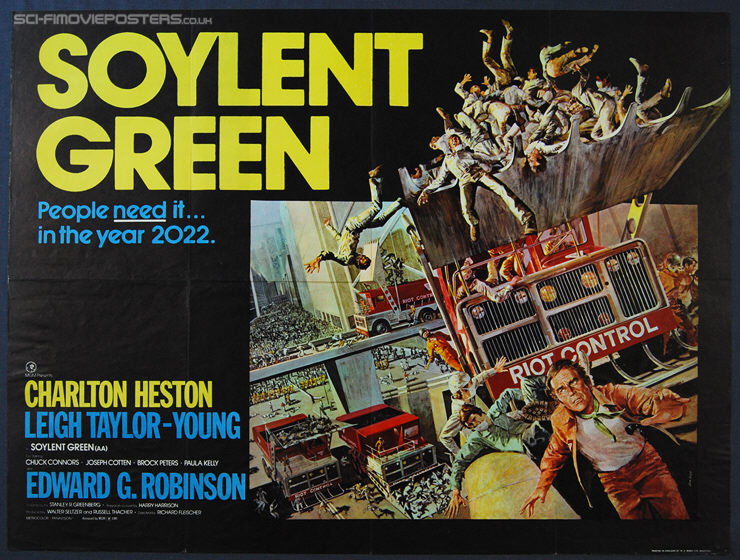
A really good dystopian story is often a story of disillusionment, of learning that the fairy land you thought you lived in isn't one. There's a dark underbelly you didn't know about. A cost. (Soylent Green is people!) Maybe the system was put in place with the best of intentions, but but it falls apart or becomes something very different than what was intended.

My heart says that there is no such thing as a utopia because there's no one way that will work for every citizen.  My utopia could be your personal hell.

Just for contrast, I went googling for utopian novels. The most recent one on a wikipedia list of such things was 1962 (Aldous Huxley's Island). There wasn't anything on the list I had read.

From another list, I found a few I had read: The Giver by Lois Lowry, Snow Crash by Neal Stephenson, The Mars Trilogy by Kim Stanley Robinson. Again, though, I run across this theme of utopia not being utopia for everyone.

Maybe that's why no one seems to write an unambiguous utopia these days.  We understand too well that it all depends on where you stand whether you see paradise or purgatory.
________________________________________
This post is part of the Blogging from A-Z Challenge.

Wednesday, April 23, 2014

T: Tegucigalpa (A-Z Blog Challenge: Evocative words)

Tegucigalpa and Guadalajara are two of my favorite Spanish words. They are place names, in particular the capitol city of Honduras and the largest city in the Mexican state of Jalisco.

I've yet to get to visit either place, but I love the words themselves.

I'm a long time student (and teacher) of Spanish. Since I first began to study the language as a college student, I was drawn to the sounds of it. It was foreign to my ear, but attractive, so flowing and lovely in its vowels. I think I like these two words for their vowels.

Teh-goo-see-gahl-pah. Say it. Doesn't it feel nice in your mouth? I understand that its originally a Nahuatl word, changed by Spanish influence into the form we know it in today. There's some serious disagreement about what the word means. Some say it refers to the silver in the hills; others say it means something about painted rocks or sharp stones.

But my love for the word is solely about the sound, not the meaning. Being able to pronounce it correctly requires a good facility with Spanish vowels. It has nearly all of them in the single word.

Guadalajara (gwah-dah-lah-har-ah), on the other hand, is all A's.  I think it's the J in that word that makes it
so much fun to say. Spanish J's sound like English H's. Add a flipped R into the end and you've got yourself one beautiful sound. It's almost a song just in the one word.

Obviously, I'm a word nerd. Why else would I choose to write 26 posts all about words I find evocative?

It's interesting to me that the Spanish words I love are all about sound, and the English words I love are mostly about meaning. Maybe it's because I'll always be a visitor in Spanish, but I'm a native in English. Maybe it's because my first literary love was poetry, which is all about sound. In any case, my love affair with words shows no sign of slowing down after all these years.
________________________________________
This post is part of the Blogging from A-Z Challenge.

Tuesday, April 22, 2014

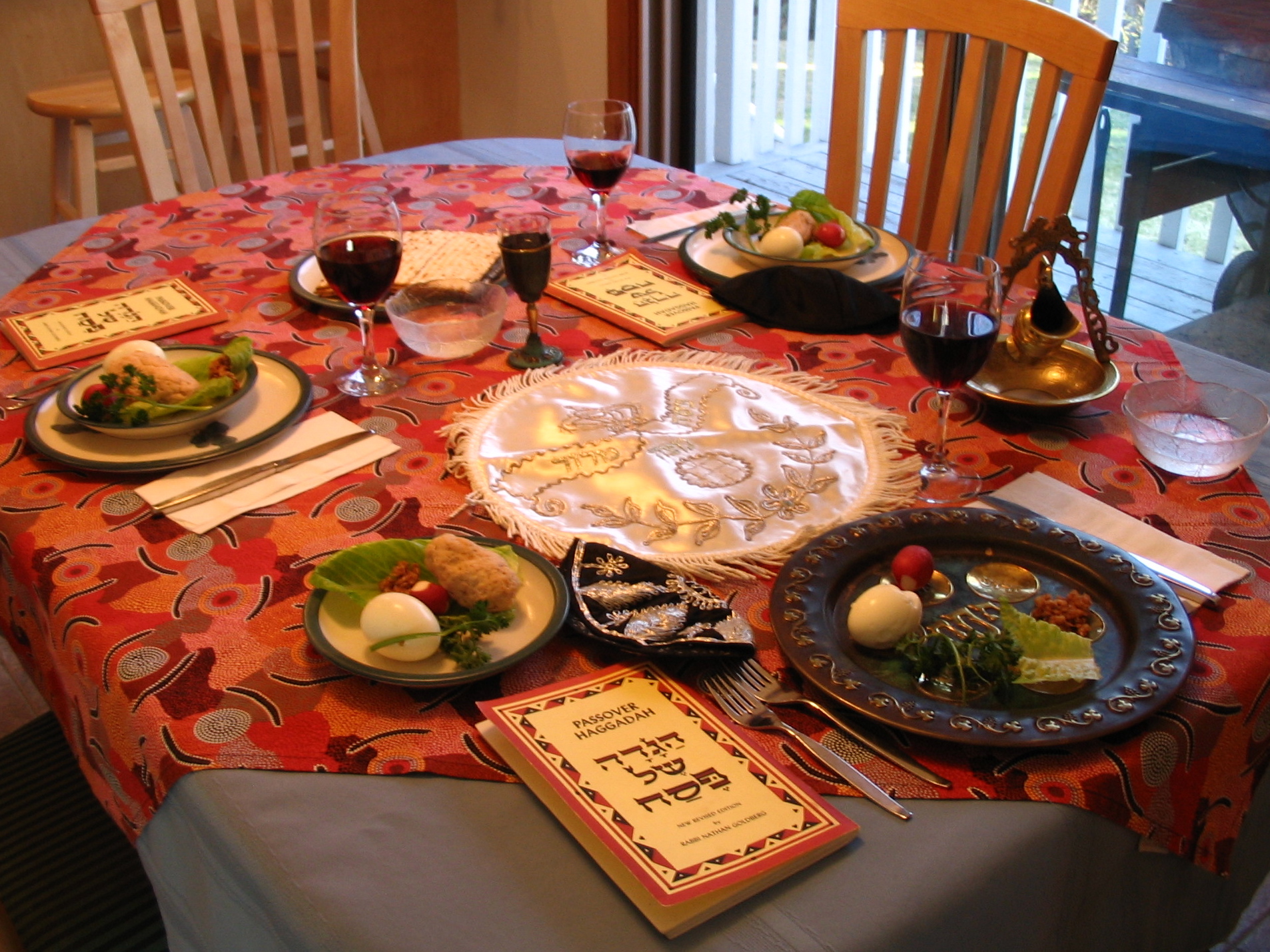
S: Seder (A-Z Blog Challenge: Evocative words)

As I write this, Passover has just begun (though it will already be over when I post it).

Although I identify strongly with my Jewish heritage, I wasn't raised in the traditions of the faith. Observations of holy days and traditions . . . well, it's something I'm putting together as I go, trying to figure out what parts are important to me and which are not.

I've struggled in particular with the Passover Seder. It's one of the more specific and prescriptive holy days, with rules and expectations about what will be done. While I've found my own way to observe other holy days like Yom Kippur, Rosh Hashanah and Hannukah, I haven't found my way through this one.

In part, it's a problem with my work-life. Living a Jewish life is difficult when you work on a Christian calender.  I can only take so many unpaid days without failing in my financial responsibility to my family. This time of year is high pressure at school, our last chance to make a difference for our students before they face the trials of state testing. It's not a good time to miss school and hand my students to a substitute (not that there ever really is a good time for that). This makes it hard to prepare properly.

A Passover Seder is like a Thanksgiving dinner in a way. You can really build up a lot of pressure (even if it's all in your own mind) to do it "right." Because I don't feel I can do it right, I often don't do anything at all, even though that also feels wrong.

It's a great narrative, and the wonderful, deep and resonant stories are part of what draw me to this part of my heritage in the first place.It's a celebration of survival and freedom, and a lesson in our responsibilities to the world. It's a parable and a history all at once.

This year I am still the simple son. Maybe next year I will find my way.
________________________________________
This post is part of the Blogging from A-Z Challenge.