Thursday, March 31, 2022

My March in Books

 March was a helluva month at la Casa Bryant. As I write this, on the last day of March, there are five men upstairs ripping out my carpet and installing beautiful new floors. All of March and part of February has been about getting ready for this moment--basically moving out of three rooms of our home without having any other rooms to move into because we still live here. 

No wonder I escaped into books as much as possible. And it was a good month for reading: 


I read ten books in March. 

I don't feel like rehashing the ones I didn't like, so I'll let you click over Goodreads via the links above if you want to know why I didn't like them. Let me gush a little about the good things. 


It was "women in horror" month, so a perfect moment to revisit Shirley Jackson, one of my favorite authors of all time, and Tananarive Due whose work I love more and more, the more of it I read. Both of these books were well worth the read. 

The Shirley Jackson collection wasn't all horror, but even when she's writing social commentary or domestic explorations with a literary bent, Shirley always sees through to the dark side of things. It had been years since I last read "The Lottery" and it was just as chilling as I remembered, but my favorite story in that collection is "Flower Garden" which captures what it's like to be an outsider in an insular community and how trapped even an insider can be by social pressure. 

Tananarive Due's book, similarly, did not at first seem like it was horror. A lot of the book feels like a domestic tale of a marriage on the rocks . . . but it gets steadily weirder. Jackson and Due pair well together, with their focus on domestic settings and the horror of seemingly ordinary moments. 


For full disclosure, the author of Amazing Grace is my publisher. That probably influenced my choice to read it, but I assure you that, when I read work by friends and colleagues, if I don't like it, I just don't comment at all. If I'm telling you about it here, then I liked it. In fact, I loved this one. I really enjoyed the main character Lila Grace, a middle-aged Southern woman with the ability to talk to ghosts. I liked the sparks of romance between her and the new sheriff and the way that what she knew about the community mattered as much as her abilities when it came to solving the central mystery. I hope John writes more with these characters. There's definite series potential. The poor man already writes several series though, so I might have to be patient to wait for him to get back to this one. 

I've read Sense and Sensibility more than once. Between reading it and watching the film with Kate

Winslet and Emma Thompson repeatedly, I was predisposed to loving this book. I'm not sure when I last read/watched it, but it was before I married my husband, so that's coming up on twenty years. In fact, I had completely forgotten that Elinor and Marianne had a younger sister (to be fair, she's really only in the beginning and end of the book).  It was just as good as I remembered, and remains my favorite of Jane Austen's work (yes, I set it higher than the acclaimed and beloved Pride and Prejudice). 
So those are the books I loved this March. I also quite liked: 

  • A Spindle Shattered by Alix E. Harrow (a retelling of Sleeping Beauty, with a multiverse angle and a chronically ill main character)
  • The Boys Omnibus volume 1 by Garth Ennis (a darkly humorous, transgressive superhero series)
  • and Akata Witch by Nnedi Okorafor (a girl-meets-magic world series set in Nigeria among Leopard people)
What did you read this month? Anything I should have on my TBR? I'd love to hear about it in the comments! 


Sunday, March 20, 2022

Too "CW" For Me


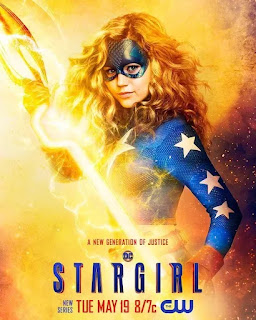
Stargirl seems like it ought to be a show for me. Female protagonist, cool superpowers, giant robot/suit, family drama, and a small town setting. So much to love. 

But I don't love the show. I'm not even sure I like it. 

And I think I've figured out why. It's the same reason I don't love The Flash or Arrow, even though those shows ought to have been right up my alley, too. Both had strong starts with interesting characters, but I eventually just lost interest. 

It's the "CW" effect. 

When a show is handed over to CW (or WB), it immediately changes, and not for the better in my point of view. They *look* good, with pretty people in great costumes and decent-for-the-budget special effects, but they don't hold up well to scrutiny. 

They're . . .shallow. 

So often the plot relies on people avoiding a conversation, often that conversation wouldn't even be that difficult to have. Or ignoring an obvious application of the powered person's skills. Or strange caprices. Character motivations shift from episode to episode, so it's hard to even know if someone is behaving "out of character" because there is no consistency about what is "in character." 

Superhero stories tend be a bit plot-driven…cool action scenes and creative fights are part of what fans come for, me included! But, the best ones also really understand their characters and lead to strong emotional payoffs. 

WB shows seem to be all about short-term payoff and cool moments, and I'm pulled out of the story again and again because I can't understand why characters are doing what they're doing. 

I watched Season 1 of Stargirl and enjoyed seeing the team of heroes come together. I liked the generational take, with young people taking over for older heroes. I had high hopes for Stripes-the-stepdad-with-a-secret-history. But I wasn't drawn in enough to watch it quickly. I think it took me two years to watch the whole season. 

The continual shifting of tones lost me. Was Stripes to be taken seriously as a mentor or laughed off as inept comic relief? Am I supposed to keep cheering for a girl who shows herself over and over again as more self-interested than anything else? 

I'm starting to wonder if we just hand the story over to a completely new team of writers every other episode and that no one reads the other team's work to build naturally from what came before. 

When we moved to the second season, I watched one episode and I'm not sure I'll be back for any more.
 
The adults in the show are not making any sense. Mom and Dad were THERE in the first season: they were part of the fight with the bad guys. The superhero stuff isn't a secret from them. But, they behave as if they have no understanding of all of what's going on. It's like they just forgot everything that happened and stepped back in time to the original conflict of trying to keep the kid protected versus letting her step into her role as a hero. 

Maybe I'm just too old for this, but it seems like cheap manipulation rather than honestly-built suspense. 

How about you? Do you like the WB/CW superhero shows? I'd love to hear your thoughts in the comment. 

Wednesday, March 2, 2022

Sticking the Landing


Welcome to the first Wednesday of the month. You know what that means! It's time to let our insecurities hang out. Yep, it's the Insecure Writer's Support Group blog hop. If you're a writer at any stage of career, I highly recommend this blog hop as a way to connect with other writers for support, sympathy, ideas, and networking. If you're a reader, it's a great way to peek behind the curtain of a writing life.

Our Twitter handle is @TheIWSG and hashtag is #IWSG.

The awesome co-hosts for the March 2 posting of the IWSG are Janet Alcorn, Pat Garcia, Natalie Aguirre, and Shannon Lawrence!
____________________________
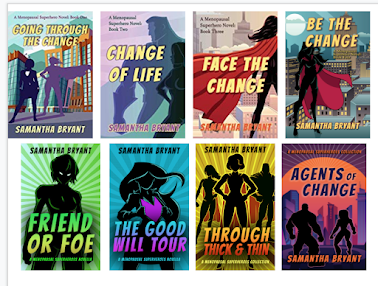
I'm trying to write the final book in my Menopausal Superhero series right now, and it's kicking my butt. It seems ridiculous, feeling frozen after four novels, 2 novellas, and a selection of shorts. 

Maybe it's the finality of it. 

This is the end, my chance to wrap it all up, and bring it together in a satisfying way, freeing myself to work on all the other projects that have been calling my name while I forced my focus down this one path to see it through to this moment. 


And now that I'm here, I'm suddenly full of doubt. 

What if I can't stick the landing? What if I took myself and my readers on this wild ride only to write that ending fails? 

It's silly really. My publisher wouldn't let that happen. If I turn in a draft that doesn't do the job, they'll help me with some development edits. But first I have to give them something to edit, and that's where I'm stuck. 

So my questions for the IWSG community today: 

1. If you've finished writing a series, how did you wrap up it up? Any advice to make sure it satisfies?
2. What series have you read where you either LOVED the ending or were frustrated by it? Why? What makes a good series ending? 

Or if you don't have any advice, sympathy is also appreciated! It's a good problem to have, I know, but I still need to solve it. 

Monday, February 28, 2022

February Reads

I seem to be reading more slowly so far this year. I'm not sure if it's me, or that I'm picking longer books or what. But in February, I only finished 4 books, and two of those I'd mostly read in January, but finished in February. Still, there were all well worth reading, so at least I know my time was well spent. 


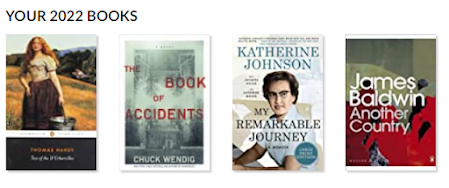
I started reading Another Country in January, as it was the February pick for my First Monday Classics Books Club, the book club I help facilitate with another author friend for our local public library. This is only the second work by James Baldwin I've read. I read Go Tell It on the Mountain a few years back. 

Structurally, Another Country was messy. The plot meandered, which suited the narrative at times, set as it was among a group of New York literati in the late 1950s. But that meandering feeling annoyed me as a reader at other times. There was a lot to chew on in terms of theme: race, relationships, sexuality. It was interesting that, in a book with so much openness about race and sexuality, misogyny still oozed from the pages like pus from a sore. The assumptions about what it means to be a woman definitely show when the book was written, and by whom. 

So, not a light or casual read, and problematic in some ways, but still deep and thought-provoking. Well worth the read. 


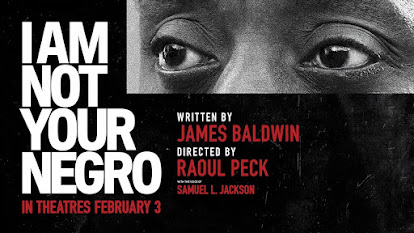
After our book club discussion, I sought out I Am Not Your Negro on the recommendation of another reader and was so glad I did. Baldwin was a powerful public speaker and I learned a lot about the behind-the-scenes aspects of the 1960s Civil Rights Movement in watching. It's on Netflix, if you're interested (or at least in was in February 2022). 

I also started reading Katherine Johnson's memoir My Remarkable Life in January and finished it just as February began. I loved it. Johnson (of Hidden Figures fame) had such a straightforward storytelling style, neither self-aggrandizing nor downplaying her skills and talents. It ended up being a different view than I'd ever seen before of the Civil Rights Movement through its effects on one ambitious woman of the time. 

Next for me was The Book of Accidents by Chuck Wendig. When I was doing my Spooky Reads series on YouTube last year, I realized that I haven't been reading as much horror as I used to, and since I really love horror, that seemed like a shame, so I've promised myself the chance to read more horror this year. 

The Book of Accidents had some great imagery and a creative plot. I won't tell you too much about it because it's more fun if you go in knowing very little and let the story surprise you, but I enjoyed it!

And just today, I finished Tess of the d'Urbervilles, the March selection for my First Monday Classics. This was a re-read for me, so I knew what was coming, but I still wanted to punch more than one character (sometimes that included Tess). A nuanced story with complicated characters and a lot to say about social mores, education of women, and agrarian English life. 

So, that's what I managed in February. How about you? What did you read this month? I'd love to hear about your favorite reads in the comments. 

Friday, February 18, 2022

Things I should do (writing life edition)

image source


Write 3 morning pages first thing

    Write at the time of day that my brain works best

Write at the same time daily

    Write every day

Don't write every day

    Talk with other about what I'm writing

Don't talk about what I'm writing until its done

    Share writing in progress

Never share writing in progress

    Seek feedback early

Eschew feedback entirely

    Outline and plan every aspect before beginning a draft

Just write and trust to the future to shake out the details

    Don't worry about correctness as I write

Obsess over correctness as I write

    Write what I feel passionate about

Research trends and write to market

    Read everything in the genre I'm writing

Don't read in the genre I'm writing

    Think about my audience

Don't think about an audience

    Write descriptively

Write without adjectives or adverbs

    Drink (coffee, wine, water . . .I'm not sure)

Don't drink


I tell you, it's enough to drive a girl to drink. Luckily I'm old enough not to worry too much about what others think I should do. I'll do it my way. You do it yours. We'll all get there in the end. 

Sunday, February 6, 2022

Submission Challenge, January 2022

There's a lot of work in a writing life that isn't exactly writing. There's networking and promotion, research and reading, thinking. But the worst part for me? Submitting my work. 

At this point, it's not really about fear of rejection any more for me. 

I've longed learned not to take that too personally. Whether or not a venue accepts my work is not solely about its quality. 

Sometimes, it's as mundane as length (longer or shorter than they have room for), or bad luck in subject matter (they just accepted another writer's work on a similar theme). Or maybe *that* editor doesn't like my story--it doesn't mean another editor won't like it, or even that the same editor won't accept a different story from me. 

So, no. I'm not angsty about the submission process. I just get frustrated by how much time it takes! 

There's research involved to find reputable places. There's tracking, to make sure you don't send the same place a story they've already rejected. There's formatting, to comply with various submission guidelines (blind submissions, preferred fonts and formatting, file type preferred, etc.). None of this brings joy to my heart, so it gets bumped down my to-do list by tasks I enjoy more, which is no way to build a catalogue of published work! 

Luckily, in 2019, I ran across Ray Daley and his Submission Challenge. The idea was that he'd provide a list of venues he had already vetted for speculative fiction submissions, and that those of us who decided to participate would send a piece of writing to one venue every day for the whole month. 


I really appreciated the feeling of support and camaraderie in that challenge and considered the event a great success when I participated back then. I ended up with two publications from that bout of submissions, and learned about some great magazines and publishers I hadn't yet heard about. 

I've tried to participate again a few times, but never quite had the time/energy/focus on the right timeing again until this year. 

So, end stats: 

  • 37 submissions in total (If the story had a quick rejection, I sent it right back out to a new venue)
  • 27 different stories
  • Revised/finished: 3 stories
  • 14 rejections
  • 2 acceptances!
  • Not bad, and there's still hope that some of these submissions will still lead to more acceptances yet. I'm especially pleased because one of those acceptances was for a piece that has been near and dear to me since I wrote it, but that I've had no luck placing for publication. My records (I use Duotrope to track) showed that this was the 11th time I'd submitted that story, so persistence paid off!

    I've set a goal of submitting my work 100 times this year, and I've made a good dent in that already, thanks to the challenge. Plus, participating in this challenge gave me a push to finish and revise a couple of stories that had languished in my hard drive for a while and get them out there. 

    I also wrote a new story for an anthology I heard about during the challenge. (They're not open for submissions yet, but when they open, I'll be ready!) 

    And bonus! It gave me meaningful work that will further my career while I work my way through the next novel. I LOVE writing short fiction because it gives me a chance to experiment at lower commitment on a smaller scale. It's playful for me in a way that novel writing isn't. 

    I look forward to sharing my stories with you when pub day comes! 

    Wednesday, February 2, 2022

    My First Writing Friend


    Welcome to the first Wednesday of the month. You know what that means! It's time to let our insecurities hang out. Yep, it's the Insecure Writer's Support Group blog hop. If you're a writer at any stage of career, I highly recommend this blog hop as a way to connect with other writers for support, sympathy, ideas, and networking. If you're a reader, it's a great way to peek behind the curtain of a writing life.

    Our Twitter handle is @TheIWSG and hashtag is #IWSG.

    This month's optional question: Is there someone who supported or influenced you that perhaps isn't around anymore? Anyone you miss?

    The awesome co-hosts for the February 2 posting of the IWSG are Joylene Nowell Butler, Jacqui Murray, Sandra Cox, and Lee Lowery!
    ____________________________

    I'm fifty years old. Generally speaking a person doesn't get to live this long and NOT lose some important people in their lives. I've run out of grandparents, though I am fortunate to still have both my parents. I've lost too many friends, uncles, cousins, dogs, and students (because really, any at all is too many). 

    But when I consider this question in terms of my writing life, I instantly thought about Jean, my first writing friend that I met outside a classroom. Writing friends are different than other friends--there's a special connection that comes from that shared passion. 

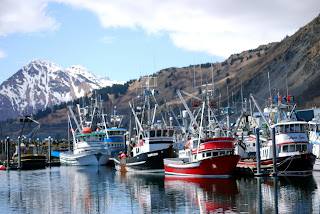
    Jean was a little bit older than me, how much exactly I'm not sure. I was twenty-two when I met her, having just moved to Kodiak, Alaska after my college graduation. 

    When we became friends, Jean seemed like a real grownup to me, especially when I still felt like I was faking it. (I'm still faking it by the way--I can't believe people think I'm a real adult). 

    I met her through the public library, which is, of course, a fantastic place to meet people--it's where the readers are! Jean put up a flyer on the bulletin board about a creative writing group she wanted to put together and I jumped at the chance. I was a poet, then, and craved the community and support I'd found in my creative writing program in college. 

    I don't really remember that first meeting that well now, but I remember the feeling of all our long, rambling conversations about everything under the sun. I remember how much and how widely she read, and how strong and sure she was in her opinions. She didn't shave her legs and felt like happiness was more important than being skinny, and I longed to care less what people thought and to do what I felt good about like her. (I'm almost there, thirty years later). 

    I remember her warmth most of all, her absolute faith in all of us in that little writing group she created. She just knew we had the ability to create work worth reading, and she made sure we knew it, too. 

    It would have been easy to let writing slip away in those years, to write it off as a plaything from my youth, and funnel all my energy into my job. But my relationship with Jean kept writing central to my life, both for my own self-expression and in my ambitions for publication and finding readers. 

    Submitting my work to poetry magazines back then meant printing out copies of my poems and mailing them in envelopes with stamped-self-addressed envelopes folded inside so that the journal could respond without cost to them. 

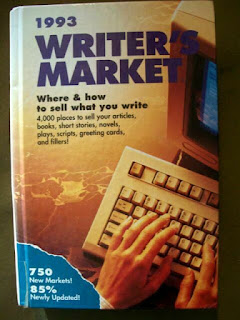
    We spent weekend afternoons and late evenings together perusing Poets and Writers Magazine and Writers Market books from our library and goading each other to submit our words for consideration. 

    She'd point out a market and tell me that I should send that poem about fog to this one, or ask me if I'd considered expanding that essay about the pillboxes at Fort Ambercrombie because maybe We Alaskans would like it. (She was right--they did! It was my first post-college publication). 

    Her own poetry had such range. Funny sometimes. Sardonic. Witty. Shades of Dorothy Parker. Other times enraged, sometimes sad and lyrical. But always always always with such beauty of language and such surprising insight and observation. 

    I didn't keep up with her very well after I left Kodiak. I'm really a terrible friend in that way--I always get so swept up in life where I am, that I don't send letters, make phone calls, or go back and visit often enough. But we'd touch base every so often over the years, sending news when one of us had a life change. We never met again in person, and I regret that. 

    In her last years, Jean was fighting cancer, but when we talked on Facebook, it was still about the people we love (real and fictional) and the words we would write. 

    I was lucky to find her. 

    Sometimes when I'm talking about a life of words, I can still hear her laughing.